Why a stronger Europe matters to Asia’s security
It may spare an already-stretched America entanglements in a second theatre
I REFER to Mohan Kuppusamy’s commentary, “If Europe goes to war, the fallout will be felt in East Asia” (Oct 15, 2026).
He is right that a Nato-Russia war would be ruinous for Asia’s trade-dependent economies, and that preparing for war is not the same as preventing it. I would add three points on where the danger lies.
First, an under-armed Europe is the likelier invitation to attack. Europe is not rearming because Russia is stronger, but Russia is close, heavily armed, and perceived in European capitals to have hostile intent.
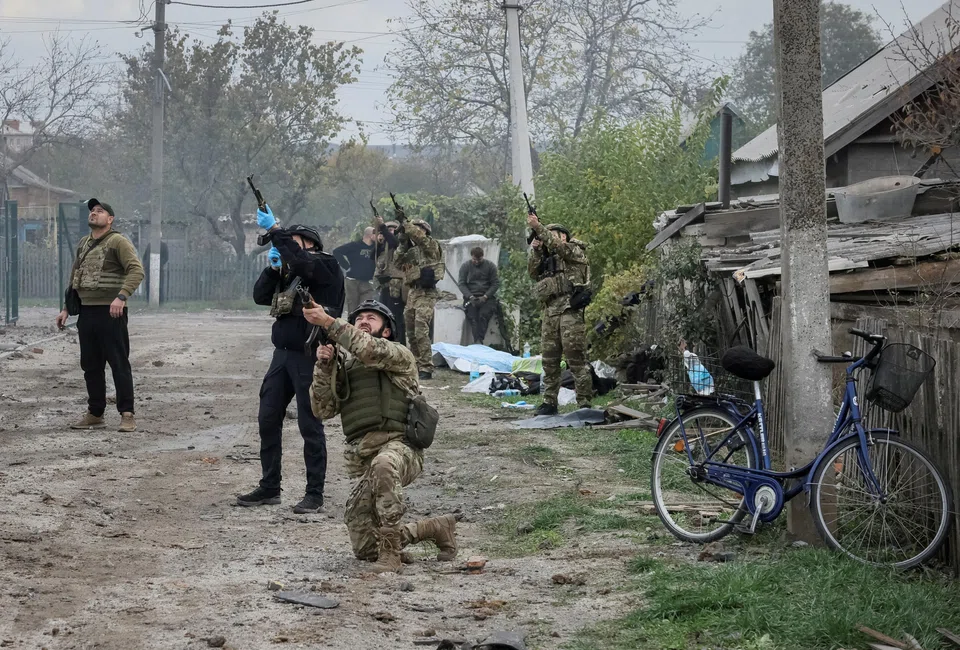
In 2022 Russia invaded Ukraine, and in September 2025 its drones crossed into Poland, prompting Warsaw to invoke Nato’s Article 4.
In June 2026, Germany’s army chief said Nato members agree Russia could launch a large-scale assault on allied territory before the end of the decade.
Kuppusamy seems to read Germany’s goal of a “war-ready” Bundeswehr by 2029 as fatalism, but Danish defence intelligence assesses Russia could be ready for large-scale war within five years if it perceives Nato as weak or divided.

Second, Europe cannot count on Washington to fill the gap. The 2026 US National Defense Strategy asks Nato allies to take “primary responsibility for Europe’s conventional defence”.
America is already stretched. Since the US-Israeli war on Iran began in February 2026, hundreds of air defence interceptors have moved from South Korea and elsewhere in Asia to the Middle East.
Europe’s 29 Nato members spent 487 billion euros (US$559 billion) on defence in 2025, and this is expected to grow to about US$639 billion in 2026. Meanwhile, Russia reportedly plans to spend US$202.58 billion on defence in 2027.
Third, if Europe does stumble into war, it would likelier be through what it acquires than how much it spends. Here, Kuppusamy’s caution is well justified. The security dilemma is sharpest when defensive and offensive weapons cannot be told apart.
Air defence, minefields and border fortifications raise the cost of invasion without threatening Russian territory; long-range strike weapons threaten it directly. Europe is moving towards the latter.
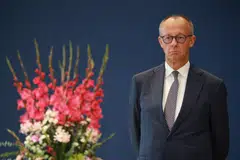
After Washington appeared to shelve plans to station long-range missiles in Germany, Chancellor Friedrich Merz said in July 2026 that Germany would buy Tomahawk cruise missiles itself.
Moscow treats such weapons as provocative, as its August 2025 exit from a moratorium on intermediate-range missiles showed. Germany has also ordered 536 million euros of artificial intelligence-guided strike drones, first for its brigade in Lithuania.
Such systems speed up how fast a military can observe, decide and act. That helps a defender, but also cuts the time that states need to judge each other’s intent. Combined with Russia’s 2024 doctrine lowering its nuclear threshold, this is one way Europe could compress the path to war.
Europe should therefore weight its rearmament towards defence. A Europe that can defend itself may not pull America out of the Middle East, nor guarantee that Washington stays committed to its long-term interests in Asia.
Yet it may spare an already-stretched America entanglements in a second theatre, and leave it the wherewithal to preserve Asia’s balance of power.
Marcus Loh MA candidate in war studies, King’s College London
Decoding Asia newsletter: your guide to navigating Asia in a new global order. Sign up here to get Decoding Asia newsletter. Delivered to your inbox. Free.
Share with us your feedback on BT's products and services