

Why the US ‘rescue’ of Iran could backfire
The Trump administration risks strengthening the regime it seeks to unseat
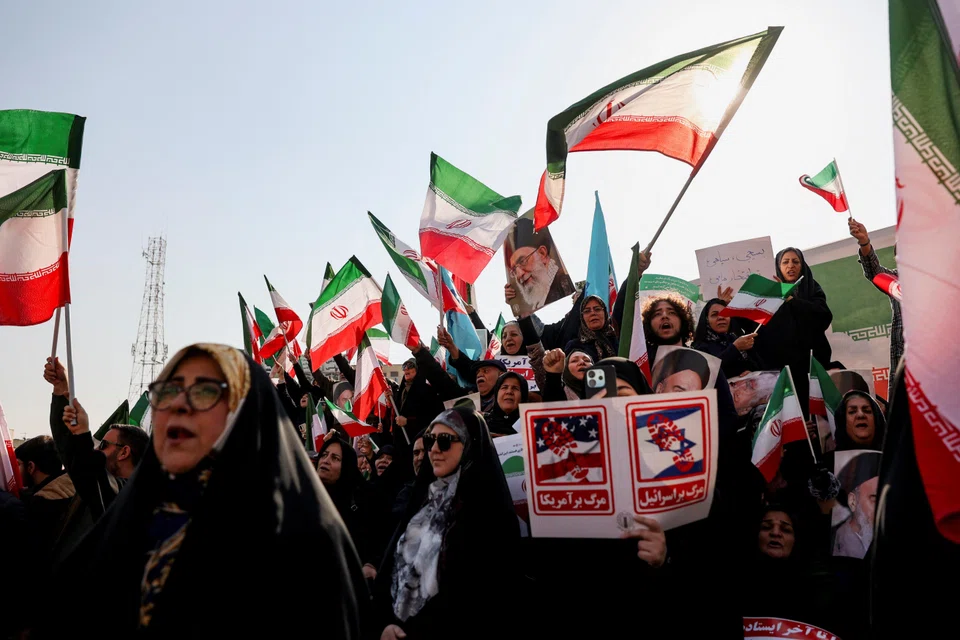
THE nationwide protests that erupted in Iran in late December 2025 present the Trump administration with its most consequential Middle East policy challenge to date.
What began as demonstrations over economic collapse has evolved into the most serious challenge to the Islamic Republic since 1979.
The administration’s response – combining economic sanctions, explicit military threats, and public support for protesters – represents a sharp departure from traditional American approaches and raises profound questions about efficacy, risks and long-term implications.
Between restraint and intervention
The administration has deployed a three-pronged strategy: targeted sanctions against Iranian officials involved in the crackdown, explicit threats of military intervention, and vocal public support for demonstrators.
US Treasury Secretary Scott Bessent announced sanctions against individuals and entities allegedly responsible for the violent suppression.
These represent standard policy tools, though their effectiveness remains questionable, given Iran’s already heavily sanctioned economy and the regime’s demonstrated willingness to prioritise political survival over economic considerations.
More controversial is US President Donald Trump’s unprecedented rhetoric.
His declaration on Jan 2 that America would “come to their rescue” if Iran kills protesters breaks with decades of carefully calibrated messaging. Where traditional diplomatic language praised protesters while criticising crackdowns, Trump has explicitly threatened rescue operations.
Reports suggest security forces have killed between 500 and 2,400 demonstrators, though Internet blackouts obscure the true toll.
The policy carries substantial risks.
First, explicit American backing may allow the regime to more effectively frame protesters as foreign agents, potentially undermining the movement’s indigenous character. Iranian Supreme Leader Ali Khamenei has already accused demonstrators of attempting to please Trump.
Second, if military action does not materialise despite continuing deaths, American credibility suffers significantly.
Third, any intervention faces immense practical challenges: Iran is a large nation state with substantial military capabilities. The regime could respond to strikes by intensifying rather than reducing repression, potentially destroying the very movement intervention aims to protect.
Most concerning is the nuclear dimension. Following the June 2025 strikes on Iranian nuclear facilities, intelligence suggests Iran still possesses hidden near-weapons-grade uranium.
Destabilising the regime through external pressure could trigger a scramble for nuclear materials among rival factions, including competing elements within the Revolutionary Guard Corps – an existential threat far exceeding any posed by the current regime.
Breaking with precedent
The Trump approach marks a clear break from previous administrations. During the 2009 Green Movement, the Obama administration adopted a cautious posture, offering moral support while avoiding actions that might allow regime claims of foreign interference.
Then president Barack Obama feared overt endorsement would delegitimise the movement domestically. Similarly, during the 2017 to 2018 protests and 2022 to 2023 Woman, Life, Freedom movement, administrations balanced human rights support with concerns about inadvertently harming protesters.
This restraint reflected strategic calculation and historical experience. The 1953 Central Intelligence Agency-orchestrated coup against Iranian Prime Minister Mohammad Mosaddegh remains a touchstone of Iranian nationalism and anti-American sentiment.
Any intervention risks evoking that history, providing powerful nationalist appeals to rally support even among otherwise critical populations.
Trump’s willingness to threaten intervention represents a calculated gamble that context has fundamentally changed.
The regime’s strategic position is uniquely weak: loss of Syria, degradation of Hizbollah, destruction of much nuclear capability, and economic collapse leave it more vulnerable than at any point since 1979. Proponents argue this creates a window where external pressure might tip the balance towards regime change.
Yet, this vulnerability creates dangers previous administrations did not face. A wounded, desperate regime may act more recklessly than one confident in its position.
Competing interests and uncertain outcomes
Strategic assessment must balance competing considerations. US interests in regime change are clear: the Islamic Republic supports regional proxies, pursues nuclear capabilities, threatens American allies, and brutalises its population. A democratic, independent Iran would transform Middle Eastern geopolitics. These potential benefits are substantial and genuine.
However, the path from current instability to that outcome is treacherous. Military strikes targeting the repressive apparatus might prompt scorched-earth retaliation against protesters.
More limited strikes on military facilities would do little to protect demonstrators while potentially rallying nationalist sentiment. Broader intervention risks protracted conflict in a country of 89 million with difficult terrain and substantial military capabilities.
Regional considerations compound these challenges. Iran’s neighbours fear consequences of state collapse: refugee flows, sectarian violence, terrorist groups filling vacuums, and nuclear materials falling into unknown hands.
China has signalled opposition to intervention, while Russia maintains support for Teheran. Unilateral action would face significant international opposition and potentially drive Russia-China-Iran coordination.
Most fundamentally, the US has limited ability to shape post-regime outcomes. Even successful intervention provides no guarantee of democratic succession.
Iraq and Libya stand as cautionary examples of how regime removal can produce chaos rather than stability. Iran’s size, complexity and ethnic diversity suggest collapse could produce not democratic transition, but prolonged civil conflict.
The administration must also consider opportunity costs. Resources for potential Iran operations constrain other priorities. Demonstrative deployment to Venezuela and ongoing global commitments stretch military capacity.
Major Iran intervention would necessarily limit American freedom of action elsewhere, potentially emboldening adversaries to test resolve in other theatres.
The limits of good intentions
The Iranian people’s aspirations for freedom deserve support, and regime brutality merits consequences. Yet, good intentions do not guarantee good outcomes.
The Trump administration’s approach represents both moral commitment to human rights and potentially catastrophic miscalculation of American capabilities to shape events in complex societies.
History suggests foreign military intervention in revolutionary situations frequently backfires, that nationalist responses to external pressure can strengthen rather than weaken regimes, and that the US has limited ability to engineer political transitions.
The current protests may indeed represent Iran’s 1979 moment – but 1979 showed how revolutions can produce outcomes more hostile to US interests than the regimes they replace.
The most prudent course may be the most frustrating: supporting protesters through sanctions, information access and diplomatic pressure while resisting the temptation to do more. Sometimes, the most important lesson of power is recognising its limits.
The alternative – well-intentioned intervention producing unintended catastrophe – has become tragically familiar in the US’ Middle East policy. Whether the administration can resist that temptation, and whether restraint proves wise or cowardly in hindsight, remains the defining question of this crisis.
TRENDING NOW

First Resources blames El Nino, outside fires for Kalimantan hotspots amid haze scrutiny

High Court rules against Julius Baer’s Singapore trust arm in US$50 million family trust dispute
Singapore key exports jump by higher-than-expected 68.4% in September, led by non-electronics

MSCI proposes standalone status for Indonesia; Jakarta stocks plunge 8%

