

Why we should pity the Bank of England
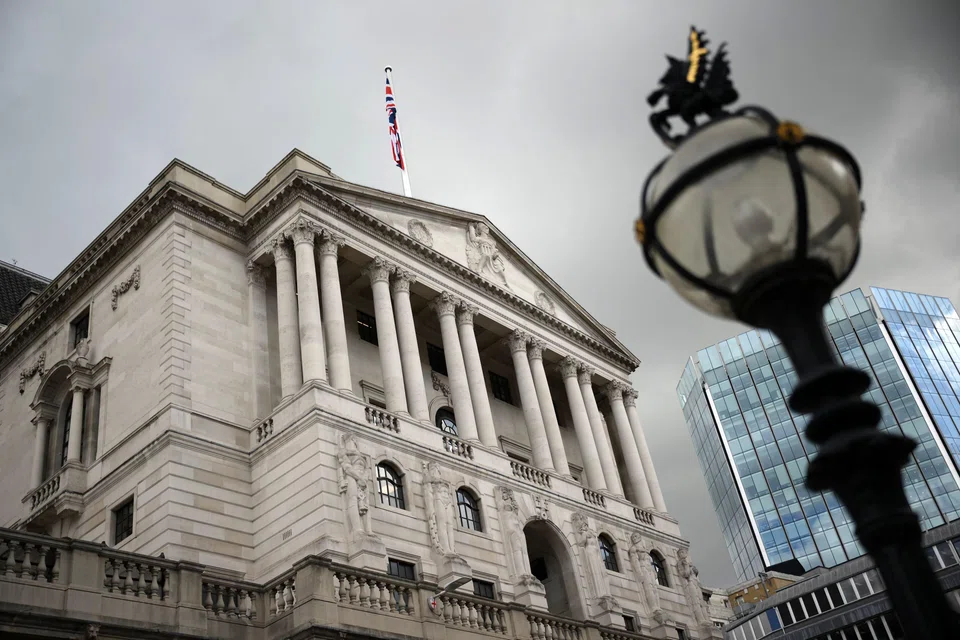
THE Bank of England finds itself in a tricky position leading up to this week’s policymaking committee meeting, alongside its counterpart, the Bank of Japan.
Among the major global central banks, they both face the most intricate monetary policy challenges. However, unlike the Bank of Japan that acted last week and is able to contain the immediate damage from policy hesitancies and possible missteps, the BOE doesn’t have the luxury of time to experiment with policy responses.
Even if it meets market expectations on Thursday (Aug 3) by raising its interest rate by 25 basis points – in line with what the European Central Bank (ECB) and the US Federal Reserve did last week – it remains exposed to a more bumpy inflation path, greater political criticism, and faltering growth momentum for the UK economy.
Admittedly, the BOE has seen some positive developments in recent weeks. Most notably, the better-than-expected inflation data released on Jul 19 raised hopes of a more favourable disinflation trajectory ahead, leading to a decrease in market interest rates, which were already being influenced by optimism about a soft landing in the US.
However, these positive notes are insufficient to offset the following inconvenient realities:
- The UK still holds the highest inflation rate among G7 economies at 7.9 per cent.
- Despite 12 consecutive interest rate hikes, the BOE was forced in June to increase its last rate hike from 25 basis points to 50 basis points, in an unusual policy step so deep into a hiking cycle.
- Its forward policy guidance challenge is a multiple of what others face, on account of the greater domestic economic and financial sensitivities.
- In response to political and other pressures, the BOE announced an external review of its “forecasting and related processes during times of significant uncertainty”.
These challenges are particularly perplexing for a central bank that was the first among its counterparts – that is, the ECB and the Fed – to acknowledge its mistake in characterising inflation as “transitory”. It was also the first to initiate its rate-hiking cycle to combat high inflation, and it remains the most transparent about the growth and inflation challenges ahead.
The reality is that the Bank of England faces a more acute set of tests compared to the other two major central banks, due to four main factors.
First, a stronger resistance to further real wage erosion among segments of the labour force, evidenced by the combination of the highest nominal wage growth and widespread industrial action.
Second, disruptions in external trading relations post-Brexit that slow supply chains and make them less cost-effective.
Third, a lower degree of internal economic flexibility contributing to longstanding productivity challenges. And fourth, limited government support for supply-side enhancement in comparison with the efforts of the US and, to a lesser extent, the euro zone.
The combination of these factors implies that it is unlikely that the BOE will experience significant accelerated relief in the months ahead.
Also, as it does not as yet receive sufficient support from the government and other sources to enhance supply, the central bank faces an uncomfortable policy choice: between tolerating too-high inflation for too long, or essentially going it alone in an even more pronounced manner, risking a deeper mortgage crisis that could unsettle the country economically, financially and socially.
One potential advantage for the BOE in the G7 is that it does not face the policy challenge of its Japanese counterpart – which, in the quarters ahead, must exit a protracted regime of yield curve control (YCC) causing economic and financial distortions.
This is an inherently difficult and uncertain policy manoeuvre that, if mishandled, can undermine domestic financial stability and economic well-being – yet it risks providing limited relief to the Bank of England.
By contributing to higher government bond yields in advanced countries and possible forced selling of foreign securities by Japanese investors, a mishandling of the YCC exit by the Bank of Japan could complicate the already complex situation facing the UK.
TRENDING NOW

First Resources blames El Nino, outside fires for Kalimantan hotspots amid haze scrutiny

High Court rules against Julius Baer’s Singapore trust arm in US$50 million family trust dispute

Singapore key exports jump by higher-than-expected 68.4% in September, led by non-electronics

MSCI proposes downgrading Indonesia to standalone market status

