

Will dark factories brighten Asean’s manufacturing future?
The emergence of fully automated manufacturing hubs outside the bloc may threaten the region’s appeal, so the bloc must act fast
AN ELECTRIC vehicle factory in Shanghai took two-and-a-half years to produce its first million cars. After becoming 95 per cent automated, it took just 12 months to produce its next million.
A next-generation Korean electronics factory producing high-end semiconductor packages halved its workforce with the goal of becoming fully unmanned by leveraging artificial intelligence (AI), deep learning, robotics and digital twin technology.
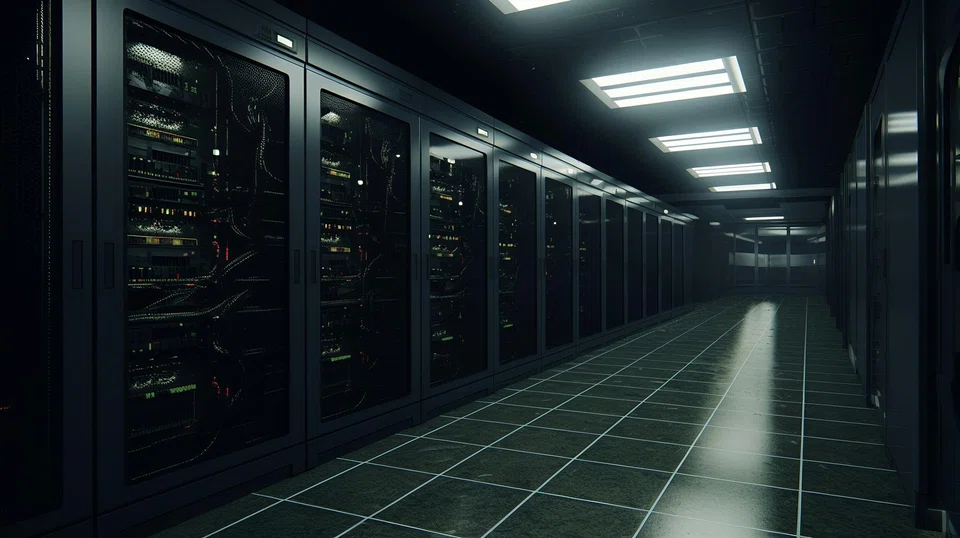
Such breakthroughs in productivity levels in the manufacturing sector point to a new trend in the making: “dark factories” or “lights-out factories” that are fully automated facilities running 24/7 without human intervention.
The promise? An opportunity to reduce workforce needs by 50 per cent to 90 per cent while shortening production lead times by as much as 90 per cent.
Asean’s place in the global market
Manufacturing accounts for roughly 20 per cent of Asean’s economy. In Malaysia, Singapore, and Thailand, more than a fifth of that manufacturing output comes from sectors tied to the semiconductor value chain – from smartphones and industrial robots to electric vehicles and defence. These high-tech sectors are seen by Asean as drivers of high-value jobs and economic growth in the region.
However, these very sectors have the most exposure to the dark factory trend. In fact, the emergence of dark factory manufacturing hubs outside the region may threaten the appeal of the bloc and pose risks to the goals of Asean’s industrial policies.
Therefore, the real question for Asean is if and how it will embrace this trend and safeguard its future.
Building an Asean edge
Asean must recognise the emergence of dark factories as a critical trend and adapt its legacy industrial policies to stay ahead.
Indonesia, Malaysia and Thailand are focusing on driving data centre investments and building large language models for local applications to enhance their AI infrastructure. While these are positive first steps, they may not fully address the challenge.
To ensure that Asean is on the winning side of this trend, there are three vital steps that need to be taken.
First, national aspirations will need to be reset. Policymakers should assess how the dark factory revolution will reshape jobs and economic growth. Old value chains will inevitably make way for new ones, which will be leaner, faster, and more productive.
Traditional factories that rely on low-cost land, affordable utilities and semi-skilled workers will soon fall short, as these conventional metrics for productivity will lose relevance quickly.
South Korea offers an example of this shift. Its new K-robot Economy vision aims to accelerate adoption of robotics in its manufacturing sector. To achieve this, it plans to strengthen robot component manufacturing capabilities and has set a target to raise domestic supply from 44 per cent to 80 per cent by 2030.
Second, priority sectors should be identified as pilots for dark factory strategies. As value chains are unique to each sector, tailored approaches are needed to integrate AI effectively.
Each Asean country has its unique strengths, and a dark factory-driven industrial strategy should amplify those advantages. For example, the transition to dark factories in Thailand, with its solid automotive base, will differ from Malaysia, which is strong in precision engineering and electronics.
This targeted approach is a strategy deployed by other major economies. In the United States, for example, the government is supporting the development of lights-out factories in strategically important sectors such as defence. It has positioned itself as a key buyer for an advanced manufacturing company that plans to establish a large-scale AI-powered manufacturing hub in the US to produce mission-critical systems for munitions and shipbuilding.
Third, countries need to establish the building blocks of a dark factory ecosystem. This means ensuring that there are enterprises and talent that can design and build such factories, including engineers, researchers, and innovators with the unique skill sets to develop AI applications and redefine the manufacturing process.
Robust digital infrastructure, including graphics processing unit (GPU)-based data centres with low latency networks and advanced cybersecurity, must underpin the reliability of such automated operations. This will require funding amounting to hundreds of billions of dollars, making it crucial for countries to attract the right private equity and venture capital investors to drive change at scale.
For instance, the US government established the Blue Manufacturing Marketplace to strengthen its advanced manufacturing ecosystem. The initiative connects firms developing cutting-edge technology with manufacturers capable of scaling production.
A new-age workforce that can operate such facilities will also be key. While dark factories may be unmanned, they are not unmanaged. This requires a workforce that is comfortable working with AI and can manage the human-machine interface, which necessitates the creation of new job categories with the suitable training in place.
The challenge will lie in managing the workforce transition. While disruption is inevitable, a carefully executed transition will provide opportunities for talent to upskill and move into higher-value roles. For example, a robotics engineer can earn double or even triple the salary of a traditional production line worker.
Singapore’s SkillsFuture Queen Bee programme, which empowers industry leaders to champion workforce development, is a good example of managing workforce transition. Similarly, in China, universities are urged to collaborate with businesses on AI application projects, aligning industry needs with the country’s talent pipeline.
Learning from the past to safeguard the future
History is ripe with lessons for those who fail to adapt. In the 18th century, the British textile industry, once a world leader, was upended by the industrial revolution. Similarly, the US’ Rust Belt, a powerhouse of steel and automotive manufacturing, began its decline with the advent of new automated production methods.
Asean’s manufacturing industry stands at a similar crossroads. The emergence of dark factories – fully automated, AI-driven production hubs – will reshape global manufacturing. Embracing this AI-driven revolution is not optional; it is imperative to secure the region’s economic future.
The writer is a partner at Monitor Deloitte in South-east Asia. The views expressed here are his own and do not reflect the opinions of Deloitte.
TRENDING NOW

Grab CEO’s wife Chloe Tong on life with Anthony Tan and finding her purpose

US trade chief to consider trade deal tariff caps in excess capacity probe
Bee Cheng Hiang customers’ e-mail addresses exposed in Singapore’s first case of AI-related data breach

DFI Retail to take over Starbucks business in Asia from Maxim’s Caterers

