Will the Iran-Israel war suck in the US?

There are many in Donald Trump’s administration that are opposed to US global military interventions, including his vice-president, JD Vance
Summarise
    • Trump ran for US president as an anti-war candidate. He has been very critical of previous military interventions in Iraq and Afghanistan.
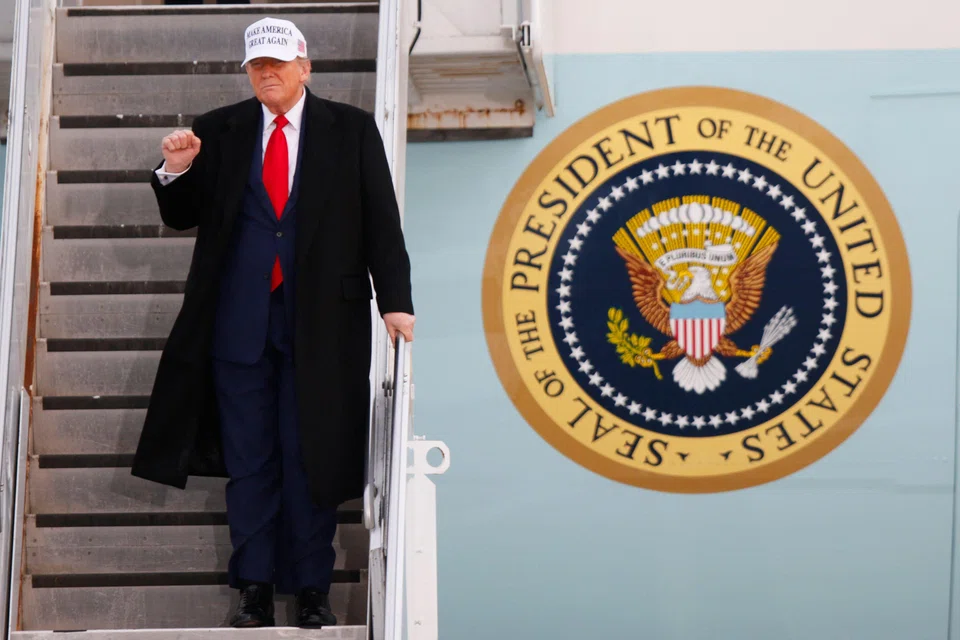
    • Trump ran for US president as an anti-war candidate. He has been very critical of previous military interventions in Iraq and Afghanistan. PHOTO: AFP
    Published Tue, Jun 17, 2025 · 05:00 AM

    WHEN US President Donald Trump fired Mike Waltz from his job as the national security adviser at the beginning of May, the general consensus in Washington was that the anti-war faction in the administration was winning the battle for the president’s foreign policy agenda.

    Indeed, Waltz was a member of the pro-Israel wing of the Republican Party, also known as neoconservatives, who supported a tough US posture in dealing with Iran’s efforts to acquire nuclear military capabilities.

    Critics had accused Waltz and other “neocons” in the National Security Council of collaborating with Israel’s Prime Minister Benjamin Netanyahu in his attempts to win the White House’s support for giving a green light to the Jewish State to attack the Islamic Republic’s nuclear sites.

    Since Waltz’s firing, there have been clear indications that President Trump was pressing the Israeli leader to refrain from using military force against Iran.

    Instead, the Trump administration has been engaged in diplomatic negotiations with Iranian officials aimed at reaching a compromise that would include Teheran’s agreement to put on hold its nuclear activity in return for the lifting of Western economic sanctions.

    Steve Witkoff, a New York real estate tycoon and golfing buddy of Trump, who was nominated by the president as United States Special Envoy to the Middle East, has held six rounds of talks with Iranian Foreign Minister Abbas Araghchi, with reports expressing a sense of optimism about the chances of the two sides reaching an agreement.

    It should be recalled that Trump ran for US president as an anti-war candidate. He has been very critical of previous military interventions in Iraq and Afghanistan and the US exercise in “nation building” in the Middle East as well as America’s backing of Ukraine in its war with Russia.

    Vowing to prevent drawing the US into similar military quagmires in the Middle East, President Trump insisted that he would not only help end the wars in Gaza and Ukraine, but would also try to reach a new deal with Iran over its nuclear buildup, all within 24 hours of taking office. Trump had withdrawn the United States from an earlier nuclear deal with Teheran during his first term in office.

    In a way, Trump’s emergence as a peacemaker reflected a major political change taking place on the political right, with so-called neo-isolationists, opposed to US global military interventions, gaining more influence, on the Maga (Make America Great Again) movement’s agenda with its America-First slogan.

    In fact, President Trump nominated as his vice-president, a leading neo-isolationist, JD Vance, who had served in the Iraq war and has been very critical of the US military adventure there as well as of America having been drawn into the Russia-Ukraine war.

    VP Vance and other neo-isolationists – including director of national intelligence Tulsi Gabbard, and undersecretary of defence for policy, Elbridge Colby, and pundits such as Tucker Carlson and influencer Charlie Kirk – have argued for a gradual US disengagement from the Middle East, and to some extent from Europe. They also want to divert US military and diplomatic resources to dealing with the geo-strategic and geo-economic challenge in the Indo-Pacific that China poses.

    In that context, the neo-isolationists have argued that while a nuclear Iran may challenge Israel’s strategic interests, it would not pose an existential threat to the US. Hence, the US would need to make a deal with Iran and avoid being sucked into a possible war between the Islamic Republic and the Jewish State.

    But at the same time, the Republican Party has remained under the strong influence of the party’s pro-war and pro-Israel wing, that includes Evangelical Christians and powerful national security hawks.

    While the Trump administration was negotiating with the Iranians, the majority of Republicans in the Senate signed a letter emphasising that any agreement with Iran should result in the full dismantlement of its nuclear programme, including permanently ending the regime’s capacity to enrich uranium.

    But Vance and other neo-isolationists were concerned that this pressure from the pro-Israeli hawks, coupled with Netanyahu’s insistence of the need to use force to destroy Iran’s nuclear sites, would torpedo the diplomatic momentum towards a deal with Iran. It could instead create the conditions for a new war in the Middle East that could draw the US into it, which is what they warned the Israeli leader would try to do.

    In late May, Trump had warned Netanyahu not to attack Iran while Washington was negotiating with Teheran over a nuclear deal. Officials and pundits then concluded that the president had vetoed any Israeli plan to attack Iran and that Israel would therefore not take action vis-a-vis Iran as long as the US negotiations were still ongoing.

    At the same time, US officials did warn of military action if Iran didn’t agree to end enriching uranium and producing the material that can be used in nuclear weapons. But the issue was supposed to be the focus of US-Iran talks in Oman on Sunday (Jun 15), which have since been cancelled.

    From that perspective, the assumption in Washington was that Netanyahu had gone against US wishes in launching an attack against Iran.

    And, indeed, Secretary of State Marco Rubio quickly made clear after the attack took place that the US had not been involved and described the strike as “unilateral action” by Israel.

    But from then on, Trump’s position on the war became somewhat vague. On Friday, the president came out in support of the Israeli strikes, telling The Wall Street Journal that the administration had known about them in advance.

    In retrospect, the US negotiations with Iran to preserve regional peace could be seen by some as a cover for the surprise Israeli attack that killed three top Iranian generals and key nuclear scientists while hitting some of the country’s nuclear sites.

    On Friday, President Trump called the Israeli attack the “greatest thing ever for the market” because it would stop Iran developing a “nuclear weapon that was a great threat to humanity”.

    In a social media post, Trump wrote: “I gave Iran a chance to make a deal” but they “just couldn’t get it done”. He then urged Iran to make a deal “before there is nothing left”.

    In an interview with CNN on Friday, President Trump said that the Iranian “hardliners” the US had dealt with in the nuclear negotiations died in the Israeli attack.

    Does that mean that the Israel strikes actually strengthened President Trump’s hand in the negotiations with the Iranians and that the goal of reaching a nuclear deal with Iran could still be achieved?

    In reality, Israel would not be able to destroy Iran’s nuclear facilities without the help of American bunker-busting bombs to take out reinforced atomic facilities.

    Israeli PM Netanyahu and his Republican supporters are hoping that the momentum created by the war, and the images of civilians in Tel Aviv killed in Iranian missile attacks, would force the Trump administration to join the war on the side of Israel and destroy Iran’s nuclear facilities.

    Much would depend on Iran’s moves. Its leaders threatened that an Israeli attack would lead them to target American military bases in the Middle East. President Trump wrote on Truth Social over the weekend that Iran would face American might “at a level never seen before” if it attacked the US.

    If the Iranians do attack American targets, the US military response could indeed be devastating.

    But then President Trump also wrote on Truth Social that “we can easily get a deal soon between Iran and Israel, and end this bloody conflict”.

    The fuzzy message coming from President Trump: I want to be a peacemaker; but I could easily turn into a warmonger.