

Will S$70,000 per child entice couples to have kids? Worries over a dystopian future must be overcome
Confidence matters when couples decide whether to have children

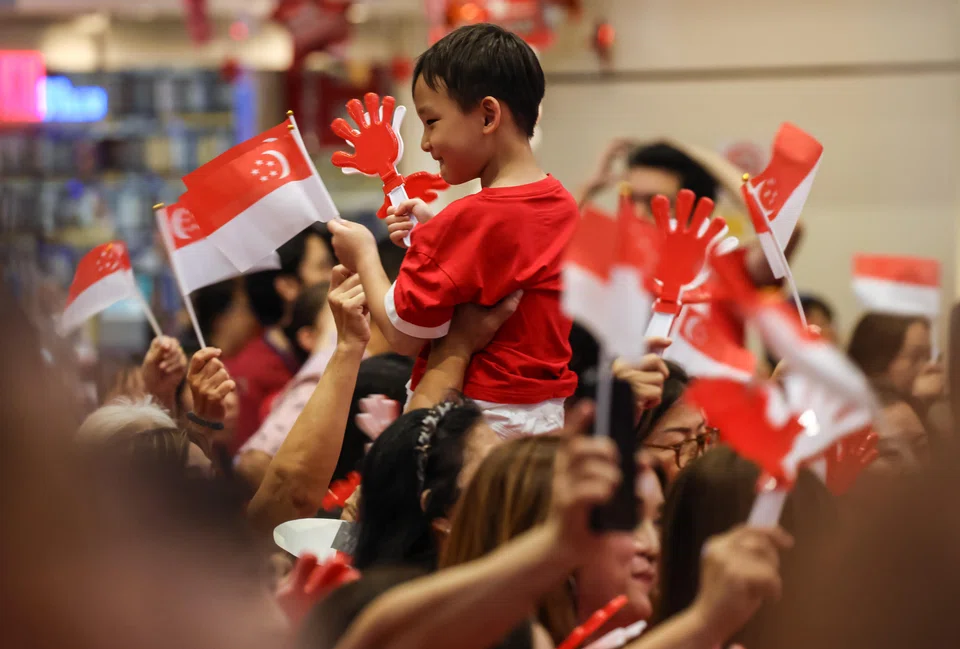
MEASURES to support parenthood took centre stage at this year’s National Day Rally (NDR).
Every Singaporean child will receive almost S$70,000 in direct financial support as they grow up.
In perspective, a sum of S$70,000 is over 12 times the median gross monthly income from employment (including employer/platform operator CPF contributions) of full-time employed residents of S$5,775 in 2025.
The amount of direct financial support that a local household with three children could receive may exceed S$200,000.
Still, Singapore can be an expensive city to live in. Receiving about S$200,000 in direct financial support over multiple years might not go very far for a family with three children, depending on lifestyle and education choices.
Nonetheless, couples here who are starting their parenthood journeys would certainly be well-supported. Other family-support measures unveiled at this year’s NDR include giving parents with children aged 12 and below more childcare leave, and reducing preschool, child care and infant care fees.
The parenthood measures come amidst a significant drop in the country’s resident total fertility rate to a new low of 0.87 in 2025, which presents Singapore with an existential challenge.
However, while couples will be comprehensively supported in their parenthood journeys, might increasingly well-educated and well-informed couples baulk at having children, not just because having kids impacts lifestyles and household finances but also due to fear over what the future holds?
Dangers loom
Three major trends may point to a bleak and possibly dystopian future.
One, geopolitical uncertainties are rising.
Today, numerous players are engaging in economic coercion, foreign interference, disinformation campaigns, and cyber-attacks on critical infrastructure, among others.
Prime Minister Lawrence Wong said in this year’s NDR that the world today is “more contested, more unstable and more dangerous than before”.
According to PM Wong a regional conflict can quickly become something bigger and while we hope never to see a global conflict in our lifetimes, we cannot ignore the growing risks.
My parents spent some of their childhood years when World War II was raging – a time of great suffering.
Arguably, couples may flinch at bringing children into a world with rising risks of major military conflict and where much of humanity may have to endure the agony of war.
Two, the recent heatwaves and wildfires in Europe, as well as various climate catastrophes elsewhere provide further evidence that with global warming, many places could become uninhabitable in future.
Failure to combat climate change could mean having to live with unbearably high temperatures, more frequent and damaging natural disasters, and growing water scarcity, among others.
Can a child grow up with the priceless gifts of access to fresh air, water and cool winds?
Indeed, a nightmare scenario of a climate Armageddon where the fragile global ecosystem collapses and inflicts massive suffering on humankind can make people shudder at bringing a child into this world.
Three, the rising power of artificial intelligence (AI) coupled with fears that its risks are not being properly managed are making many people very anxious.
Sure, Singapore has a successful track record in managing the impact of technological changes on jobs.
However, could AI’s impact be different and ultimately prove too difficult for governments to handle?
Numerous white-collar jobs could be eliminated. Gains of AI may be extremely unevenly shared. AI could even make many humans feel superfluous.
Can humans ensure that AI is dependable and controllable?
A world with potentially scarce jobs, growing risks of AI going rogue and where humans may be subservient to AI might hardly be one where one wishes to welcome a child into.
Confidence matters
Invariably the future is unpredictable. Yet people embrace risk when they have confidence in the future.
Businesses expand when they think they can get new customers. People buy equities or property because they expect to see capital gains.
When businesses and consumers are confident, the economy thrives. Confident businesses invest more thereby creating jobs and generating positive benefits.
When business confidence is high, more new businesses are set up, some of which may grow to become major enterprises.
Meanwhile, when consumers are confident, domestic consumption, which is a key driver of gross domestic product, rises. On the flip side, pessimistic consumers who save excessively can bring an economy to a standstill.
Likewise, people need to be confident in order to embrace the risks involved in having children.
I have a child who will become a teenager soon.
While my child brings joy into my life, I constantly worry over her future.
Can she excel academically? Can she be gainfully employed in future? Will she find a suitable life partner? Will she be grounded with strong values?
One aspect that gives me confidence is that my child is growing up in Singapore.
This little red dot champions meritocracy, inclusiveness, multi-racialism, inter-religious harmony, and the rule of law.
Singapore works – businesses want to invest here and people want to build their lives here.
Bringing up a child in the Republic means enjoying access to high-quality and affordably priced education, healthcare, housing and public transport. The city is safe and rich in activities where children can develop their interests. The government works hard to create good jobs and equip people with the skills to be employable.
Developments in global geopolitics, climate and AI are not within Singapore’s control. And there are good reasons to worry over the possibility that humanity faces a dystopian future.
Still, on balance, one can be hopeful that good sense prevails and humanity finds a way forward. Importantly, there are good reasons to be confident that this improbable nation will continue to thrive.
Combine confidence in Singapore improving as a place for living, working and playing, with the huge support that families here receive in raising children, and couples who want children should confidently go forth to have them.
When more couples have the confidence to have more children, Singapore’s prospects will be even brighter.
TRENDING NOW

One-third of Singapore-listed firms at risk in severe AI downturn: MAS

‘Not done’: Keppel CEO Loh Chin Hua transformed the group, but says there’s ‘still a lot to do’

He built the Vingroup empire. Now South-east Asia’s richest man is handing some key roles to his sons
‘We don’t want to stay as we are’: CEO Patrick Ng builds a more resilient Huationg

