Will US policy deter Teheran?
The Biden administration needs to respond forcefully to the strikes mounted by Iran’s proxies across the Middle East. At the same time, it wants to de-escalate tensions with the Islamic republic.
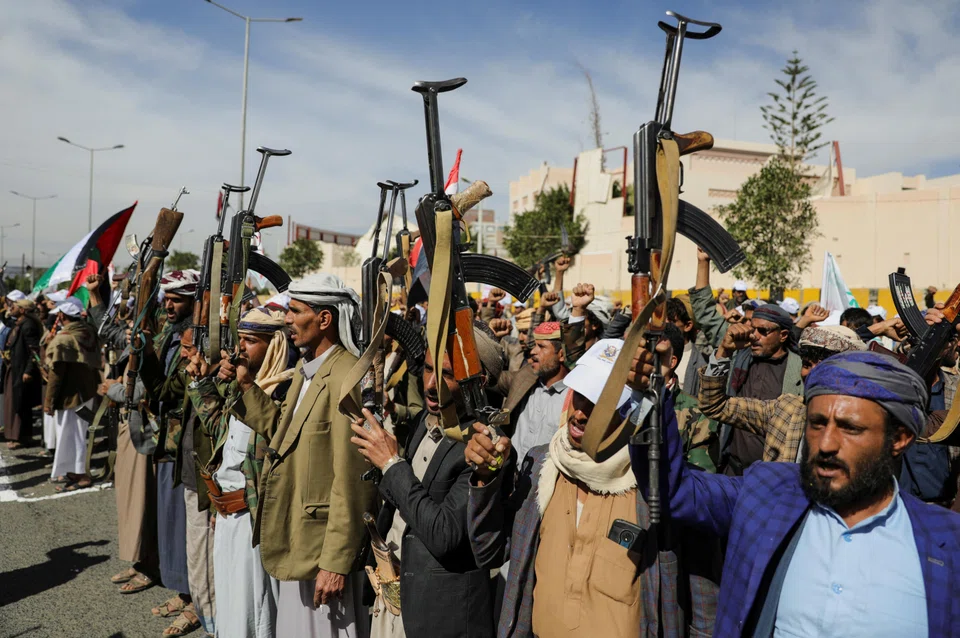
“WE’VE not seen a situation as dangerous as the one we’re facing now across the region since 1973, and arguably even before that,” US Secretary of State Antony Blinken warned last week (Jan 29) about the growing tensions between the United States and Iran as he referenced the Yom Kippur War.
Indeed, in recent months, the US and its allies have come under attack by radical Middle Eastern groups supported by Iran. These proxies of the Islamic republic have targeted American bases and troops in Iraq, Syria and Jordan as well as US-owned ships in the Red Sea.
The US and its allies have retaliated with a series of air strikes, including against the Houthi militias in Yemen in response to ship attacks, and against targets in Syria and Iraq in response to a drone attack that killed three American soldiers in Jordan.
The escalating tensions between Washington and Teheran have taken place against the backdrop of the war in Gaza which pits America’s ally Israel against the Hamas militant Islamist group, a proxy of Iran, that has controlled the Gaza Strip.
Hamas launched an attack on the Jewish state last Oct 7 during which it killed more than 1,200 Israelis while kidnapping 250 others, most of whom are being held hostage in Gaza. Some US intelligence sources have accused Iran of orchestrating the attack, which Teheran has denied.
The war in Gaza, which has already resulted in the death of thousands of civilians there, has widened to include exchanges of fire between Israel and the Lebanese-Shi’ite Hizbollah group, another regional partner of Iran, that has attacked targets in northern Israel, forcing residents there to flee from their homes.
Iran also started providing intelligence and weaponry to its Houthi allies in Yemen who were targeting ships, including commercial vessels, passing through the Red Sea.
And, it seems to have given the green light to its proxies in Syria and Iraq to attack American targets there, although officials in Teheran contend that they don’t have full control over these groups that supposedly act independently.
The war in Gaza could be seen as another round of fighting between Israel and Palestine, or a phase in the century-old struggle between Jews and Arabs over the territory of Palestine/land of Israel.
But the danger is that the war between Hamas and Israel will not be contained as a local ethnic-religious conflict.
In a way, the role that Iran has played in orchestrating the war and the attacks on American targets could lead to the “regionalisation” of the conflict in the form of a military confrontation between Israel, a nuclear power, and Iran, which has come close to acquiring its own nuclear military capability.
On another level, the Hamas attack has shifted the balance of power in the Middle East in the direction of Iran and its proxies, while weakening the position of the US and its partners.
From that perspective, the Hamas attacks amounted to a major blow to US strategic interests in the region, by bringing to an end an earlier US effort to normalise relations between Saudi Arabia and Israel, as part of a strategy aimed at forming a pro-American Arab-Israeli partnership to contain Iran.
Adding to a sense of Iranian aggressiveness, there have been reports that Teheran has considerably ramped up its production of uranium in recent weeks, reviving fears that it may be speeding towards the capability of producing several nuclear weapons.
As seen from Washington, a failure to impede this Iranian drive for regional supremacy would be a geopolitical loss for the United States and undermine its global position relative to China and Russia.
Iran and its proxies would be in a position to establish a new balance of power in the Middle East under which Israel is left damaged, Hamas is not destroyed, and the normalisation of relations between Israel and Saudi Arabia remains stalled.
In response to these Iranian moves, the Biden administration asserted its support for Israel in its war with Hamas, supplied it with advanced weaponry and deployed two US aircraft carriers and marine forces to the Middle East as a warning to Teheran and Hizbollah to refrain from widening the war.
Yet, at first, the Biden administration refrained from responding to strikes by Iran’s proxies against American forces in Syria and Iraq, or, for that matter, to the Houthis’ threat to international shipping, through direct military response.
The American caution reflected concerns that a more powerful US response could lead to direct military confrontation with Iran and its proxies.
President Joe Biden is aware that in the aftermath of the US military fiascos in Afghanistan and Iraq, the American public isn’t in a mood to support another major US military intervention in the Middle East. That it could happen during a US presidential election year would obviously hurt Biden’s chances of getting re-elected.
Moreover, with the US facing two major geostrategic challenges – in Ukraine and in Taiwan – the Pentagon’s nightmare scenario is that America could find itself fighting in three regional theatres: in Europe, in East Asia and in the Middle East.
The reality is that the United States does not have the military resources to fight on three fronts, and the American people don’t want to be drawn into a new quagmire in the Middle East.
But, the danger was that the Iranians would see this American military caution as a sign of weakness. Hence the decision by the US, backed by Britain, to respond in a forceful way to the Houthis’ attack on international shipping as well as to hit scores of other targets belonging to Iranian-backed armed groups.
The US has carried out air strikes on more than 85 targets in Syria and Iraq, including command and control operations, intelligence centres, weapons facilities and bunkers used by the Quds Force, the foreign operations arm of Iran’s Islamic Revolutionary Guard Corps. Among the targets was the group responsible for the Jordan strikes that killed the three American soldiers.
The strikes were supposed to give credibility to the Americans’ warning that the Houthis and other Iranian proxies would face “consequences” if they kept attacking US and Western interests, and help restore US deterrence in the region.
But it’s not clear whether they did, with the Houthis continuing their assaults on shipping in the Red Sea and the Iranians arming them and providing them with real-time targeting intelligence.
In fact, when the United States took out Houthi launching facilities, it struck at night, after clearly telegraphing its intentions, and avoided targeting the Houthi leadership behind the Red Sea shipping attacks.
It is likely that Iranian officials believe that an escalating conflict in the Middle East will increase the costs to the United States and the West without risking a wider war. As they see it, a continuing escalation of the conflict would be cost-effective, since the US would never take steps that would risk war with Iran and would do everything to minimise existing risks, with the goal of de-escalating tensions with Iran.
To put it differently, from Iraq to Lebanon and Gaza, Iran and its proxies can ignite crises and force the US to respond on Teheran’s timetable, putting America at a strategic disadvantage.
Biden and his national security aides believe that they can still reassert US’ position in the Middle East by launching a diplomatic initiative, under which a ceasefire in the Gaza war would be followed by an American push for the establishment of a Palestinian state backed by Saudi Arabia and the other Arab-Sunni states.
American officials believe that these diplomatic moves could renew the efforts to normalise relations between Saudi Arabia and Israel under a deal brokered by Washington – one that would weaken Iran’s ability to exert its influence in the region and reshape a balance of power favourable to the Americans.
TRENDING NOW
He built the Vingroup empire. Now South-east Asia’s richest man is handing some key roles to his sons
‘Our bread and butter’: Family-run Loo’s Hainanese Curry Rice hands reins to third generation
Grab CEO’s wife Chloe Tong on life with Anthony Tan and finding her purpose
US says China to buy 10 million tonnes of coal in 2027 and 2028