

Will Washington’s Cuba campaign succeed this time?
There’s a strong case for ousting President Miguel Diaz-Canel, but any attempt could risk real complications
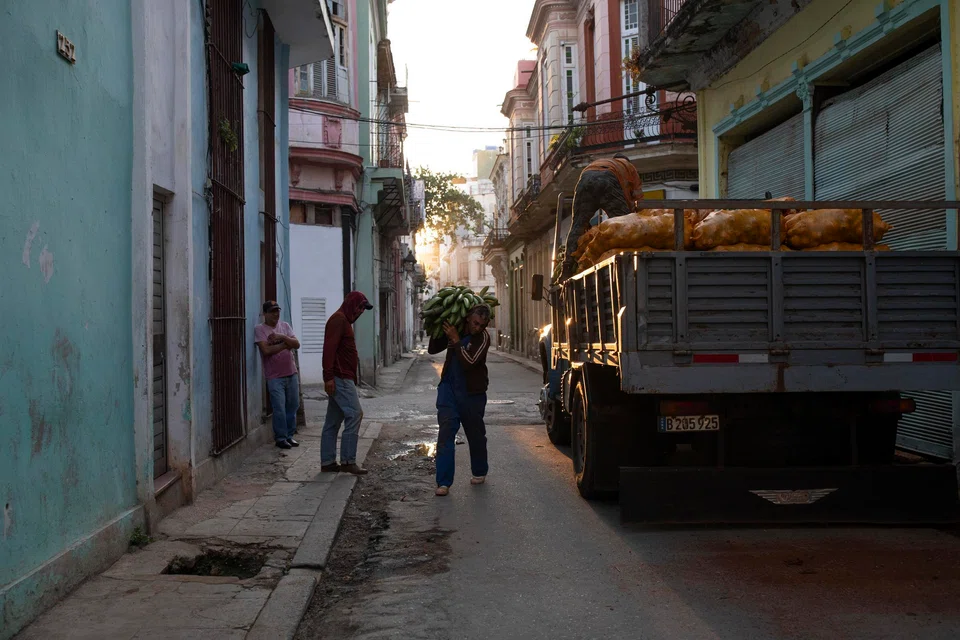
OVER the past 16 months, the Trump administration’s Cuba policy has moved from familiar sanctions tightening into something more ambitious: an openly declared bid to topple President Miguel Diaz-Canel’s government.
The strategy is now well-documented in executive orders, US State Department designations and President Donald Trump’s own public statements.
The harder question, and the one that has received less scrutiny, is whether it is likely to work, and what “working” would actually look like.
The policy architecture rests on three pillars. The first is a near-total oil embargo, enabled by January’s Executive Order 14380, which declared a national emergency over Cuba and threatened secondary tariffs against any country supplying oil to the island.
After US forces captured then Venezuelan president Nicolas Maduro and halted Venezuelan crude exports, Mexico suspended its own shipments within weeks; Cuban fuel imports have since fallen by an estimated 80 to 90 per cent.
The second pillar is a targeted sanctions campaign under Executive Order 14404, signed on May 1, designed to dismantle Grupo de Administracion Empresarial – the military conglomerate that controls between 40 and 70 per cent of Cuba’s formal economy.
The third, according to The Wall Street Journal, is an active effort to identify regime insiders willing to broker a transition.
The strategic case for the approach is straightforward. Cuba hosts foreign intelligence facilities linked to Beijing and Moscow, remains on the State Sponsors of Terrorism list, and has served for decades as an ideological and logistical hub for adversarial governments across Latin America.
After Venezuela’s collapse, Havana is the last significant node in that network. Proponents argue that a US unable to pressure a Caribbean island 145 km from Florida cannot credibly project influence anywhere.
The economic asymmetry is overwhelming, the regime is genuinely unpopular, and the moment is unusually favourable. Letting it pass, in this view, would repeat the strategic error of every half-measure since 1959.
The case against taking action is not primarily moral but practical, and it begins with history.
Washington has been trying to bring down the Cuban government for 66 years.
The 1962 embargo did not do it. The collapse of Soviet subsidies in the early 1990s, a far sharper economic shock than anything imposed today, did not do it.
Cuba’s economic crisis, known as The Special Period, produced suffering on a scale current sanctions have not approached, and the regime emerged structurally intact.
Authoritarian governments under siege tend to consolidate, not crack; scarcity becomes a tool of internal control rather than a source of effective opposition.
The question is whether anything about the present moment makes the long-failing playbook suddenly viable.
Historical precedents, current complications
Several factors do distinguish 2026 from previous attempts.
Cuba is more economically fragile than at any point since 1993, with nationwide blackouts now routine. The Venezuelan precedent is fresh and intimidating. And Marco Rubio’s State Department is more focused, technically sophisticated, and personally invested in the file than any predecessor’s.
These are real advantages. But they must be weighed against equally real complications.
One is the day-after problem. Ricardo Zuniga, who negotiated the Obama-era thaw, told The Wall Street Journal there is “nobody who would be tempted to work on the US side”.
Unlike Venezuela, where significant factions within the military and political class were open to negotiation, the Cuban system is unusually closed and ideologically coherent.
A pressure campaign without a credible internal interlocutor risks producing not a transition but a vacuum – or a harder-line successor government with less to lose.
The migration problem is another complication. The 1980 Mariel boatlift and the 1994 rafter crisis both followed periods of acute economic distress on the island; both reshaped American domestic politics in ways policymakers did not anticipate.
A genuine humanitarian collapse – with United Nations agencies already warning of acute food, medicine and fuel shortages – would almost certainly send tens or hundreds of thousands of Cubans towards Florida, complicating the administration’s own immigration agenda.
A bipartisan congressional letter in February warned of precisely this scenario.
Great-power competition further muddies matters. China extended emergency credit lines to Havana in March; Russia has resumed limited fuel shipments. Neither can fully replace Venezuelan oil, but both have strategic incentives to ensure Cuba does not collapse on American terms.
The harder Washington squeezes, the more valuable Cuba becomes as a demonstration project for Beijing’s willingness to backstop friendly regimes under US pressure.
The Venezuelan operation may have made that demonstration more, not less, important to Chinese planners.
None of this is to say that the policy will fail. It is to say that the gap between the tactical execution, which has been disciplined and effective on its own terms, and the strategic theory of victory remains substantial.
The administration has built a powerful machine for inflicting economic damage on Cuba. It has not yet publicly articulated how that damage translates into the specific political outcome it seeks, on what timeline, with which Cubans, and at what acceptable cost in regional stability.
Maximum pressure is a tool, not a strategy. Whether the administration succeeds in turning one into the other will determine whether 2026 is remembered as the year a 66-year stalemate finally broke, or as another iteration of a familiar pattern.
The case for thinking this time is different is real. So is the case for scepticism. Both deserve to be argued on their merits, and both will be tested, one way or another, before the year is out.
TRENDING NOW
DBS remains analysts’ pick ahead of Q3 earnings after Singapore banks’ share slump
Singapore identifies 7 firms responsible for haze fires, notices issued urging action: Grace Fu

Good Class Bungalow market activity picks up pace on ‘realistic’ pricing

High Court rules against Julius Baer’s Singapore trust arm in US$50 million family trust dispute

