

You want a hydrogen car. You just don’t know it yet
Fuel cell cars are clearly a revolutionary technology. The problem is, that message is unclear
A US$5.7 billion California lawsuit has much to teach us about the perils of annoying your most optimistic customers.
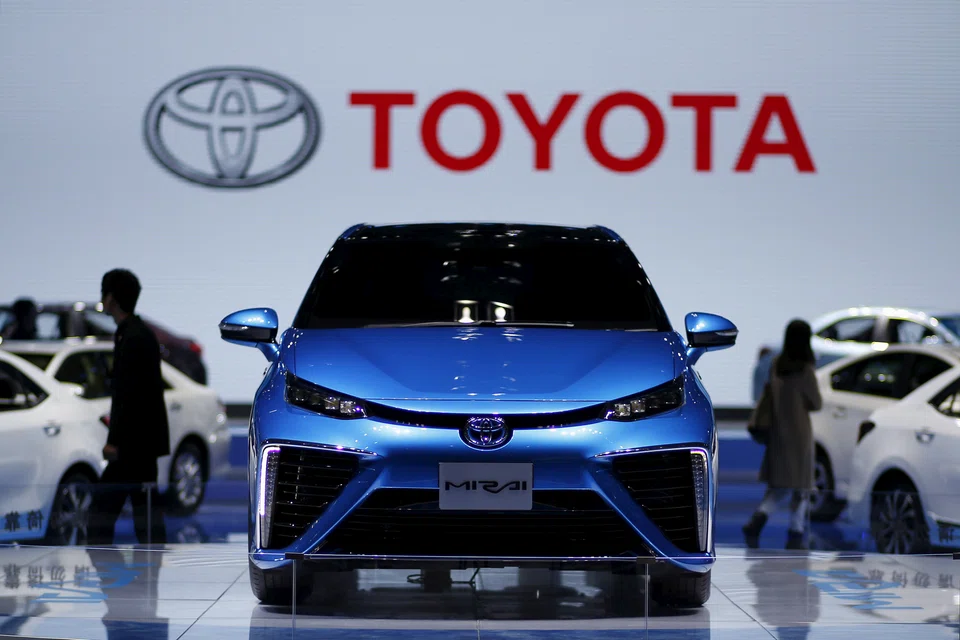
Drivers of the Toyota Mirai paid premium prices for a futuristic car whose fuel cells convert hydrogen into electricity and pure water. These early adopters now accuse Toyota of misleading them about the availability of a refuelling network. It’s easy to understand their ire: What good is a hydrogen car if you can’t buy hydrogen?
It’s just as easy to understand hydrogen’s appeal. You can make it from water using renewable electricity, it doesn’t contain carbon, and it stores energy far more densely than batteries – 3 kg contain around 100 kilowatt-hours, the same as the biggest electric car batteries.
It could power everything from cars and container ships to factories and the electric grid itself, turning intermittent wind and solar into round-the-clock energy. The ability to make it anywhere also promises a measure of energy independence in a world at the mercy of oil and gas flows.
If there is a carmaker that leads the hydrogen pack, it’s Toyota. It has already produced two generations of the Mirai (Japanese for “future”). The company sells fuel-cell trucks in Australia. BMW’s iX5 runs on Toyota’s fuel cells. In December, Toyota chairman Akio Toyoda is going endurance racing in a Corolla converted to burn pure hydrogen. He is literally driving the change he wants to see.
Yet, Toyota often finds itself looked upon as a technology has-been. Detractors pounce on the fact that the company has yet to produce a popular electric car. Instead, Toyota peddles what it calls a “multi-pathway approach” – a product strategy that says carbon emissions should be tackled using a variety of technologies, and that electric vehicles are no silver bullet.
The problem is not that Toyota is wrong – even China’s car companies are abandoning their pure electric playbook to add hybrids and follow market demand – but that its central message looks like turgid environmental, social and governance copy.
In touting its engineering pluralism, it merely ends up looking wishy-washy, which is even worse than looking dull. Consumers want a hero, not a decision matrix.
Admittedly, fuel cell cars are still too expensive to capture public imagination. But they are at least futuristic. And tantalisingly, if they proliferate, they might even make Elon Musk shut up and go away.
Alas, the Mirai lawsuit risks tarnishing the very technology that Toyota could have built into a flag bearer for hydrogen.
Management told The Business Times that the company has learnt from the episode. It will pour resources into building up refuelling infrastructure, and focus on commercial vehicles in order to scale up demand, because heavy trucks consume 120 times more hydrogen than passenger cars.
Perhaps the real lesson is that Toyota needs to work on its messaging. The “multi-pathway” spiel risks treating hydrogen cars as just another option rather than acknowledging that they require a fundamentally different infrastructure commitment.
It would have been better to explicitly tout fuel cells as a long-term bet, and make Mirai buyers feel like partners in building an ecosystem, pointing out the risks but promising support through the awkward early phase.
Hybrids really took off only after 20 years of refinement and a clear value proposition: better fuel economy. Hydrogen deserves the same clarity.
TRENDING NOW

Things to know about DBS’ incoming chairman Anthony Lim

DBS eyes prime brokerage business as Q3 profit falls 5% on weaker trading income

Royal Group and Sunset Hospitality abandon plans to open Casa Mett hotel off Orchard Road

George Yeo adds 100,000 Wilmar shares at S$2.97 apiece, taking stake to over 1 million shares

