Your cup of morning Joe is about to shock you
With a growing deficit between demand and supply, double-digit inflation looms for coffee drinkers in early 2025
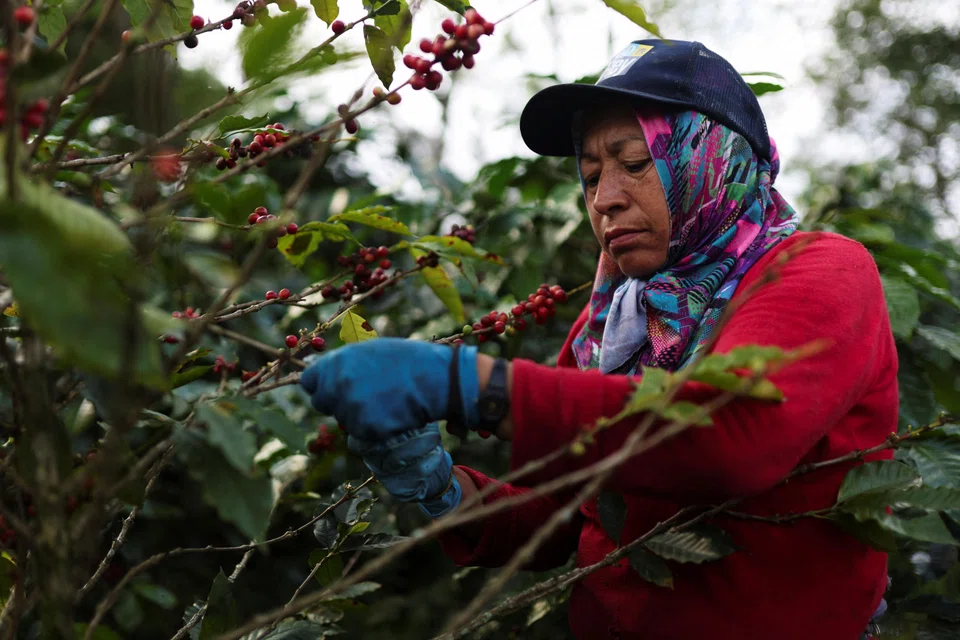
“WHY everybody did not buy coffee I cannot tell you,” writes Edwin Lefevre in his 1923 classic Reminiscences of a Stock Operator about the speculative investment of the day in commodities. “It didn’t require a Sherlock Holmes to size up the situation.”
The same could be said about today’s market: Stocking up now, before retail prices rise further, seems like a no-brainer. Forgive me for sounding alarmist but, alongside olive oil, coffee is something I cannot live without, particularly since my efforts to live the life and hopefully clone the looks of George Clooney hooked me into the world of capsules.
It is to the advantage of food giant Nestle that my caffeine consumption has proven largely price inelastic; I will pay whatever it takes to get my morning fix. And what is coming is not pretty; double-digit inflation looms for coffee drinkers in early 2025. Sure, companies will find ways to alleviate the impact – margin compression, shrinkflation, the lot – but prices will rise.
If anything, the only question is why retail coffee prices are not much higher already. In nominal terms, wholesale green coffee beans are changing hands in the New York and London markets at the highest level ever, having surpassed the peak set in 1977.
The arabica variety, appreciated by espresso connoisseurs, nearly touched US$3.50 a pound (453.6 grams) in December in New York. Yet, roasters are still selling their coffee in the supermarket as if wholesale prices were at around US$2.50 a pound, according to my soundings within the industry.
Given the lag between wholesale and retail prices, the cost of your cup of morning heart starter could increase by at least 20 to 25 per cent in the next few months.
Currently, the lag is lasting longer than usual for a variety of reasons, including supermarket chains pushing back against any higher prices due to the cost-of-living crisis. But the difference is growing so large that coffee merchants say elevated retail prices are a question of when, not if. More precisely, the question is whether the hikes will come in late January or early February.
The wait-and-see game roasters are playing has caused casualties. Last month, Cafes Legal, a 175-year-old French roaster famous for its slogan “Legal, le gout”, went bankrupt. Another large coffee merchant in Brazil also collapsed in late 2024. Others may follow.
The coffee inflationary shocks comes months after the cost of another tropical commodity – cocoa – jumped to an all-time high, surging more than 175 per cent in less than a year and a half. While the pair of commodities have little in common, the price rally is drawing parallels – and attracting speculators.
The roots of the coffee crisis are in Brazil and Vietnam, the world’s two largest producers, as bad weather has hurt crops. As a result, the world has consumed more coffee than it produced for four consecutive years.
Over 2020 to 2024, the deficit between demand and supply is somewhere between 15 million and 20 million bags (each bag weighs 60 kgs). In a typical year, the world consumes about 170 million bags. As things stand, the 2025 to 2026 season could extend the shortfall into a fifth consecutive year – an unprecedented outcome.
Roasters have used stocks accumulated during bountiful years to bridge the gap, but that has depleted inventories to what many in the industry consider unsustainably low levels. The stocks in the so-called destination (consuming nations) are gone, and the stocks at origin (producing countries) are fast disappearing.
The most immediate problem is the Brazilian harvest, which is picked from May to September. In mid-2024, many had expected that Brazil would deliver a good crop, halting the deficit era. And for a while, the indications were good – the trees flourished.
But from October, the industry started to worry, with concern becoming alarm in December as high temperatures and late rains meant the early flowers did not turn into the so-called pinheads that later transform into the berries. If, as currently expected, Brazil does not deliver, inventories will drop further.
By the end of the 2025 to 2026 season, total stocks may fall to the second-lowest level in 65 years, according to the US Department of Agriculture. Some coffee merchants believe there is a good chance that stocks fall to the lowest in modern history.
The supply chain would reach a breaking point. Of course, the invisible hand of the market will intervene before that happens – prices will rise to whatever it takes to destroy demand. In that scenario, wholesale coffee prices in New York could surge to between US$3.50 and US$4 a pound in the next few months; the most bullish merchants see the potential for even higher prices.
The next question is whether current prices, just above US$3 a pound, are the new normal. Or, to put it in meme terms, is “coffee the new cocoa” as some investors claim?
Not so fast. Differently from cocoa, where farmers have not made money for years and the subsequent lack of investment means ageing and sick trees, coffee is a vibrant industry. In several countries, plantations are run as commercial businesses, rather than the hand-to-mouth version of smallholders in cocoa.
Brazil, Vietnam and Colombia, plus a handful of other nations, have the potential to produce more, if the weather helps. Current prices provide an incentive to farmers. But climate change presents a structural issue for coffee.
For generations, the crop has been at the mercy of the weather, with frosts – and, to a lesser extent, droughts – repeatedly triggering large losses in Brazil. What is new is that coffee is suffering now from heat – and no one in the industry is sure what high temperatures could mean for production.
So, enjoy the next few weeks of reasonable retail prices before prices go higher. And do not be surprised if repeated waves of hot weather keep making your caffeine fix more expensive. BLOOMBERG
TRENDING NOW
He built the Vingroup empire. Now South-east Asia’s richest man is handing some key roles to his sons
DBS wants to be ‘Asian bank for Asians’ rather than global bank: CEO Tan Su Shan
Ex-Goldman trader builds mini pod shop in Singapore with offbeat hires
Asean’s challenge is to become resilient against global geopolitics: former Indonesia trade minister