A stitch in time to anchor tech listings in Singapore, for Singapore
IN the perilous post-independence years in Singapore, we opened our economy and markets to global business and competition with the success and jobs that brought us from third to first world in a generation. The meritocratic mantras worked well where our pioneers put in blood, sweat and tears.
We took risks that made the impossibility of this little red dot the financial centre that it is today. But intergenerational meritocracy has its challenges, and not only in the social or wealth distribution sphere.
One such impossibility sprang from decisions made by the Monetary Authority of Singapore (MAS), whose leaders including Ng Kok Song and Lim Ho Kee built the bridges with Chicago Mercantile Exchange in 1985.
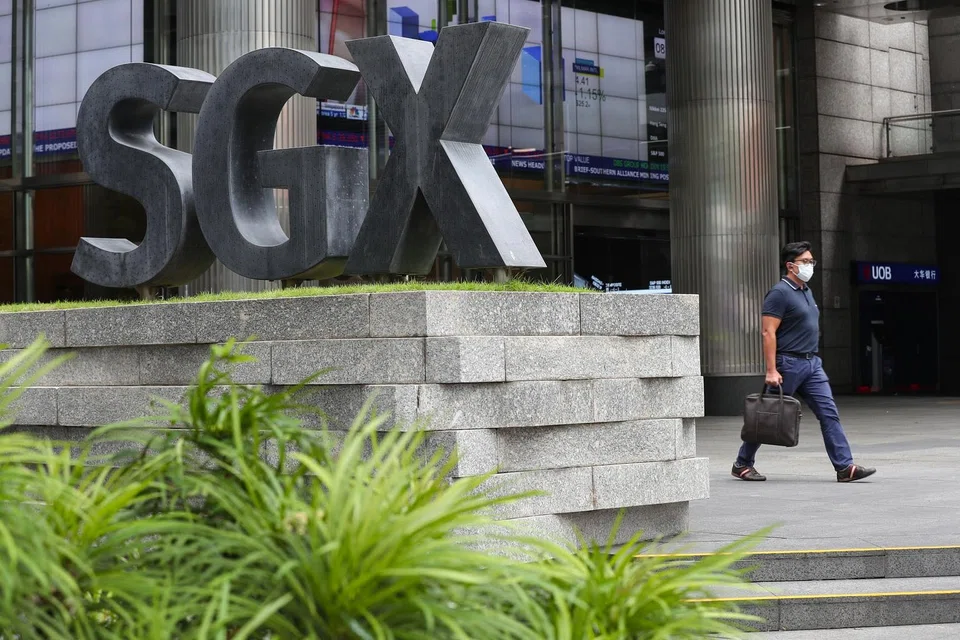
Then came the birth of SIMEX. Derivatives, once relegated to the Cheapside of LIFFE in London and Chicago, poor cousin of Wall Street, have become far larger a marketplace than stocks. Today's Singapore Exchange (SGX) remains the Asian leader in financial derivatives. It enjoys global dominance in iron ore derivatives and Chinese renminbi futures (where it has more than 85 per cent market share against the HKEX). Its Japanese, Indian and Chinese equity futures are where offshore prices are set and benchmarks used.
Most recently, despite MSCI's commercial motivation to shift north to Hong Kong, SGX fended off HKEX competition by partnering with FTSE to create liquidity in a new Taiwan contract. A globally unprecedented first, it migrated US$8 billion open interest from a 26-year-old MSCI Taiwan futures contract, and kept the mooring of equity derivative risk management firmly anchored in Singapore.
Similarly in capital markets, Singapore's transparent open marketplace, with high scores in governance in a rough neighbourhood, led the way. It took decades for volumes on Bursa Malaysia to recover the values once traded in a combined KLSE and CLOB in Singapore, before the arbitrage-fuelled liquidity was shut down in the Asian Financial Crisis.
Demutualisation - our own big bang in the 1999 formation of SGX - as well as innovation helped SGX blaze the trail. And for a season, it was not just an Asean hub with Thai Bev, Wilmar and the Jardine Groups, all of which were firm anchors for global investors to access Asia via Singapore. It was also the gateway for Chinese firms, including the STI component Yangzijiang which is having a stellar year once again in spite of the rock and roll in North Asian markets this year.
Without its own hinterland, maintaining pole position for a couple of decades is no mean feat. However this part of the financial centre has been struggling with schizophrenia in more recent years. We lament the lack of vibrancy in our local stock market, but some quarters simply cannot tolerate market risks in their stride. Would safety first in bank deposits eroded by inflation be a better bet? Millennials today are punting crypto and accredited investors getting scammed in nickel despite our best attempts in protecting the investing public from themselves.
This results in SMEs having to raise much needed growth capital in not-always-hospitable overseas markets. For every Sea, there is a long tail of those who have gone to Australia, Hong Kong, Taiwan and US that have faded into obscurity weighed down by extra costs. Meanwhile, the S$4.7 trillion in assets under management here - an accumulation of wealth from CPF monies to the sovereign wealth fund to family offices - gets more promiscuous in further glistening shores.
With the significant amounts allocated through the National Research Foundation, we are now a strong market for seed and early-stage funding. Many agencies, including A*star and EDBI, contribute to the increasingly vibrant private and venture capital money markets here with Asian unicorns funded out of Singapore.
However, they rarely emerge in our public markets.
Temasek's anchoring of deep tech unicorn Nanofilm must be the type of outcomes we seek. Nanofilm performed well post its IPO in 2020 and is now making strategic moves into hydrogen that can engender high value jobs, employment and new industry here. In a world of not just America, but everyone else first for themselves, we must direct some traffic to champion our local heroes to be regional and global champions for Singapore, in Singapore.
Now the concerted push by the government, Temasek, EDBI, MAS and SGX - a multi-agency task force led by the Ministry Of Trade and Industry - will carry commitments across at the highest levels. Heliconia will not be the only vehicle that has successfully supported local enterprises, although not all had actually listed in Singapore.
The different pots across different agencies can be more actively - directly or indirectly - allocated to our emerging champions across different parts of the funding cycle. It is therefore imperative that our local tolerance to domestic market risk and willingness to deploy capital here collectively gets behind this catalyst. It is not just about lamenting about and trying to get a free ride from government initiatives.
It is also putting our money where our mouth is. If we want a vibrant capital market, first put your own foot forward, in whatever capacity - investor, private banker, asset manager, expert, journalist, or dare I say, regulator.
Chew Sutat is chairman, Shan De Advisors. He was formerly senior managing director, global head sales and origination, at SGX. READ MORE: