

The Biden bulldozer is ready to roll on
The president-elect has decided to Think Big and press ahead with a blitz of grand policy and legislative ideas.
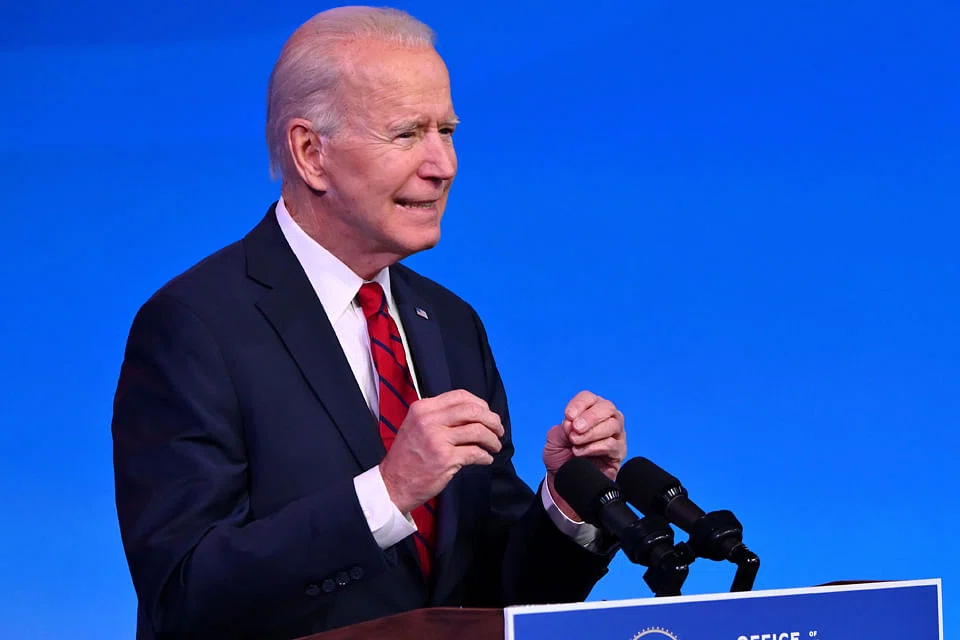
AS US President-elect Joe Biden takes office in Washington, DC, on Wednesday, in the midst of a deadly pandemic and an economic crisis, against the backdrop of deep racial and cultural divisions, and following the shattering assault on the Capitol, he will be facing massive challenges unlike those that confronted his predecessors, starting with the need to unify the country. Only time will tell if he is up to the task.
That the inauguration of the former vice-president as the 46th president of the US will look so different than those of his predecessors, is another reflection of the sense of distress, if not foreboding, that has enveloped Washington, DC, in recent days. The centre of the city reminds one of a military camp, with fortresses, concrete barriers and security checkpoints, and men armed with ammunition patrolling next to the barricades, surrounding the Capitol next to the platform on which the presidential inauguration will take place.
Past inauguration ceremonies had brought together thousands of Americans to the heart of Washington, DC, ready to celebrate the swearing-in of a new president.
This year the city will not be pulsed with visitors and instead will observe one of the most contentious transfers of presidential power in American history.
More than 20,000 members of the military and police soldiers protecting the city will outnumber around 1,000 guests in attendance, the majority of whom will be members of Congress and their guests.
HOPE FOR UNITY
One of those absent from the event will be outgoing president Donald Trump, breaking with 150 years of tradition that is supposed to symbolise the peaceful transfer of power. But then Mr Trump was impeached by the House of Representatives last week for inciting his supporters to storm the Capitol while lawmakers worked to certify President-elect Biden's election victory.
Many Republican members of Congress, some of whom voted last week to reject the official results of the presidential election, are also not expected to attend.
But former presidents Barack Obama, George W Bush and Bill Clinton, along with their spouses, as well as two senior Republican leaders - the departing Vice-President Mike Pence and the outgoing Senate Majority Leader Mitch McConnell - would be in attendance, a sign perhaps that despite the deep political divisions among Americans, there is still some hope for forging national unity.
After Mr Biden is sworn in by Chief Justice John Roberts at noon at the US Capitol's West Front, which was occupied by an angry pro-Trump mob last week, the new president will deliver his inaugural address, which, according to his aides, would lay out his vision to "defeat the pandemic, build back better, and unify and heal the nation".
Mr Biden ran for office pledging to combat the pandemic that has already killed 400,000 Americans and to get the country out of the ensuing economic recession that has left hundreds of thousands of Americans without a job.
And the 78-year-old Democrat - who has spent four decades in Washington, DC - has also promised to return a sense of civility to the White House, bringing an end to the chaos that defined the Trump presidency, and in particular, to reach out to congressional Republicans and work with them to pass an ambitious legislative agenda that comes under the banner of "Build Back Better".
But following the storming of the US Capitol by supporters of President Trump and as the Democrats are pursuing the impeachment of the outgoing Republican president, including a trial in the Senate, over the charge that he incited the riot, some suggest that the new president may be facing a mission impossible: Winning the support of the House of Representatives and the Senate, where the Democrats maintain slim majorities, for the huge legislative package to deal with the pandemic and its economic fallout, that the president-elect and his aides have detailed in recent days.
But it seems that instead of playing defence and trying to push forward a series of modest plans, President-elect Biden has decided to Think Big and notwithstanding the toxic mix that could undermine his agenda, to press ahead with a blitz of grand policy and legislative ideas.
The blitz starts with a proposed US$1.9 trillion fiscal rescue package that would provide a large boost to the economy if passed into law, and help the country conduct a vaccination campaign and revive the economy, including by sending US$1,400 cheques to many Americans, and provide relief to communities and small businesses hurt by the recession.
Mr Biden, a veteran and successful political operator, recognises that the obstacles he faces have become dramatically harder, and has decided that by riding a bulldozer carrying massive fiscal plans, he would be able to persuade the nation and its representatives in Congress to get behind him.
According to Moody's Analytics, if the fiscal rescue plan proposed by Mr Biden passes into law, real GDP growth would be robust at nearly 8 per cent this year and almost 4 per cent next year, bringing the economy back almost to full employment by fall 2022.
ANGRY ELECTORATE
But there is that big political "IF" here. The new Democratic president will have to convince at least some of the Republicans in the Senate to embrace his fiscal package that under budget reconciliation rules could pass by a majority vote of one senator.
But then Mr Biden may be confronting a Republican political bulldozer powered by an angry Republican electorate and some Republican lawmakers who have vowed to sabotage the new Democratic administration's plans.
In fact, according to a new Washington Post-ABC News poll, seven in 10 Republicans said that President-elect Biden was not legitimately elected and only 12 per cent of them were confident that he would make "the right decisions for the country's future".
Moreover, only 49 per cent of all Americans were confident that the new president would make the right decision, as opposed to 50 per cent who don't, reflecting the narrow electoral base of support that he enjoys.
So no one should be surprised if some Republicans would do everything in their power to ensure that the Biden administration fails.
Yet the new president's aides hope that some of the more centrist Republican leaders, including Senator McConnell, who want to weaken the influence of Mr Trump on their party and prevent him from running for the presidency in 2024, would be ready to work with the coming administration, especially when it comes to dealing with the pandemic and the economy.
Hence the expectation that Congress would eventually end up approving Mr Biden's fiscal rescue package, perhaps in two stages.
And in any case, the new president is also expected to take executive action to wrestle with the pandemic and to revive the economy as well as to reverse several of Mr Trump's controversial policies, like his ban on travel from several Muslim countries. That is bound to anger the Republican Trumpists who would probably be waiting for guidance from the outgoing president.
READ MORE: American democratic experiment still works despite Trumpian assault
TRENDING NOW

Once staunchly pro-China, Malaysian Chinese businesses are now distancing themselves from Beijing

Looking beyond looming CEO succession, should UOB potentially pursue a transformative merger?

Could stablecoins be the future of money?

Grab CEO’s wife Chloe Tong on life with Anthony Tan and finding her purpose

