

The digital revolution against trade fraud
Gaps in current international trade ecosystem can be addressed with cross-border, coordinated use of blockchain technology.
THE world urgently needs a revolution of the current system of international trade. In just the first six months of 2020 alone, the world has witnessed a number of massive corporate scandals that involved allegedly fraudulent or fabricated trade documents.
Take the Hin Leong debacle for example. On June 24, the interim judicial managers of the insolvent oil trader reported that the company's officers may have fabricated documents and used them to mislead banks into extending over US$1 billion of financing to the company. Documents that may have been forged or were of dubious authenticity included bank remittance advices, bank statements, bills of lading, sales contracts, sales invoices, swap-trade confirmations, swap-trade tickets, deal-settlement slips and inter-bank transfer certificates.
Such extensive corporate frauds have been able to take place because the current system of international trade requires the use of certain trade documents that were historically designed to permit cross-border trade to take place, without the buyer and seller needing to personally check on the status of an international supply of goods.
Buyers and sellers relied on reputable third-party service providers - such as banks and port authorities - to act as a preventive check by endorsing legal documents such as bills of lading or MT103s, the provision of which would signal to the buyer or seller that a certain transaction (for example, the loading of goods on a vessel or bank transfer) had taken place.
However, the ability of sophisticated parties to exploit gaps in the current international trade ecosystem is a clear signal that something needs to change.
AT THE SOLUTION'S FOREFRONT
In this writer's view, the solution to this problem is a global digital trade ecosystem built on blockchain technology. And I am glad that Singapore is at the forefront of these initiatives.
On June 12, in a virtual signing ceremony, Singapore's Minister of Trade and Industry Chan Chun Sing e-signed a new trilateral Digital Economy Partnership Agreement (DEPA) with New Zealand and Chile.
The DEPA is intended to guide the signatories' multilateral cooperation and set standards on a wide range of emerging technologies and related digital trade issues - for example, on artificial intelligence (AI), e-payments, and invoicing and digital identities. The agreement's ultimate goal is to enable seamless, end-to-end digital trade, facilitate secure cross-border data flows, and promote consumer trust in the broader digital ecosystem.
Singapore's decision to take the lead in building a global cross-border digital ecosystem via the signing of the trilateral DEPA is visionary and timely.
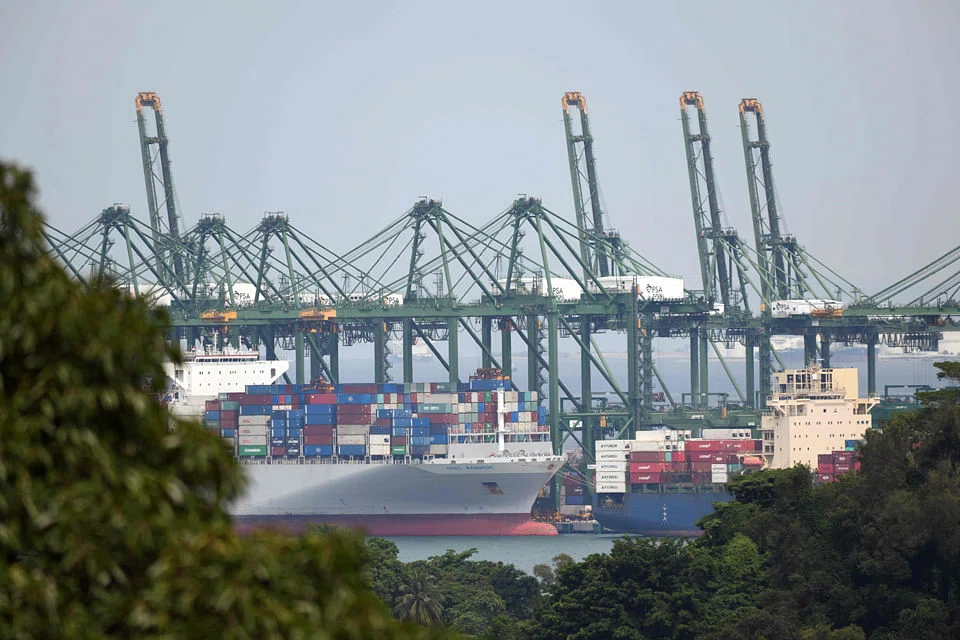
As an international trading hub, Singapore's survival and reputation has been built on its historical ability to facilitate international trade flows. Today, Singapore is the world's largest transshipment hub. It is the busiest port in the world in terms of shipping tonnage handled. Singapore's port is so efficient that it is often more cost-effective to ship goods via Singapore than to go in a straight line from Port A to Port B. This is no doubt helped by Singapore's connections to 600 ports in over 120 countries. Singapore also boasts one of the world's best and busiest airports in Changi Airport.
However, Singapore's reputation as an international trading hub has recently been rocked by massive trading scandals. As mentioned above, top of the list is the Hin Leong debacle. As part of the Hin Leong group's efforts to restructure almost S$4 billion in debt, Singapore energy tycoon Lim Oon Kuin startlingly admitted to hiding S$800 million of losses and selling oil pledged as collateral for loans to raise cash. This news sent banks scrambling to take steps to recover what they could from the beleaguered group.
Just weeks before Hin Leong's failure, Agritrade International, whose businesses span palm oil and coal mining, collapsed amid allegations of fraud. This involved forged bills of lading hiding potential losses on S$600 million of liabilities.
These scandals are clear evidence of the fact that the current system of international trade has serious deficiencies that allow for unscrupulous actors to engage in unsavoury and fraudulent activities.
As such, Singapore's decision to forge ahead with multi-lateral partnerships to establish a global digital trade ecosystem is prescient. I expect the DEPA to eventually revolutionise the way in which Singapore functions as a global transshipment and trading hub. It would also improve Singapore's reputation after the recent spate of scandals.
Imagine a world where every transaction along the supply chain is recorded on a blockchain ledger: from production, through the various product and distribution intermediaries, and finally to consumption by the end-consumer. It does not matter where any of the parties are located in the world because the digital ecosystem will capture all relevant data.
Further, the blockchain system will have an in-built system of checks where the parties to the transactions themselves, as well as third parties involved in supporting the transactions - such as port agents, logistics providers and banks - can establish the validity and actual occurrence of each transaction in the supply chain. It will be difficult for any trader to represent that a transaction has taken place either upstream or downstream if it did not actually occur.
AN EXCITING FIRST STEP
Imagine further a world where every e-signature is tied to an individual's or corporate's identity. So every e-signed bill of lading cannot be forged or falsified, which means that only real supply transactions can occur.
As a commercial litigator, I frequently see fraudulent actions committed against parties who have to outsource the task of verifying the actual supply transactions to third parties because they cannot do so themselves. One recent example involved a US customer who was cheated by a Singapore coal trader, who allegedly sold coal produced in an Indonesian coal mine. The US customer had received falsified bills of lading allegedly provided by the relevant Indonesian port agent, and had made millions of dollars of payment for the coal supply upon receipt of the said bills of lading. It was only months later that the US customer discovered that there were, in fact, no actual supplies of coal.
By having a real-time digital ledger that can be verified by checking against the properly authorised e-signatures, it becomes easier and simpler for a customer to monitor the supply of the supply of coal from an Indonesian mine to the end-point in the US.
One way to analogise the DEPA is to compare it to the Singapore government's push to digitise and centralise the healthcare records of patients. Think about what a Singapore General Hospital (SGH) cardiologist could do if he were seeing a patient for the first time, and he had access to the patient's records from his primary healthcare provider, Hougang Polyclinic, and the patient's records from Sengkang General Hospital, where he was treated for his kidney and liver issues. The SGH cardiologist would have better and more complete information to make a more informed, efficient diagnosis and find a solution to the patient's heart problem.
I believe the DEPA is an exciting first step towards a seamless global trade system that is underpinned by a digital ecosystem of checks and balances. Singapore will need to be at the forefront of these global digital initiatives to maintain its international trading hub status.
I look forward to the next announcement regarding the DEPA.
READ MORE: ZenRock interim JMs flag doubtful trades, invoices, cash transactions
TRENDING NOW

World’s largest offshore wind platform by Seatrium consortium on track to be completed by 2028

Is stamp collecting enjoying an analogue revival or are its best days over?

GovTech retrenches another 38 staff in second round of layoffs

MBS adjusted property Ebitda falls 20.6% in Q3 with fewer high-roller visits, weaker hold

