

Australia’s housing slump wipes US$128 billion off top two markets
This is likely to weigh on the wealth effect that underpins consumer spending
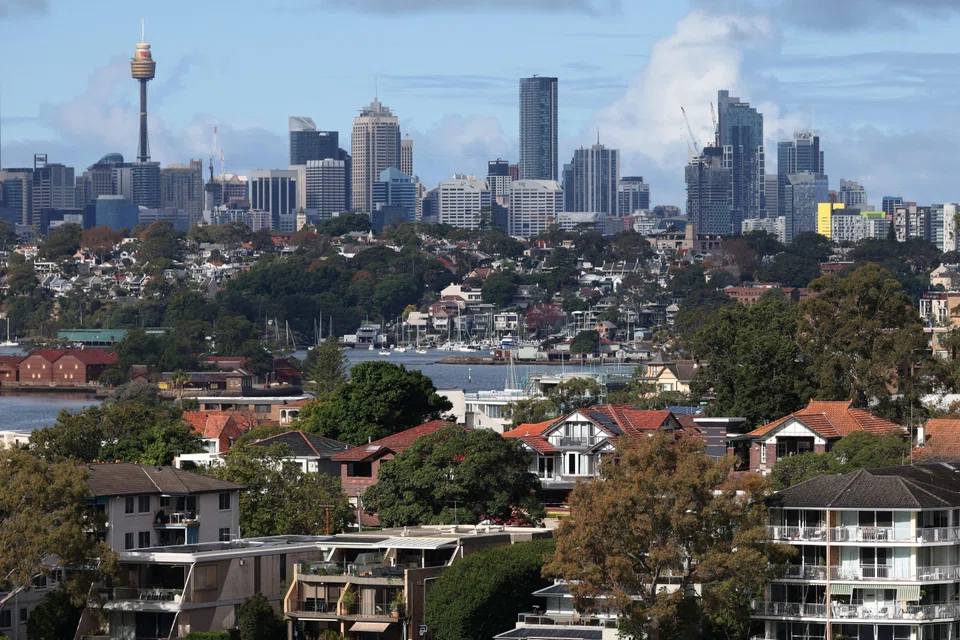
[SYDNEY] Australia’s housing downturn has wiped US$128 billion off the value of the nation’s top two markets so far this quarter, a result that’s likely to weigh on the wealth effect that underpins consumer spending across the economy.
Sydney prices dropped 2.7 per cent between Mar 31 and Jun 25, erasing A$120 billion (S$107.3 billion) from the value of stock, while Melbourne declined 2.3 per cent, shedding A$65 billion, according to calculations by Bloomberg Economics based on data from property consultancy Cotality and the Australian Bureau of Statistics.
The wealth effect is an economic phenomenon whereby changes in asset prices – particularly housing but also shares – influence how much households consume and borrow.
“The hit to wealth is broadening out, but concentration of price declines is greatest in the top end of the market, thus far,” said James McIntyre, economist for Australia and New Zealand at Bloomberg Economics.
Monthly Cotality data shows the top 25 per cent of dwellings in the Melbourne and Sydney housing markets have fallen 4.5 and 5 per cent, respectively, from their peaks last year.
“That’s likely to deliver a substantial blow to spending by wealthier households initially, but the softening at the lower and middle end of the market will spread the pullback more broadly over the second half of 2026,” McIntyre said.
Australia’s property market has largely been a one-way bet for the past 30 years and was amplified during last decade’s run of ultra-low interest rates. A surge in immigration in the post-pandemic period exposed a further shortfall in new construction and gave prices another leg up, even as the Reserve Bank aggressively raised rates.
Housing has also been at the heart of inter-generational angst in Australia as asset-rich baby boomers and others made huge gains on their homes and, in some cases, investment properties as well.
Yet the paper wealth generated has also helped fuel consumption, which accounts for about half of gross domestic product in Australia.
The RBA, in a research article prior to the pandemic, investigated whether households consume more when wealth increases. In that paper, the answer was a resounding “yes.”
“The components of consumption that respond most to changes in wealth are typically durable goods, such as motor vehicles and household furnishings,” the article said. “The responsiveness of motor vehicles is particularly large – a 1 per cent increase in housing wealth raises expenditure on motor vehicles by 0.6 per cent.”
Yet a combination of rapid-fire rate rises this year, slowing immigration and affordability constraints have seen home prices cool. On top of that, the Labor government, trying to address intergenerational inequality, sought to crack down on tax breaks in existing housing in last month’s budget. While that may prove to be positive in the longer-term, it will weigh on the market and spending in the short-term.
“Price declines are delivering a long-desired improvement in housing affordability, just not in the way policymakers would prefer,” McIntyre said.
“Rising construction costs need higher sales prices to unlock much-needed supply, and shell-shocked consumers – bogged down by uncertainty from the Iran war, rate hikes and the federal budget – could see falling home equity as one more reason to keep wallets closed.” BLOOMBERG
Decoding Asia newsletter: your guide to navigating Asia in a new global order. Sign up here to get Decoding Asia newsletter. Delivered to your inbox. Free.
Share with us your feedback on BT's products and services
TRENDING NOW

ComfortDelGro appoints two new independent directors

Once staunchly pro-China, Malaysian Chinese businesses are now distancing themselves from Beijing

NoonTalk needs continued financial support from CEO Dasmond Koh, auditors warn

DP Architects sets the benchmark for sustainability disclosure and design

