

CDL strategic review ‘timely’ after last year’s disputes, Sherman Kwek tells shareholders
The exercise will be ‘a look back at everything we’ve done’, says group CEO; details to be unveiled by end-June

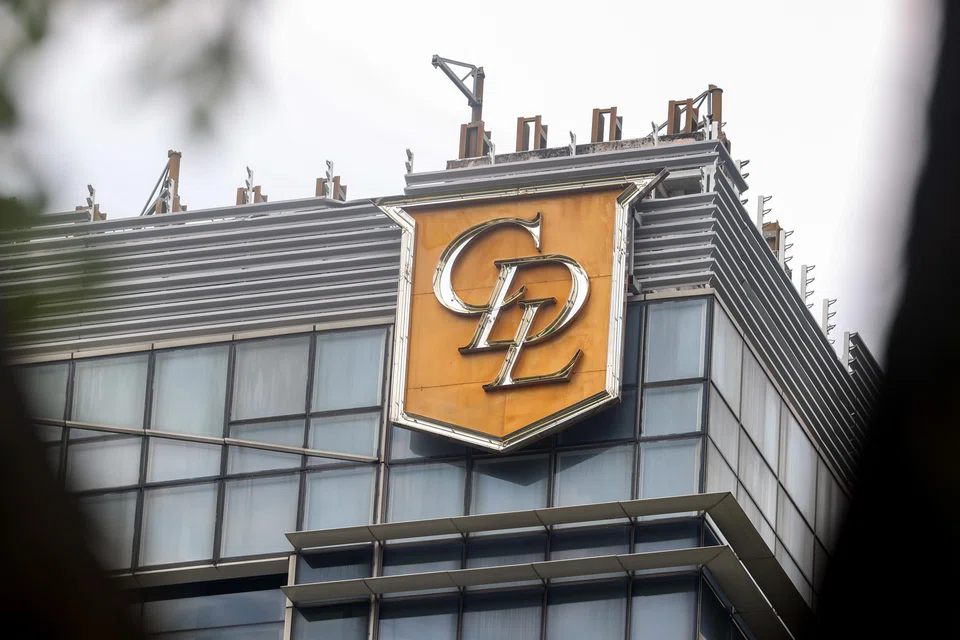
[SINGAPORE] An ongoing strategic review being done by City Developments Ltd (CDL) was “timely” after the company went through “some difficulties” and internal disputes last year, group chief executive officer Sherman Kwek told a packed shareholders’ meeting on Wednesday (Apr 29).
The property giant is looking to “revamp” its strategy and better articulate its value to investors, and has appointed global advisory firm Teneo for the task.
At CDL’s annual general meeting (AGM) on Wednesday, Kwek said that the review will be discussed at a board strategy meeting in May, with details expected to be unveiled by end-June.
He was responding to a shareholder query on the strategic review, which was first announced at CDL’s February earnings briefing. The exercise aims to examine the group’s global portfolio and capital allocation priorities, with plans to step up capital recycling and monetise assets.
Kwek said that the move came after CDL “went through some difficulties last year”. He cited not only geopolitical challenges but also “internal disputes and issues”.
In early 2025, the group was thrust into the spotlight after a public clash between Kwek and his father, executive chairman Kwek Leng Beng, over control of the company. The matter has since been resolved, with the Kweks vowing to put matters behind them.
“We felt it was timely to engage a firm so that we can move forward and… revamp our strategy,” said the younger Kwek.
He explained that CDL’s current strategy launched in 2018, focusing on expanding its asset portfolio, strengthening recurring income and unlocking value through capital recycling. “We needed external validation whether this strategy is appropriate (and) relevant, and (whether) we communicated it properly to our shareholders.”
He added: “We are excited because we think this strategic review comes at an appropriate time as well. It’s a look back at everything we’ve done.”
At the AGM, another shareholder raised a question on CDL’s succession planning.
Kwek shared that the group has internal plans in place, and the elder Kwek remains “healthy and vibrant”. “We will continue to work together as a team, and until such time when he decides and makes that decision.”
Growing AUM
Asked if the group intended to increase its exposure to emerging markets where businesses can reap the most growth, Kwek noted that CDL already had exposure in China and Vietnam.
The group had “many successful development projects in China but… also had stumbles there”, said Kwek. In 2020, CDL ended up taking a huge S$1.8 billion impairment hit and wrote off its investment in Sincere Property.
Still, China cannot be ignored as a market, Kwek added, and CDL has since invested in a large mixed-used site in Shanghai’s Xintiandi precinct, under a joint venture. The group continues to be “on the lookout for good investments”.
CDL has also gone into Vietnam, albeit “I’ll be honest… we were late to the game”, said Kwek. So far, the group has built a scalable residential platform through two fund partnerships, with around 6,000 to 7,000 mass market homes in the pipeline.
As part of efforts to drive growth, CDL will focus on expanding its fund management business.
Currently, the group oversees about US$3 billion in assets under management (AUM), primarily through two real estate investment trusts (Reits). “Admittedly, (it) hasn’t really grown as fast as we would have liked it,” he added.
CDL had previously targeted US$5 billion AUM by 2023. “Unfortunately, we never reached that target, so we kind of just left that target out,” Kwek said.
He attributed the slower progress partly to a prolonged high interest rate environment, which made fundraising and new listings more challenging. This included a previously planned Reit listing of CDL’s London office assets, which was later shelved.
“We will still continue to explore and see whether we can get some of these fund management ambitions done soon,” noted Kwek.
For example, the group’s living sector portfolio spans about 7,600 units and beds, with a total gross development value of S$3.7 billion. “Parts of the portfolio are doing exceptionally well, especially (in) Japan,” he said. “We’re grateful for that recurring income, but we also recognise that we bought it in order to eventually… inject it into a fund management platform.”
Kwek explained that such efforts to expand CDL’s recurring income streams is crucial, especially since development profits can fluctuate and even “dry up” if the group slows land acquisitions.
It could also help smooth earnings and support dividend consistency in years with fewer large divestments, he said.
On the other hand, some sectors CDL will not deepen exposure to include logistics, data centres, healthcare and energy. “Because we don’t have experience, we can’t really bring a unique value to the table,” pointed out Kwek.
He also acknowledged that retail is not one of the group’s core strengths, given the scale it requires to operate efficiently. For instance, larger retail-focused peers benefit from established tenant networks that support pre-leasing rates when opening new malls.
Meanwhile, CDL’s retail assets are typically part of mixed-use developments acquired through land tenders, where the group’s focus is on the residential component. “If we don’t think we’re the best people to manage it, or we think we can sell (the retail portion) for a very high price, maybe that’s where we go,” said Kwek. “At the end of the day… it’s about maximising shareholder value.”
In November, CDL and Sunway MCL sold retail asset Piccadilly Galleria for S$65.5 million, which translates to about S$3,250 per square foot. The retail podium is part of an integrated development that includes the 407-unit condominium Piccadilly Grand. The buyer was said to be Koufu Group.
Lagging prices
At the AGM, one shareholder also questioned why CDL’s share price has lagged UOL Group’s.
In response, Kwek said the gap likely reflects the two developers’ geographic exposure.
UOL is more Singapore-centric, with some 85 per cent of its assets based locally. This tends to be viewed by shareholders positively and “gives investors a lot of comfort” during times of geopolitical uncertainty, he said.
In contrast, CDL’s portfolio is more globally diversified across markets, including China, Japan, Australia and the United Kingdom. It also has over 160 hotels worldwide, including a “good chunk” in the Middle East, the United States and Europe.
“Diversification can be a double-edged sword,” Kwek said. “On the whole, I still think (it) is important, because you should not put all your eggs in one basket… But when a global event happens, it hits you more if you are globally exposed.”
In Singapore, Kwek believes CDL is “every bit as good” as UOL, with several new projects in the pipeline. This includes two executive condominiums and a new private condominium in Jurong West, which is slated to launch in the third quarter.
“We continue to churn out new projects (and) our projects continue to sell well,” he noted. “We redevelop older assets as well (to) create more value in the company.”
He added: “We need to continue pushing forward the diversification because that’s only healthy for a company so we can withstand any cyclical or regional shocks.”
Still, all resolutions tabled at the AGM were passed comfortably, with support level in the high-90s range. These included the re-election of numerous independent directors, the renewal of its share purchase mandate, and approval for directors to issue shares and grant share options.
The resolution at CDL’s extraordinary general meeting on its new long-term share incentive plan was also passed on the same day, with 77.6 per cent approval.
Under the new framework, selected key management and senior management may be awarded CDL shares, primarily through existing treasury shares purchased under the share buyback programme. There is a lifetime cap of 10 per cent of the group’s total issued ordinary shares, with a planned duration of 10 years.
Vesting will be tied to metrics such as total shareholder return, earnings per share, return on average capital employed and greenhouse gas emissions reduction.
This will ensure senior management’s remuneration is directly tied to “long-term value creation for shareholders”, while strengthening its retention of “high-calibre senior management in a competitive talent market”, CDL said.
TRENDING NOW

LTA proposes combining car COE categories, adding rebate-surcharge system

StarHub to acquire MyRepublic’s mobile business amid ongoing telco consolidation

DBS, OCBC, UOB rout lops billions off STI as inflation, rate concerns spook investors

Grab CEO’s wife Chloe Tong on life with Anthony Tan and finding her purpose

