

Chinese curbs risk derailing record Hong Kong home-buying spree
China’s home prices are still on a yearslong decline since the downturn began in 2021
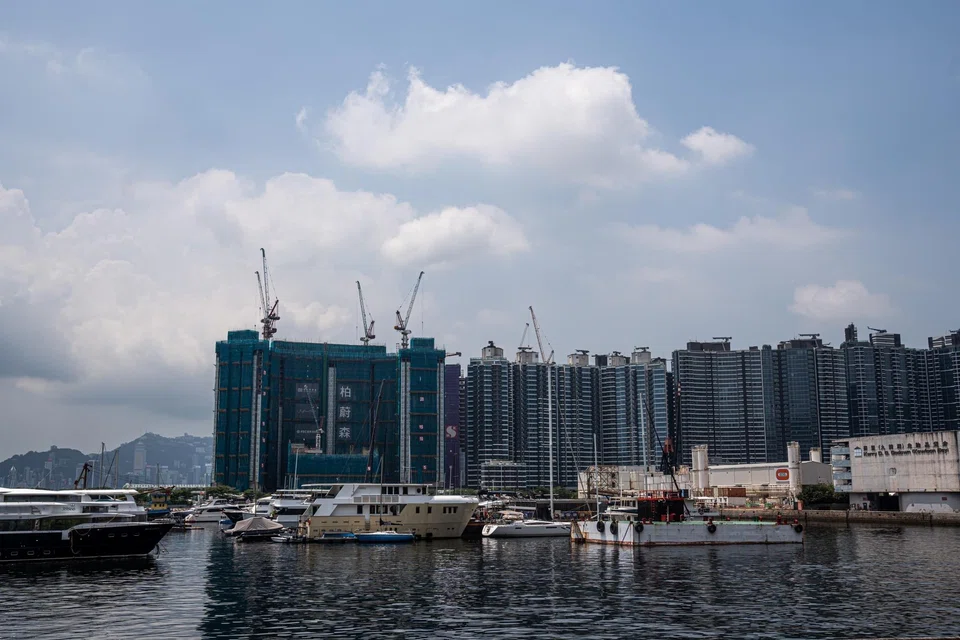
[HONG KONG] Chinese who spent more than ever on Hong Kong real estate in the first quarter of this year now face a hurdle to overcome as rules get stricter on wealthy people in the mainland taking cash overseas.
Homebuyers from the mainland spent around HK$43 billion (S$7 billion) in Hong Kong in the three months to March, a record haul for that period, Midland Realty data show. While for years they have been a key cohort, this time around they are buying into a broader swathe of property, including two-bedroom apartments and chunks of office blocks.
Last month’s shock move by China to rein in illegitimate cross-border funding channels threatens to curb that spending. Bloomberg Intelligence expects demand for higher-end homes could see a hit as the tougher enforcement of rules weighs on the ability of buyers to pay deposits that often require large down payments with cash.
“The negative impact would be more on sales of luxury homes,” said Patrick Wong, senior analyst at Bloomberg Intelligence. “For luxury units with a sizeable amount of lump sum, they may still need to move money out from mainland China to support their purchases.”
China in May curbed trading of overseas equities and vowed to ramp up controls for banks. While Chinese citizens moving money overseas are well versed in changes from regulators, there remains a US$50,000 limit per person on annual outflows.
At stake is the current broad nature of where the Chinese are buying property in Hong Kong. Highly educated and affluent Chinese, lured by Hong Kong’s low taxes and widened visa options, are driving a wave of immigration from the mainland to the former British colony. It’s spurring buoyancy in middle-class neighbourhoods, including Kai Tak and Wong Chuk Hang, as many newcomers prefer newly built property.
The median value of property purchased in Hong Kong by mainland Chinese was HK$6.95 million for the first four months this year, higher than the HK$5.43 million by locals, data from Midland show.
“They contribute to every kind of deal we do, from quick rentals to buying mass-market homes as well as luxury properties,” said Kenny Tsui, a manager at Centaline Property Agency in Hong Kong. “We barely have to speak Cantonese,” he said, referring to Hong Kong’s local language.
After taxes that target non-resident homebuyers were removed in 2024, mainland Chinese flooded into Hong Kong’s property market, driving their contribution to about one-third of overall purchases.



Demand from Chinese buyers is expected to endure, despite the new measures announced by Beijing for funds moving overseas, according to analysts. Together with renewed interest from locals, property prices will hit a fresh all-time high in the next two to three years, Jeff Yau, Hong Kong property analyst at DBS, forecasted.
The spending spree is fuelling a turnaround in Hong Kong’s residential market, where home prices fell for four years and developers faced a prolonged cash squeeze.
“This proportion will maintain in the future and mainlanders will continue to be a key buyer in the market,” said Yau.
The price divergence between Hong Kong and China also plays a role. The rebound in Hong Kong prices has underscored confidence for potential mainland buyers previously worried that weakness would persist for a long time, like in China, said Bloomberg Intelligence’s Wong.
Hong Kong residential values are up 10 per cent since last year’s trough. In contrast, China’s home prices are still on a yearslong decline since the downturn began in 2021.
The rebound is not solely the result of Chinese capital flowing in. Interest from local buyers has also revived and domestic residents dominate second-hand residential sales and make up the other half of new-build purchases.
Analysts expect a tapering home supply in the next few years to support prices. Estimated average annual home completion from 2026 to 2028 stands at around 14,450 units, compared to almost 18,000 units built every year over the past three decades, DBS data show.
Also attracting investors to the market is the positive rental carry, when the rental yield is higher than the mortgage rates.
Crucial support for Hong Kong’s struggling commercial property sector has come from Chinese firms. Top tech companies Alibaba and JD.com made two of the biggest office tower deals in Hong Kong in the past year, with the duo forking out a total of about US$1.4 billion.
Some large-scale Chinese companies in artificial intelligence, biomedicine and fintech industries are looking to buy commercial space in Hong Kong, said Charli Chan, deputy managing director of China capital markets at Cushman & Wakefield, who works with mainland clients. Drawn to Hong Kong’s international financial system, these firms are interested in buying entire towers in larger deals, she added.
The retail market is benefiting too. Mainland brands form part of the increasing leasing demand that has raised occupancy in the main shopping districts, according to Andy Kong, director of Midland Shop. Beverage stores, fashion brands and even brokerage firms from north of the border have been filling storefronts that had struggled for years.
Chinese brand W Management recently took over the flagship store formerly rented to Swedish label H&M in Causeway Bay, a popular shopping area.
Many of these Chinese brands see Hong Kong as a “stepping stone” for them before they expand further overseas, Kong added.
Luxury sector
The high-end market is where demand might suffer amid tighter scrutiny on cross-border flows. Chinese buyers made up more than half of the transactions valued at least HK$100 million in the first quarter, compared to about 40 per cent in 2025, according to data from Savills.
Clients who need to transfer money out of mainland China may find it harder to enter the Hong Kong market now, said Jack Tong, director of research and consultancy at Savills.
Still, many potential buyers of luxury homes in Hong Kong already have money parked offshore or businesses running outside of the mainland. Barring further tightening measures from the authorities, luxury residential sales and the contribution from Chinese buyers could still hit the highest level this year since the pandemic, estimates Tong.
“For those who have money here, they will still buy when they see properties they like,” said Tong. BLOOMBERG
Decoding Asia newsletter: your guide to navigating Asia in a new global order. Sign up here to get Decoding Asia newsletter. Delivered to your inbox. Free.
Share with us your feedback on BT's products and services
TRENDING NOW

DBS, OCBC, UOB rout lops billions off STI as inflation, rate concerns spook investors

Grab CEO’s wife Chloe Tong on life with Anthony Tan and finding her purpose

OCBC sheds S$8 billion in value as shares close nearly 6% down; analysts cautious on banks

Deal between tycoon friends sparks scrutiny of Philippine power sector

