



China targets offshore billions in biggest crackdown in decades
Officials have cracked down on trust structures favoured by the Asian nation’s ultra-wealthy
IT STARTED with a tax bill.
Tom, a Beijing-based tech executive, had for years been trading overseas stocks without any backlash from local authorities. Chinese citizens buying and selling shares in foreign markets is officially illegal – besides a few permitted routes – but it’s also widespread.
For many, the government’s inaction in closing loopholes for so long made it seem like these trades were within the spirit, if not the letter of the law.
The first warning sign was when Chinese tax officials hit Tom with a 100,000 yuan (S$18,824) bill for his gains on overseas stock trading. Soon after, regulators went much further: shutting down the very channels that allowed him and hundreds of thousands of others to trade abroad in the first place.
China has launched the biggest shake-up of its cross-border tax system in decades, threatening three popular brokers with at least US$330 million of penalties, vowing stricter controls for banks and quietly ramping up pressure on the country’s richest people and the vehicles they use to hold overseas assets.
The shift has ramifications for everything from Hong Kong’s stock market – buttressed by demand from mainland China – to the hordes of law firms, financial advisers and investment funds that help Chinese citizens manage their money overseas.
Officials have cracked down on trust structures favoured by China’s ultra-wealthy. They have pushed back against so-called red-chip listings, which Chinese companies use to raise money overseas without direct oversight of local tax officials. They have effectively hiked taxes on private equity and venture capital firms backed by foreign investors.
The biggest jolt came last week when authorities moved against Futu Holdings, Up Fintech Holding-owned Tiger Brokers and Long Bridge Securities for allegedly operating on the mainland without a license. Regulators vowed to confiscate all “illegal gains” from their domestic and overseas entities. The shares of Futu and Up Fintech plunged, fuelling a sell-off in other Chinese firms listed in the US.
Futu and Up Fintech said in public statements that they would cooperate with authorities. In response to questions from Bloomberg News, Long Bridge said that it would comply with regulatory requirements and implement all so-called rectification measures.




Citic Securities estimates the clampdown could affect as much as HK$250 billion (S$41 billion) of assets in Hong Kong, with up to HK$180 billion of those assets at Futu alone. Futu has also become a player in Hong Kong’s initial public offering market, where it has worked on more deals than any other firm this year, according to data compiled by Bloomberg.
The regulatory moves are already sending a chill through Hong Kong’s banking community, where firms with heavy exposure to mainland clients are tightening their checks and weighing up what steps they need to take to avoid falling foul of Beijing.
“Servicing wealthy Chinese clients offshore is now a much more complex and higher-risk business,” said Christopher Marquis, a professor of Chinese management at the University of Cambridge. “Those actively working with wealthy Chinese will worry they could be the next Tiger Brokers, Futu or Long Bridge.”
China’s State Taxation Administration did not respond to a request for comment.
Cat and mouse
Chinese citizens moving money overseas have for years played a game of cat and mouse with regulators. The official limit on annual outflows is US$50,000 per person, but citizens have used underground banks, cryptocurrencies and even fake imports to transfer more.
For years, Beijing has been tightening its grip on these outflows. In late May, Chinese officials took their boldest step yet.
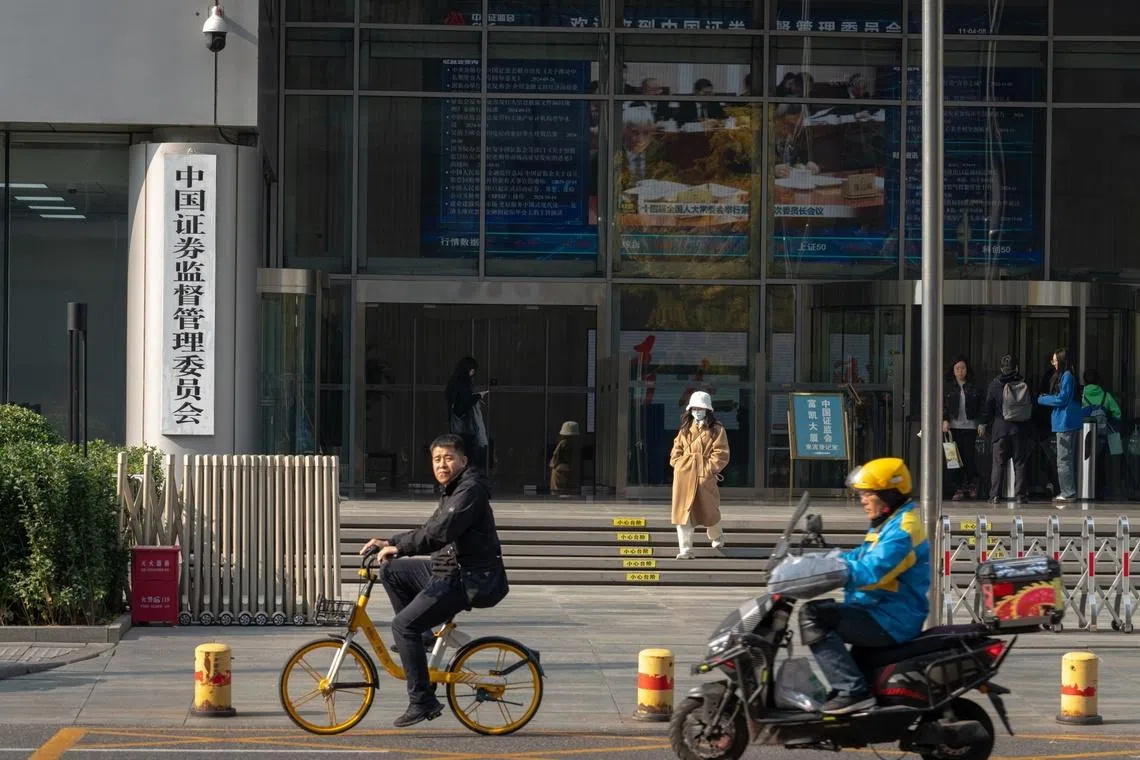
The China Securities Regulatory Commission, the People’s Bank of China, the Ministry of Public Security and five other government bodies issued a joint plan pledging to dismantle unauthorised offshore investment services that target mainland investors. They warned that banks would face close scrutiny, and firms providing accounts for cross-border investors would have to toughen up their compliance.
Around ten minutes after the joint statement, regulators announced the action against Futu, Up Fintech and Long Bridge – wiping out more than a quarter of Futu and Up Fintech’s market value in a single day of trading. (Long Bridge is not listed.) Hong Kong officials soon followed, saying they would toughen rules on accounts for mainland Chinese investors, flagging money laundering risks.
“Most of my peers, like the vast majority of clients, were completely unprepared for this news,” said Hongtao Sun, a partner at Enpact (Japan) Family Office, adding that many of his rivals had been downplaying the risk of a clampdown in order to keep business flowing.
Still, the warning signs had been flashing. The public crackdown followed a series of behind-the-scenes moves within China’s borders, where tax officials have become increasingly aggressive as they attempt to extract more revenues from the country’s wealthy.
In Beijing, Shanghai and Guangzhou, individuals have been told that investigations into their taxes could look back at least to 2018, sources familiar said, requesting not to be named because the matter is private.
The individuals being targeted are usually rich, often having more than US$30 million in their accounts, the sources said. They are typically people of Chinese origin who obtained foreign passports but later returned to live in China. Some of them used offshore trust structures to manage their wealth.
Those contacted are facing levies of up to 20 per cent on investment gains, along with potential penalties for overdue payments, the sources said. The final amounts are sometimes negotiable, they added.
There have been no official circulars on the matter but only private negotiations between the individuals and local tax officials, the sources added. The tax officials have ramped up the pressure, in some extreme cases, threatening to involve the police.
Property pain
This sweeping tax drive comes at a critical moment for Chinese officials.
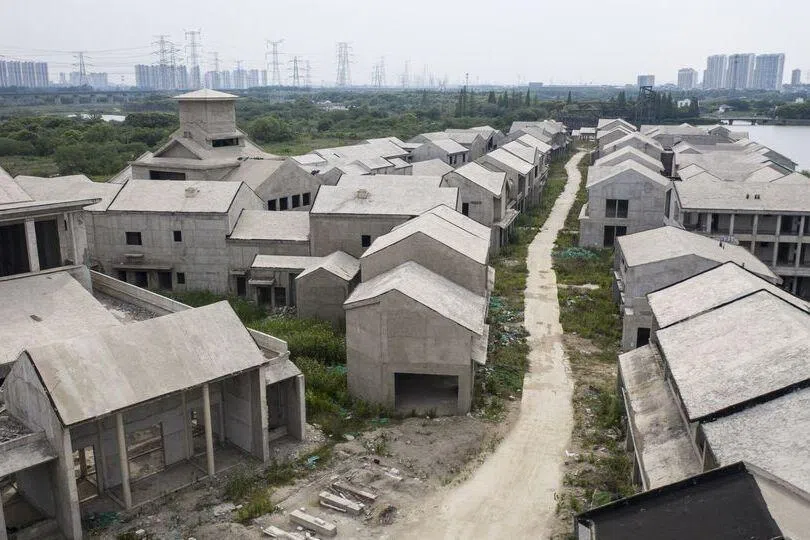
For years, local governments could rely on land sales as a major source of revenue, reducing their reliance on handouts from Beijing. But property-related revenues for local governments plunged 48 per cent over the five years till 2025, and officials have been forced to search for new sources of funding.
There is an irony to Chinese officials trying to find ways to tax foreign assets to make up for the real estate slump: The property crunch has itself been a major reason why China’s rich want to shift their money overseas, given the broader damage it has done to confidence in the economy.
“Many friends of mine are trying to open offshore accounts and invest in US stocks,” said Luis, a consulting firm employee in Shanghai, who said that he has traded through both Futu and Long Bridge. “What can someone like me do in China? Buy a home and get 30 years of mortgage prison while home prices are plunging?”
Home prices in the country are down around a third from their peak levels in 2021, according to data from real estate agency Centaline Group. Some Wall Street analysts think the end of the slump is in sight, but the data still paints a bleak picture: The closest thing to good news is prices falling at a slower rate, rather than moving higher.
Chinese households, institutions and companies moved roughly US$807 billion out of the country last year, the highest on record, according to estimates from the Institute of International Finance.
Chinese officials have made major progress in increasing the tax base. China’s personal income tax revenue jumped 11.5 per cent from 2024 to a record 1.6 trillion yuan last year, official data shows. But this has not been enough to make up the shortfall – and regulators have expanded their tax push to funds, trusts and other entities long favoured by China’s mega-rich.
Authorities asked some offshore trust beneficiaries to detail information on their assets, including dividend income and profits from share disposals, sources familiar have said.
They have also started imposing higher taxes on overseas investors in China’s Qualified Foreign Limited Partnerships (QFLP), a popular fund structure that allows foreigners to buy onshore assets. No new law has been formally enacted. Instead, local tax authorities have quietly started to reinterpret existing tax laws.
Historically, foreign investors exiting deals through QFLP structures typically paid about a 10 per cent withholding tax on capital gains, a relatively low and straightforward regime. Under the new approach, those same profits can now be taxed at 25 per cent corporate income tax, more than double the headline rate, according to law firm DLA Piper.
In some cases, the shift is being applied retrospectively. Foreign investors are being asked to revisit prior years’ filings under the new interpretation, raising the prospect of significant back taxes and compliance risks.
Tighter rules
The long-term fallout from China’s sweeping tax crackdown will depend in part on how the nation’s wealthiest citizens respond. Private bankers and lawyers offering estate planning and tax advice may enjoy a boom period – as long as they can figure out a way to soften the blow.
But a degree of pain is inevitable. Some banks in Hong Kong have already moved to tighten their scrutiny of mainland clients opening savings and investment accounts in the city, placing a drag on one of their biggest client bases.
Major Chinese lenders have suspended the opening of investment and wealth management accounts for mainland residents, sources familiar said. Banks also raised the threshold for mainland applicants seeking savings accounts and tightened due diligence requirements, the sources added.
Hong Kong’s biggest banks have for years profited from their ability to attract Chinese money. BOC Hong Kong Holdings reported a 21 per cent surge in high-end cross-border customers in 2025. HSBC Holdings saw a roughly 30 per cent increase in Hong Kong customers since January 2023, with two-thirds identifying as non-resident HSBC One customers.
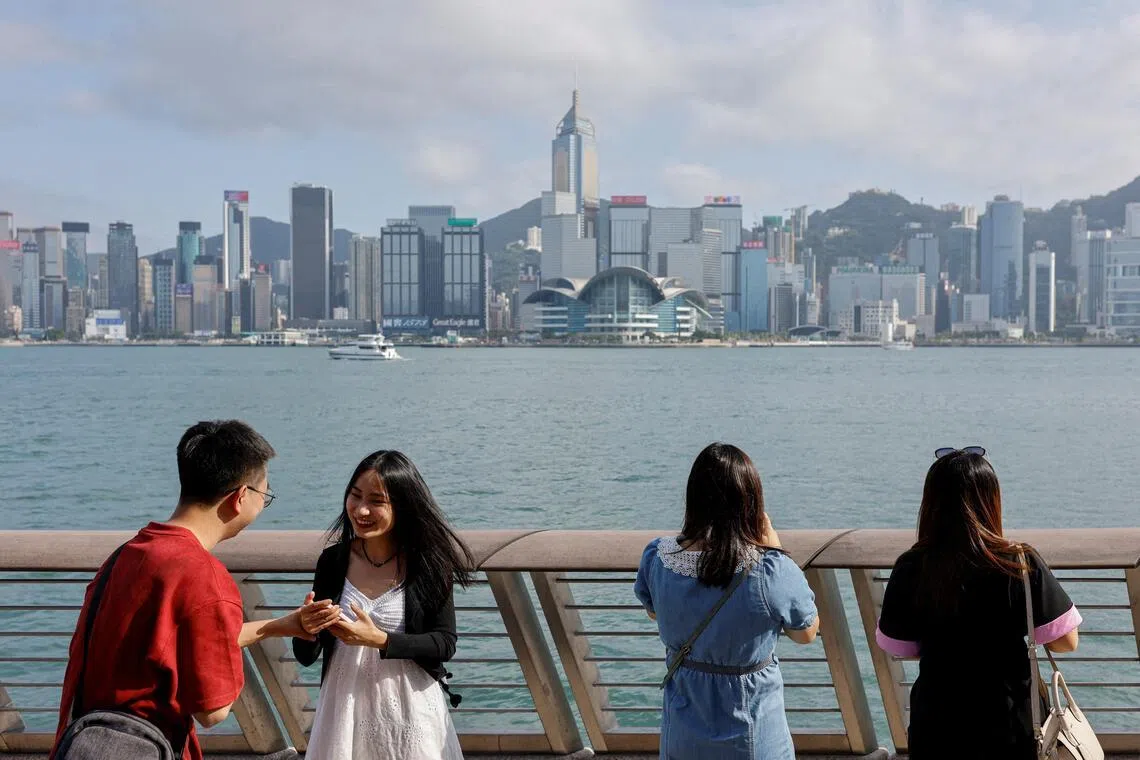
Hong Kong’s appeal to mainland Chinese citizens has long been a trump card in its attempts to attract the mega-rich. The city has narrowly overtaken Switzerland to become the world’s largest cross-border wealth hub, according to a recent report by Boston Consulting Group.
The moves also reduce the already limited channels for mainland Chinese investors to buy overseas shares. Those with at least 500,000 yuan in their local brokerage accounts can buy Hong Kong-listed companies through the Stock Connect programme. But to get exposure to other bourses, they purchase funds that participate in the so-called Qualified Domestic Institutional Investor programme.
That programme is capped at a quota of US$176 billion, a fraction of the country’s US$25 trillion of household savings.
Chinese investors have been particularly attracted to the US stock market, where tech stocks – including a few national champions from China itself – have soared amid excitement about artificial intelligence.
For many Chinese, though, the potential returns are no longer worth it.
Zhuang, a wealthy Chinese investor, said that he has doubled his money in the past year trading US stocks. But he is no longer willing to risk the ire of his country’s regulators. Zhuang has moved to dissolve his positions. He will put his money into China’s domestic A-share market instead. BLOOMBERG
Decoding Asia newsletter: your guide to navigating Asia in a new global order. Sign up here to get Decoding Asia newsletter. Delivered to your inbox. Free.
Share with us your feedback on BT's products and services
TRENDING NOW

DBS, OCBC, UOB rout lops billions off STI as inflation, rate concerns spook investors

Grab CEO’s wife Chloe Tong on life with Anthony Tan and finding her purpose

OCBC sheds S$8 billion in value as shares close nearly 6% down; analysts cautious on banks

Deal between tycoon friends sparks scrutiny of Philippine power sector

