

Higher mortgage rates depress US single-family housing starts, building permits

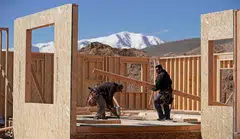
US SINGLE-FAMILY homebuilding tumbled to a two-and-a-half-year low in November, and permits for future construction plunged as higher mortgage rates continued to depress housing market activity.
The dour report from the Commerce Department on Tuesday (Dec 20) followed on the heels of news on Monday that confidence among homebuilders plummeted for a record 12th month in December.
It put residential investment on track to contract for the seventh consecutive quarter, which would be the longest such stretch since the collapse of the housing bubble triggered the Great Recession. The housing market has borne the brunt of the Federal Reserve’s fastest interest rate-hiking cycle since the 1980s as the US central bank wages war against inflation.
“The Fed’s rate hikes are doing what they are supposed to, further deepening the recession in the residential housing construction markets,” said Christopher Rupkey, chief economist at FWDBonds in New York. “There’s nowhere for homebuilders to hide. We don’t know about the rest of the economy, but the housing market is clearly in recession.”
Single-family housing starts, which account for the biggest share of homebuilding, dropped 4.1 per cent to a seasonally adjusted annual rate of 828,000 units last month. That was the lowest level since May 2020, when the economy was reeling from the first wave of the Covid-19 pandemic.
Outside the pandemic plunge, single-family starts are the weakest since February 2019. Single-family homebuilding decreased in the south and mid-west, generally considered as the more affordable regions of the US. It increased in the north-east and west.
Starts for housing projects with five units or more surged 4.8 per cent to a rate of 584,000 units, the highest level since April.
Multi-family housing construction is being driven by strong demand for rental accommodation as the higher mortgage rates force many potential homebuyers to remain renters.
The 30-year fixed mortgage rate surged to above 7 per cent a few months ago, the highest since 2002, according to data from mortgage finance agency Freddie Mac. Though the rate has since retreated to an average of 6.31 per cent last week, it is double what it was that time a year ago.
Rates could start pushing higher after the Fed last week signalled additional rate increases by the end of 2023, sending Treasury yields soaring. Mortgage rates move in tandem with Treasury yields.
Stocks on Wall Street were trading higher. The dollar fell against a basket of currencies after the Bank of Japan stunned markets by deciding to review its yield curve control policy and widen the trading band for the 10-year government bond yield. US Treasury yields rose.
Sinking confidence
Data on Monday showed confidence among single-family homebuilders sinking further in November, pushing the National Association of Home Builders (NAHB)/Wells Fargo housing market index to the lowest level since June 2012, excluding the tumble during the early days of the pandemic in the spring of 2020.
The jump in multi-family housing projects offset some of the drag from single-family housing units, resulting in overall housing starts falling only 0.5 per cent to a rate of 1.427 million units last month. Economists polled by Reuters had forecast starts would slide to a rate of 1.4 million units.
The Fed is seeking to slow inflation by bringing down demand for everything from housing to labour. The labour market has remained tight, but economists expect it to start loosening and eventually weaken next year, driven by the housing market.
The housing market has contracted for six straight quarters. Residential investment is expected to cut off as much as 0.7 percentage point from gross domestic product this quarter.
Growth estimates for the fourth quarter are as high as a 2.8 per cent annualised rate. The economy grew at a 2.9 per cent pace in the third quarter.
“Housing will play a major role in the coming slowdown in the job market,” said Gus Faucher, chief economist at PNC Financial in Pittsburgh, Pennsylvania. “Employment in residential construction, after rebounding quickly from the pandemic, has essentially been flat over the past half year.”
The single-family housing market boomed early in the pandemic as Americans sought bigger properties to accommodate home offices. The pendulum has now swung in favour of apartments.
But multi-family housing is starting to show some cracks. Permits for housing projects with five units or more dropped 17.9 per cent to a rate of 509,000 units, the lowest level since May 2021. Single-family building permits plunged 7.1 per cent to a rate of 781,000 units, the lowest level since May 2020.
Overall, permits for future home construction plunged 11.2 per cent to a rate of 1.342 million units last month, the lowest level since June 2020.
The number of houses approved for construction that are yet to be started fell 2 per cent to 293,000 units. The single-family homebuilding backlog decreased 3.4 per cent to 143,000 units, but the completions rate for this segment increased 9.5 per cent to a rate of 1.047 million units.
The inventory of single-family housing under construction fell 1.3 per cent to a rate of 777,000 million units, the lowest level since December 2021.
The combination of higher mortgage rates, declining single-family homebuilding and inventory could worsen an existing housing shortage and slow the pace of house price decreases, posing a conundrum for the Fed.
“The limited available inventory fuelled by both existing homeowners and homebuilders will keep the market tight, price declines minimal, and competition for desirable homes alive,” said Nicole Bachaud, an economist at Zillow in Seattle. REUTERS
Decoding Asia newsletter: your guide to navigating Asia in a new global order. Sign up here to get Decoding Asia newsletter. Delivered to your inbox. Free.
Share with us your feedback on BT's products and services
TRENDING NOW

Government to bring forward raising of retirement age, give employers more financial support to create flexi-load jobs

If Europe goes to war, the fallout will be felt in East Asia

Former minister Maliki Osman, Revolut chairman join Asia Gulf Holdings advisory board

Small nuclear reactors could boost the Asean Power Grid: GE Vernova executive

