

Housing affordability or a premium for good housing?
The rising prices of both public and private housing beg the question: are Singapore homes truly expensive, or are property seekers looking for more than basic housing needs?
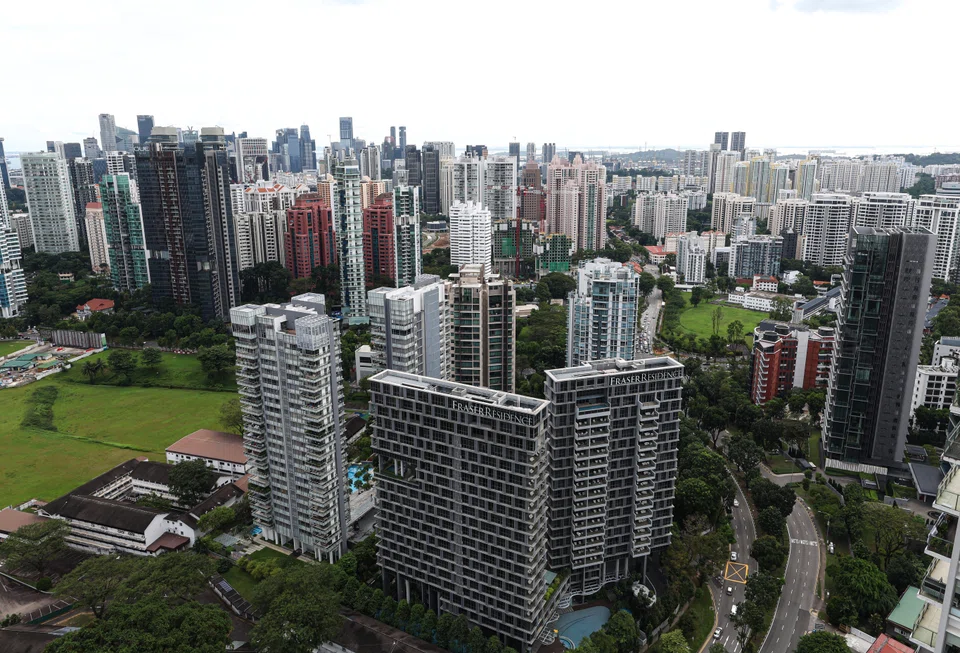
DESPITE a high homeownership rate and robust economic growth, Singapore is not immune to the global challenge of housing affordability.
According to a recent report by the Urban Land Institute (ULI), Singapore’s private homes have surpassed Hong Kong to become the region’s most expensive, boasting a median price of US$1.2 million. The affordability ratio stands at 13.7, firmly positioning Singapore’s private homes within the “unaffordable” range. Similarly, Singapore leads the region in rental costs with a median monthly rent of US$2,600.
Interestingly, Singapore has also earned the title of “most attainable” in ULI’s 2023 Asia Pacific Home Attainability Index, largely due to the affordability of public housing.
While the emerging dichotomy between private and public housing prices may indicate a widening socio-economic gap, it could also mean that more grants and subsidies are continuously needed to sustain housing affordability for the masses.
Housing prices have defied expectations amidst an uncertain global climate and escalating interest rates. Despite the pandemic and rising geopolitical tensions, Housing and Development Board resale flats saw a 32 per cent price increase from Q1 2020 to Q1 2023, while private home prices rose about 28 per cent during the same period, as indicated by the URA Property Price Index of Residential Properties.
The expatriate community has also been affected, with private rentals surging by 50.3 per cent since Q1 2020 according to the Rental Index of Private Sector Residential Properties.
These rising prices beg the question: are Singapore homes truly expensive, or are property seekers looking for more than basic housing needs? This inquiry reminds us that housing affordability encompasses more than just price. Economic opportunity, social aspirations, and social mobility are integral components of the affordability equation.
The traditional price-over-income ratio may not capture the full narrative of housing affordability. Professors Joseph Gyourko and Todd Sinai of the Wharton School at the University of Pennsylvania, and Professor Christopher Mayer from Columbia Business School and the National Bureau of Economic Research, propose a new concept: the “Superstar City” - a city with unique characteristics that make it an attractive place to live.
Could Singapore’s high price-over-income ratio not be a symbol of inaccessibility, but instead a testament to its status as a “Superstar City”? Singapore has proven its resilience, swiftly rebounding from the pandemic under pragmatic leadership. The city continues to draw global talents and high-net-worth individuals, signifying robust faith in our economy.
SEE ALSO
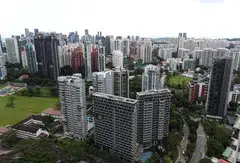
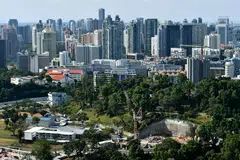
Ultimately, is Singapore’s high housing cost a sign of affordability issues, or an endorsement of our thriving city-state? It could be argued that the housing price tag is a reflection of our city’s undeniable charm and remarkable resilience.
While Singapore’s allure to foreign talent undoubtedly contributes to its property demand, it is not the sole driving factor behind the price increases observed in recent years. Data from Realis shows that foreign home purchases represented just 3-5.5 per cent of the market annually from 2016 to 2023 year-to-date.
While this international demand can instigate housing booms, as observed from 2009 to 2012, it is local demand that has been the primary price catalyst in recent times. Transactions from Jan 1 to May 23, 2023 indicate that Singaporeans made up about 76 per cent of purchases.
Domestic demand and inter-generational wealth transfer
One might wonder, given the high prices commanded by private housing, particularly new launches, how can many Singaporeans afford such homes?
It’s notable that buyers are purchasing homes with relatively high quantum, after removing the outliers. For instance, Blossoms by the Park sold 209 units from the launch weekend to May 23 at an average transacted price of S$2.02 million.
The Reserve Residences sold 520 units of the 635 units released at an average price of S$2,460 per sq ft. It was further reported those aged between 31 and 40 made up 41 per cent of all buyers, while those between 21 and 30 years of age comprised 22 per cent of buyers. The buyers’ age group seems surprising as ULI indicates property seekers earning the median income would have to save more than 13.7 years without spending to purchase a private home.
While conventional markers, such as income and GDP, serve as traditional tools to help evaluate market fundamentals and affordability, the wealth transfer phenomenon from older to younger generations often goes unnoticed.
The baby boomer generation, born between 1947 and 1964, has experienced a prosperous property market and robust economy, accumulating significant wealth over time. With approximately 959,000 citizens aged between 55 and 74, representing about 27 per cent of Singapore’s population as of 2022, the wealth transfer to their fewer offspring presents an intriguing dynamic.
As we gaze into the future of housing affordability, it’s essential to adopt a fresh perspective, focusing our efforts on those who need the most support. With the 2023 budget announcement and cooling measures, the government has signalled its intent to assist young, first-time homebuyers, whilst attempting to curb interest from investors, second-home buyers, and foreign purchasers.
Nonetheless, the government is faced with a challenging balancing act: managing affordability whilst acknowledging the investment interests of mid-to-high income Singaporeans. These individuals are likely searching for a stable long-term investment for retirement, especially given the current volatility of equity markets.
While dampening investment motivations can mitigate the potential fallout from a potential recession and prevent the income gap from widening, it could push this group towards riskier asset classes amid current economic conditions.
Constraining investment interest in homes will not precipitate price correction unless the economy undergoes significant contraction. The housing market is currently buttressed by the inter-generational transfer of wealth and the desire to upgrade homes.
Would it be advantageous, then, to dissuade housing upgrades or wealth transfers to maintain affordability? A move in this direction could render wealthy investors more transient and the removal of the housing upgrade pathway might leave high-achieving individuals’ aspirations unfulfilled.
So, how do we strike a delicate balance between preserving Singapore’s competitiveness and ensuring Singaporeans have access to quality homes?
Before implementing any radical interventions, careful deliberation is crucial. The potential costs must be calculated and implications accurately modelled, as any miscalculations could lead to unintended consequences. It is with this careful consideration and strategic planning that we can continue to navigate the ever-evolving landscape of housing affordability in Singapore.
The writer is head of real estate intelligence, data and software solutions, PropertyGuru
Decoding Asia newsletter: your guide to navigating Asia in a new global order. Sign up here to get Decoding Asia newsletter. Delivered to your inbox. Free.
Share with us your feedback on BT's products and services
TRENDING NOW
Far East Organization’s The Serra Residences sells less than a quarter of units released at average S$3,460 psf

Philippine power giant First Gen rebuffs foreign offers, plans up to US$2.6 billion in expansion

Once staunchly pro-China, Malaysian Chinese businesses are now distancing themselves from Beijing

Is stagflation returning? That mostly depends on the Iran war

