

Kallang Distripark set to be redeveloped for thousands of new private homes
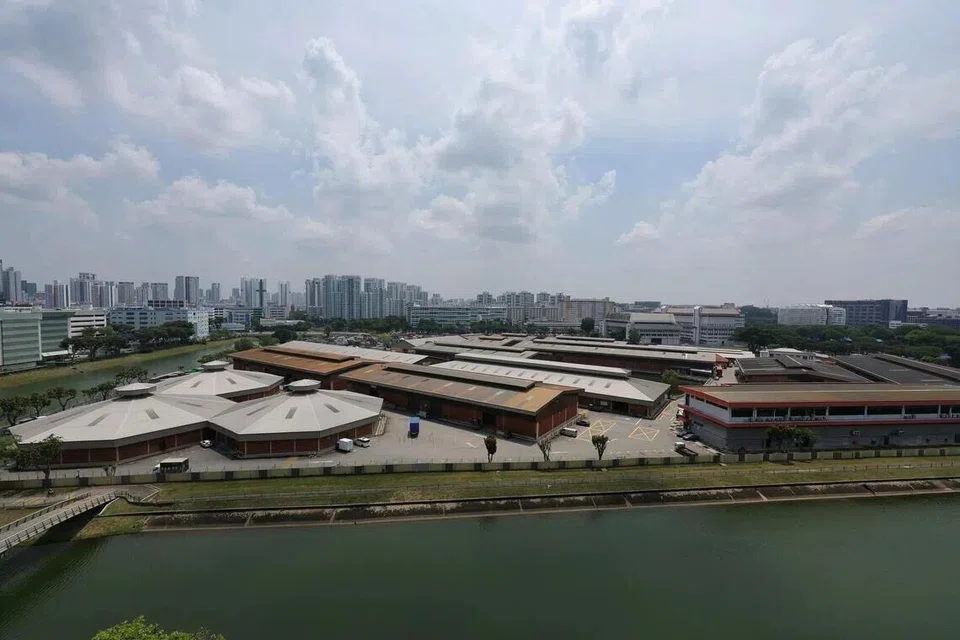
[SINGAPORE] Kallang Distripark, a privately-owned disused rubber factory converted into a warehouse site, is being prepared to be redeveloped for private housing.
The Urban Redevelopment Authority (URA) on Aug 14 published a proposed amendment to its Master Plan, which involved carving up the site into several housing plots and a new neighbourhood park, as well as introducing new roads.
Responding to queries from The Straits Times on Aug 17, a URA spokesperson said the proposed amendments are to facilitate a private development proposal that the agency had received.
Checks by The Straits Times show that the 13ha site – which has been zoned for housing since as early as 2003 – is currently owned by entities that are associated with Lee Rubber Company, whose founder was Chinese entrepreneur and philanthropist Lee Kong Chian.
A portion of the site is freehold, while the rest of it is on a 99-year lease that expires in 2067. Attempts to reach Lee Rubber Company for comment were unsuccessful.
The site includes three iconic octagonal buildings known as the Lee Rubber Godowns – rubber warehouses designed by the late pioneer architect Victor Chew of Kumpulan Akitek.
The URA spokesperson said that it has engaged the owner on the potential to retain one of the warehouses as a heritage marker within the proposed future park, adding that studies on this proposal are ongoing.
“Where physical retention is not possible, agencies will work with the owner and relevant stakeholders to document and commemorate the history of the place through heritage interpretation initiatives, such as digital documentation or storyboards,” said the spokesperson.
Three housing plots will be introduced at the site under proposed plans.
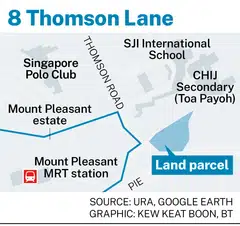
Two are meant purely for residential use. The larger one, located adjacent to Kallang Bahru, is about 3.6ha in size and sits largely on freehold land. Property analysts estimate that this site can yield about 1,200 condominium units.
The other residential plot, which abuts Pelton Canal, is about 1.6ha in size and also largely freehold. At least 450 to 550 condo units can be built on the site, according to analysts.
The proposed zoning for the third housing plot, which is about 2.4ha in size and on leasehold land, includes commercial use on the first storey. Analysts estimate that it can contain about 600 to 800 condo units.
The rest of the site includes a 2ha park, new roads to facilitate access to the planned housing developments, as well as a 1.8ha reserve site for which a specific use has yet to be determined.
Kallang Distripark was among several upcoming neighbourhoods along the waterfront that were showcased in URA’s latest masterplan, which was gazetted in 2025.
Eugene Lim, key executive officer of ERA Singapore, said that in addition to the site being on the waterfront, its central location and nearby amenities such as Geylang Bahru MRT station and Geylang Bahru Market and Food Centre, mean the upcoming homes will likely draw high demand.
Christine Sun, chief researcher and strategist at Realion Group, which comprises property firms OrangeTee and ETC, said the planned redevelopment of the industrial site can help inject new vibrancy into the area.
Apart from the upcoming Kallang View Housing Board project, which is under construction, other flats nearby in Kallang Bahru and Geylang Bahru were largely completed in the 1970s.
Meanwhile, the neighbouring 6ha Geylang Bahru Industrial Estate – located next to Geylang Bahru MRT station – is also zoned for housing. It is on a 99-year lease that expires in the mid-2070s.
Nicholas Mak, chief research officer at Mogul.sg, noted that the plot of land that has been earmarked for the park is the most valuable in Kallang Distripark, as it is where two streams converge, and will command good waterfront views.
Veteran architect Hoong Bee Lok, whose bachelor’s thesis in 1981 was centred on the pioneer architect Chew’s work, suggested that if any of the octagonal warehouses were retained, they could be used for sports, such as sheltered courts for racket games.
Hoong said that based on his interview with Chew, the latter had designed the octagon-shaped warehouses to be modular, such that new warehouses could easily be added to the site.
Wee Chwee Heng, who was a founding partner of Kumpulan Akitek alongside Chew and Hisham Albakri, said the multi-sided building allowed for possible access from multiple points, which accommodated the flexibility required of a rubber warehouse with shipments coming and going.
Wee said that while he cannot recall the warehouses’ exact completion date, they were likely among the first projects taken on by Kumpulan Akitek, which was founded in 1958.
Hoong added that Chew’s modular vision for the warehouses – which continue to be in use today – demonstrated how he was creative and “ahead of his time”, by designing buildings that could simply be joined to each other.
Plans to redevelop Kallang Distripark for housing were showcased by the URA in 2017, as part of an exhibition on turning areas along the 10km-long Kallang River into a lifestyle hub. THE STRAITS TIMES
Decoding Asia newsletter: your guide to navigating Asia in a new global order. Sign up here to get Decoding Asia newsletter. Delivered to your inbox. Free.
Share with us your feedback on BT's products and services
TRENDING NOW

Grab CEO’s wife Chloe Tong on life with Anthony Tan and finding her purpose

Hwa Seng Builder, two China companies win S$1.2 billion Tuas Road Viaduct phase two contracts

Deal between tycoon friends sparks scrutiny of Philippine power sector

Canada is upping oil flows to Asia, but South-east Asia’s refineries aren’t ready to handle them yet

