Lifting of wait-out period unlikely to trigger price surge in HDB resale market: NUS survey
Some 82% of property players expect prices to ease or see a ‘modest’ recovery

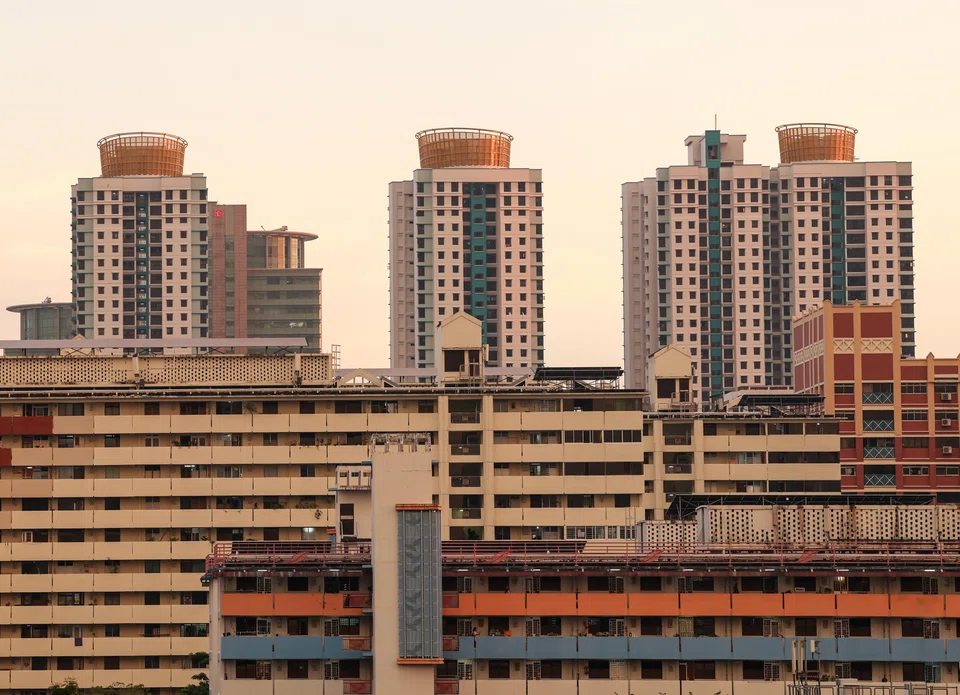
[SINGAPORE] Market watchers do not expect HDB resale prices to surge after the government recently removed a 15-month wait-out period for private property downgraders.
In a survey by the National University of Singapore’s Institute of Real Estate and Urban Studies (Ireus), 41 per cent of respondents said they expect prices to moderate or even soften in the coming months, as a substantial supply of flats reach their minimum occupation period.
One respondent predicted that the higher monthly income ceiling for Build-To-Order (BTO) flats and new executive condominiums (ECs) could divert buyers away from the resale market, bringing prices down.
Another 41 per cent believe the market might make a “modest” recovery, as returning private homeowners “inject fresh demand” and offset the past two quarters of price declines. This could translate into price growth of less than 1 per cent per quarter in 2026.
The survey comes after a series of housing policy changes in recent months.
In July, authorities lifted the 15-month wait-out period for private property owners looking to buy a resale flat, having assessed that the cooling measure had met its purpose of moderating demand and easing price growth.
The following month, the government raised the monthly income ceiling for BTO flats to S$16,000 for families and S$8,000 for singles, up from S$14,000 and S$7,000, respectively. For ECs, the income ceiling increased to S$18,000, from S$16,000.
Ireus polled real estate industry senior executives on the impact of these changes on the housing market. Respondents include developers, consultants, financial institutions, professional firms and service providers.
The removal of the 15-month wait-out period, in particular, is set to expand Singapore’s pool of homebuyers in the HDB resale market over the near term, said Professor Qian Wenlan, Ireus director. “Prices may therefore fluctuate as demand returns.”
Of the three market segments, property players expect the Outside Central Region (OCR), or suburbs, to experience the strongest price and volume growth from transitioning private homeowners.
Some 55 per cent of respondents believe demand will spread evenly across four and five-room flats in the suburbs, as “buyers prioritise unlocking cash proceeds from their private properties over larger HDB unit sizes or central locations”.
Meanwhile, nearly a quarter expect demand to be concentrated in larger, legacy units, such as executive apartments, maisonettes and jumbo flats. This could boost sales volumes of million-dollar HDB resale flats, they said.
“Reasonably priced suburban flats offer the most efficient pathway for households to free up private capital for other life-cycle priorities,” Prof Qian explained.
“However, there is also a distinct segment of the market willing to channel substantial sales proceeds towards high-end flats with ample living space or prime locations.”
Private spillover
Industry insiders also expect the removal of the wait-out period to affect the private market, especially resale supply and rental demand.
While private homeowners will no longer need to secure 15 months of interim accommodation, they must sell their private property within six months of completing their HDB resale flat purchase.
Around 40 per cent of respondents therefore expect private resale listings to rise, while nearly 23 per cent predict a drop in interim rental demand, which could moderate rents in mass-market condos and suburban flats.
Still, just over a third project minimal fallout in the secondary market, since most downgraders will sell their private properties before committing to an HDB purchase.
Meanwhile, the primary market is expected to hold steady.
More than half of the respondents surveyed said new launches cater to distinct buyer demographics, allowing developers to “maintain their planned launch pricing sales targets without direct competition from resale right-sizers”.
Another 30 per cent noted that right-sizers will gain from substantial home equity, giving developers “a window of opportunity to capture this recycled capital through competitively priced entry-level projects”.
“On the whole, survey findings lean heavily towards a restoration of market equilibrium rather than market distortion,” said Prof Qian.
“With private right-sizers dispersing primarily into suburban heartlands and new launch pricing remaining insulated, the lifting of the wait-out rule is anticipated to reinforce market stability and return the HDB resale segment to sound economic fundamentals.”