Millionaire magnet Cape Town faces short supply of luxury homes
Property prices in the picturesque coastal city get ‘uncomfortably high’ amid rising competition
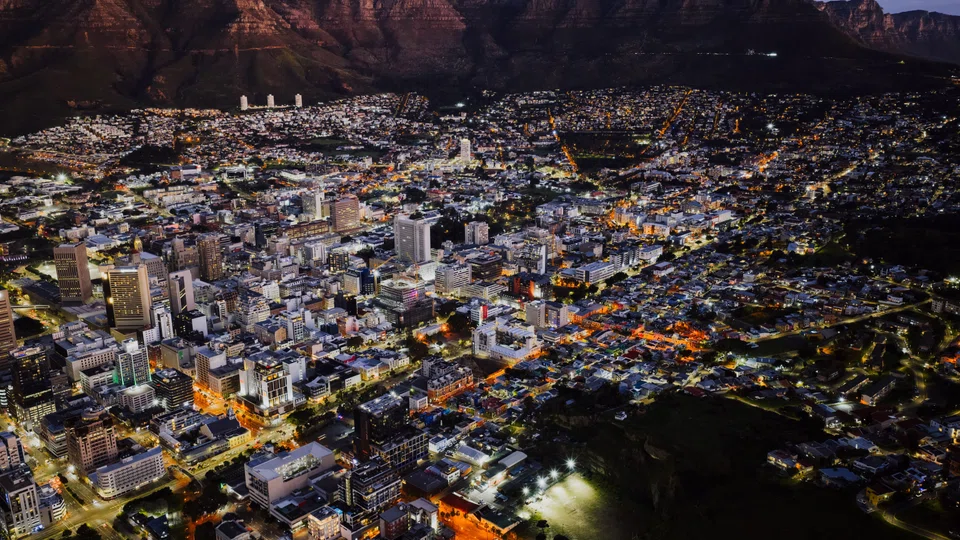
[CAPE TOWN] In Cape Town, the rich and the less well-off share something in common: both are struggling to find homes, albeit for very different reasons.
An influx of millionaires has intensified competition for the picturesque coastal city’s limited supply of luxury properties, pushing prices higher in one of Africa’s most expensive real estate markets.
Meanwhile, a growing population and a shortage of affordable housing are putting pressure on ordinary residents – a hot-button issue for voters in municipal polls scheduled for Wednesday (Nov 4).
Cape Town’s stature as a magnet for the rich and famous has been growing, with celebrities snapping up multimillion-dollar homes and developers racing to build upscale branded residences.
Foreigners accounted for about three quarters of the priciest homes registered to new owners in the first half of 2026, while high-end property values are forecast to grow faster than in cities including Singapore and Barcelona in the second half.
But the influx of wealth is sharpening a longstanding divide.

Cape Town is an employment hub, attracting migrants from across the country and beyond. Its population has jumped by almost 80 per cent to nearly five million since the turn of the millennium, intensifying pressure on housing resources.
That is adding to racial segregation in the city, a legacy of South Africa’s apartheid history that forced people of colour to live on the outskirts, far from jobs and basic services.
Staggering sums
The city, at the southwestern tip of Africa, has long been one of the continent’s most expensive real estate markets. It is a popular base for the rich, drawn to its natural beauty, climate and lifestyle.
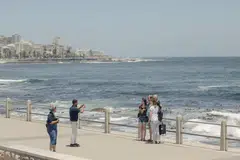
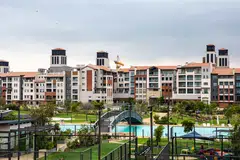
Property prices have surged about 190 per cent on average since 2010, far outpacing the country’s other metropolitan areas, based on index value data reported by Statistics South Africa.
The sums at the top end are staggering. Some units at Marriott International’s most luxurious hotel on the continent are advertised for as much 160 million rand (US$9.6 million), which would be a new public record for an apartment if achieved.
“Some houses are now selling at prices that, for me, as the broker, are uncomfortably high,” said Lance Cohen, who runs Lance Real Estate. “I’m telling people ‘you’re paying too much’ but what’s expensive today might look cheap tomorrow.”
But high-end property sales are becoming increasingly rare, and a growing share of homes now change hands through discreet private deals.
Many owners are reluctant to sell hard-to-replace homes and incur capital gains taxes on years of appreciation, further squeezing supply, and realtors say the shortage is the worst since the end of apartheid in 1994.
The number of properties for sale across Cape Town has decreased more than 20 per cent from October 2025, according to data from Property24, one of South Africa’s largest real estate portals.
Those that do make it to market get snapped up fast.
It takes an average of just 49 days in Cape Town to sell a home worth over six million rand, according to Lightstone data, almost half the time it takes in Johannesburg, the country’s commercial and business hub, and well below the national average of 67 days.
Steven Bartlett, host of “The Diary of a CEO” podcast, recently listed his nine-bedroom mansion in the exclusive Bishopscourt suburb, which includes swimming pools and a spa, for 189 million rand, more than double the price he bought it for about two years ago.
The city is also confined by geography, a feature it shares with some of the world’s most expensive residential property markets from Hong Kong to Sydney’s eastern suburbs and Monaco, further pressuring prices.
Many of the city’s most desirable and expensive homes are located in neighbourhoods along the coveted Atlantic Seaboard, a narrow 18 km stretch of coastline hemmed in by the Atlantic Ocean on one side and mountains, including Table Mountain, on the other.
Foreign interest
In the first half of 2026 alone, about 75 per cent of properties bought by individuals for more than 20 million rand were registered to non-South Africans, many of which were cash purchases, data from Lightstone showed. When purchases involving South African individuals, and local and foreign companies and trusts are included, that proportion fell to 35 per cent.
Official numbers by nationality are unavailable but historically, buyers from the UK and Germany made up the majority of foreign sales, though interest from the Nordic countries, Russia and Ukraine has increased in recent years, realtors said.
For foreign citizens, who often benefit from a stronger currency, and a growing number of people with flexible and remote working arrangements, so-called digital nomads, Cape Town’s appeal is easy to see: It offers a lifestyle comparable to top international cities at a fraction of the cost, coupled with global connectivity.
With demand far outpacing supply, Cape Town is forecast to lead prime residential capital growth in the second half of the year across 30 global markets tracked by Savills, with capital values expected to rise by 4 per cent to 5.9 per cent.
This is faster than Singapore, Seoul, Lisbon and Barcelona. On a relative value basis however, residential values still remain well below established centres like New York, London and Tokyo, as well as newer centres attracting global wealth such as Dubai, Savills noted.
But Cape Town’s growing allure for the world’s wealthy – its millionaire population has jumped more than 35 per cent over the past decade – is also reflective of a broader reshaping of Africa’s biggest economy as capital shifts away from Johannesburg.
While Johannesburg grapples with strained finances and crumbling infrastructure, growth in the Western Cape province, where Cape Town accounts for about 72 per cent of output, outpaced the national average in 2025.
The city added more jobs than any other major hub in 2025. But the economic boom has also driven up property prices and deepened social inequality and segregation.
Historically working-class neighbourhoods such as Bo-Kaap and Woodstock, for instance, are being transformed by the arrival of wealthy migrants, digital nomads and tourists, accelerating gentrification and squeezing out prospective local buyers and renters.
Limited supply is also driving up rental prices across Cape Town, with villas in affluent suburbs regularly commanding around 300,000 rand per night in the peak December to February period, and when the city hosts major international events, according to realtors.
At the same time, a growing trend of fully furnished rental units in the central business district has excluded long-term renters and created a transient residential community in the area, a report by the Cape Town Central City Improvement District showed.
“Employment influences housing demand, and Cape Town has become a ‘victim’ of its relative economic success,” said John Loos, an independent economist.
Authorities have implemented municipal bylaws to protect locals and lowered rates and taxes charged on homes relative to their market value.
South Africa’s financial intelligence watchdog has also called on real estate agents to be extra vigilant when handling high-value properties, which are “recognised internationally as being attractive to criminals”.
Furthermore, city officials want to apply commercial tariffs on properties that are primarily being used for short-term rentals, on par with hotels and guesthouses.
That may include the approximately 27,500 housing units listed on Airbnb, more than double the number in Barcelona, Amsterdam and New York, according to aggregator InsideAirbnb.
“While Cape Town is not replacing traditional wealth centres such as Switzerland, Italy, Monaco or the United Arab Emirates, it’s featuring increasingly in conversations with internationally mobile clients,” said Julie Howard, a partner in the private client and tax team at law firm Boodle Hatfield.
She cited interest from British citizens considering a permanent relocation and South Africans looking to return from the UK following recent tax reforms there.
Today, the market is characterised by “fewer sales but higher value – the super-luxury segment is performing at levels we haven’t seen before,” said Ross Levin, licensee of Seeff Property Group’s Atlantic Seaboard and City Bowl operation, noting that the average transfer price for properties in the area had increased about 22 per cent year on year.
But a supply shortage meant that annual unit sales in these areas were set to fall for the first time in five years, he added.
As Cape Town runs out of space to house its growing population, both the wealthy and the less privileged are spilling outwards.
Millionaires are increasingly looking beyond city limits to small towns along the Whale Coast to the southeast, which is popular for sighting the mammals on their migration route from Antarctic waters, and the Cape Winelands.
At the other end, officials are working to provide more affordable options to residents and new developments are cropping up around the city periphery.
Housing firms are also backing the potential for so-called “backyard housing”, or micro-apartments, in townships though their distant location from jobs further amplifies inequality. BLOOMBERG
Decoding Asia newsletter: your guide to navigating Asia in a new global order. Sign up here to get Decoding Asia newsletter. Delivered to your inbox. Free.
Share with us your feedback on BT's products and services