

New rules on gross floor area to free up building space for developers
The expanded exemptions will give greater flexibility in project design and enable better use of space

[SINGAPORE] Developers can expect better development potential and greater leeway in building design, with the government announcing on Thursday (Nov 26) that it is easing gross floor area (GFA) rules.
The relaxations include allowing wider roof eaves and sun-shading devices, eased requirements for covered linkways, and extending exemptions for mechanical and electrical (M&E) spaces.
The government will also increase funding support for energy-efficient retrofits of existing buildings, to lower upfront costs and encourage more owners to decarbonise their properties.
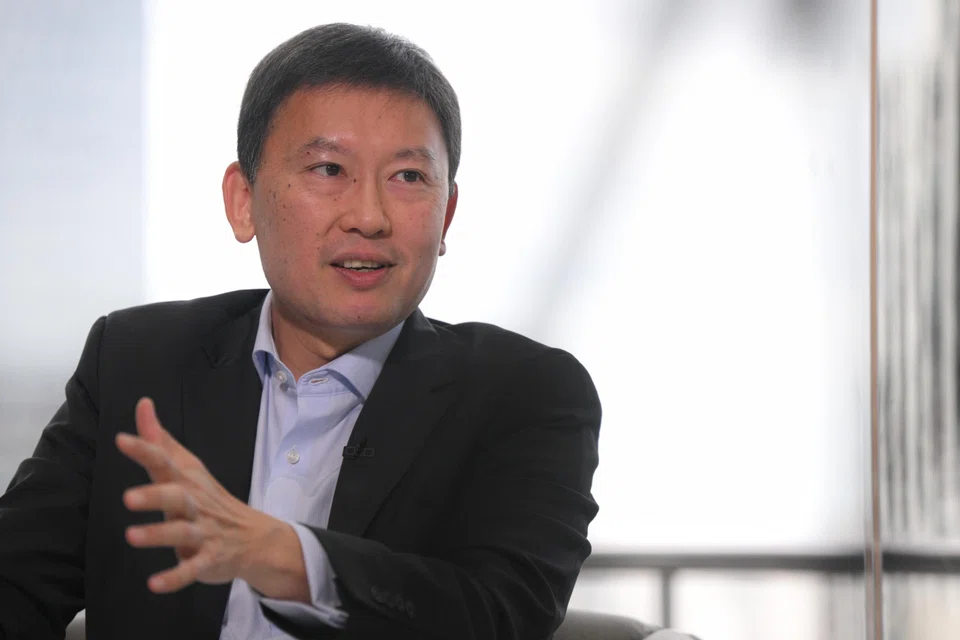
Minister for National Development Chee Hong Tat, speaking at the Real Estate Developers’ Association of Singapore’s (Redas) 67th anniversary dinner, said: “With limited land and resources, we must find innovative ways to optimise the use of spaces.”
He outlined three priorities for planners and developers: making better use of space, improving building sustainability and rejuvenating the city centre.
He added that Singapore must create attractive places that people enjoy visiting.

Greater flexibility in GFA rules
Effective immediately, the Urban Redevelopment Authority (URA) will increase the maximum width of roof eaves and sun-shading devices eligible for GFA exemption to 3 m from 2 m for areas below the sixth storey.
“In Singapore’s tropical climate, these features are important in protecting pedestrians from the sun and rain,” Chee said.
Building owners will also be able to add roof eaves and sun-shading devices to existing buildings without URA’s planning approval, provided they meet prevailing requirements. Proposals involving conserved buildings will still require planning permission.

A second rule change exempts covered linkways from GFA calculations, even if they are not incorporated into landscaped areas, although developers must still comply with existing greenery requirements, including the provision of landscape replacement areas.
A third enhancement will extend GFA exemption for M&E spaces from basement car park floors to all basement floors, giving developers more flexibility in configuring building services and freeing up ground-floor space for more active uses.
Chee said the government is also studying other possible enhancements, including the GFA treatment of covered outdoor sports facilities.
The changes are expected to improve the development potential for projects, giving rise to more saleable or lettable GFA after exemptions.
A spokesperson for Redas said the association “welcomes URA’s enhancements to the GFA exemption guidelines, which give developers and building owners greater flexibility to build more thoughtful and connected buildings suited to Singapore’s unique climate”.
More support for building retrofits
The government will also enhance the Green Mark Incentive Scheme for Existing Buildings 2.0, introduced in 2022 to help building owners defray energy-efficiency retrofit costs.
Since its introduction, the scheme has supported projects expected to collectively save about 29.5 million kilowatt-hours of electricity annually, equivalent to the annual electricity consumption of around 7,000 four-room Housing & Development Board flats.
Chee noted that retrofits involve significant upfront investments, with savings potentially taking several years to materialise.
Redas president Tan Swee Yiow, in his welcome address, said artificial intelligence could help improve building operations; he cited a case in which chiller plant energy consumption was lowered by 9 to 15 per cent, and air-handling energy consumption, by more than 40 per cent.
Revisions to the Green Mark scheme include:
- A new funding pathway for targeted upgrades to individual building systems. These include chiller plants, air-handling and fan coil units, lighting, lifts and ventilation systems. These upgrades can qualify without certification for the entire building, provided the systems meet the minimum energy-efficiency standard of EE55.
- Additional funding for structural roof strengthening needed for solar photovoltaic installations and alternative cooling technologies, with funding of up to half of the qualifying costs, capped at S$200,000 for each measure.
- Additional funding for building owners who work with tenants on energy management initiatives, including green leases, energy monitoring and benchmarking, and tenant energy-savings rebate programmes.
Chee said the enhancements are expected to shorten the average payback period for energy-efficiency retrofits by about two years, compared with projects without funding support.
The application period for the scheme will also be extended by three years to Mar 31, 2030, or until funding is fully committed, whichever is earlier.
As for the real estate industry’s long-term challenges, Redas president Tan noted that AI will change what is built, and how work is done. And while attracting young talent is already one challenge facing the sector, “getting them AI-ready is another”.
“I urge our members: Keep hiring young professionals… Pair them with mentors who will test their judgment, and give them a clear path to grow,” he said.
Decoding Asia newsletter: your guide to navigating Asia in a new global order. Sign up here to get Decoding Asia newsletter. Delivered to your inbox. Free.
Copyright SPH Media. All rights reserved.
TRENDING NOW

From everyday payments to cross-border connectivity: How DBS is shaping the next wave of digital payments with PayLah!

Nvidia halts chip shipments to 4 countries in South-east Asia, including Singapore: FT
MAS green-lights retail investor access to wider range of complex funds, but excludes private-market funds for now

Yangzijiang Maritime eyes 2027-2028 profit surge on newbuild deliveries

