

Not just a warehouse: Industrial players pump hundreds of millions into high-spec automated logistics assets
Labour constraints, complex supply chains and rising costs are driving demand for these kitted-out facilities

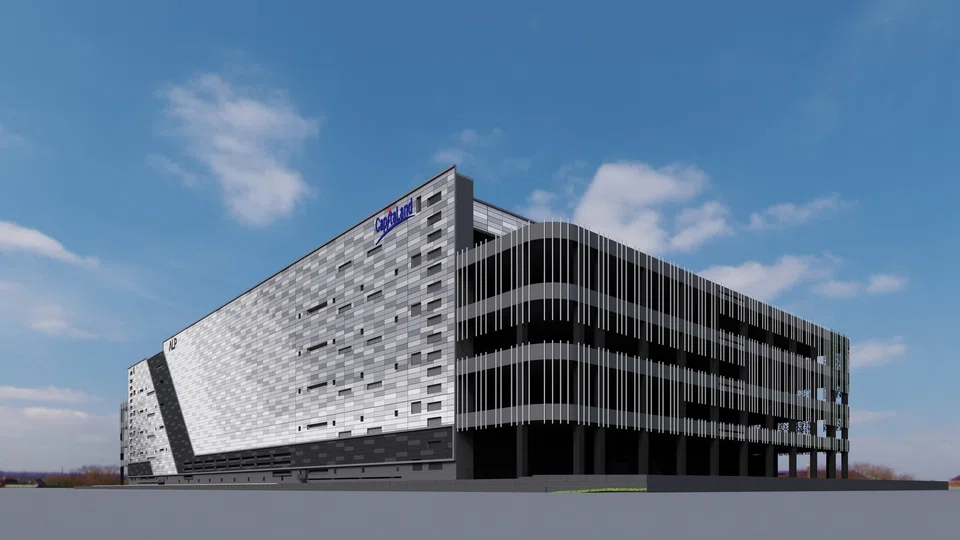
[SINGAPORE] Logistics sector players, from asset owners to operators, are increasingly packing industrial facilities with smart specifications to keep pace with demand for warehouses that do more than just store goods.
The Singapore projects announced in 2026 point to more than S$500 million invested in three major high-spec, highly automated logistics developments.
CapitaLand and Taiwanese partner Ally Logistic Property (ALP) break ground in September on their S$260 million Omega 1 Singapore project. Shipping giant Maersk opened a S$200 million fully automated warehouse facility called World Gateway II, and chemical logistics player Katoen Natie is pumping S$60 million into a new warehouse with an automated storage system on Jurong Island.
The public sector is also adapting industrial infrastructure, with JTC completing Bulim Square in 2025. The advanced manufacturing hub features Singapore’s first underground logistics network alongside an eventual 11 km sky corridor with dedicated paths for pedestrians and autonomous shuttles.
Demand for technology-enabled logistics infrastructure is accelerating amid workforce shortages and rising labour and land costs, said Patricia Goh, CEO for South-east Asia and the global head of logistics and self-storage at CapitaLand Investment (CLI).
CLI’s CapitaLand Southeast Asia Logistics Fund (CSLF) committed S$260 million to develop Omega 1 Singapore. The 71,000 square metre (sq m) automated logistics facility in Jurong Industrial Estate is leased to master tenant ALP.
In January, CLI took a minority stake in ALP, which is a capital partner in CSLF. The fund, which was launched in 2022, has raised S$400 million to date with investments in logistics and industrial projects in South-east Asia, including another Omega 1 campus in Bang Na in Thailand.
In all, CLI has deployed more than S$1.35 billion into logistics assets in South-east Asia through its listed and private funds since 2024.
Some three-quarters of major new logistics spaces in Singapore’s supply pipeline over the next few years are being built to a broad modern or high-specification standard.
This compares to only 10 to 20 per cent of existing warehouse stock that would currently qualify as modern, high-specification or automation-ready, said consultancy Knight Frank.
The upgrades come as occupiers face labour constraints, rising costs and increasingly complex supply chains.
These conditions drive demand for facilities that can do more than simply store goods.
Tim Armstrong, global head of occupier strategy and solutions at Knight Frank, said: “Labour availability remains a challenge in many markets, while supply chains are becoming more complex and service expectations continue to rise.”
Functionality is becoming as important as location and connectivity in leasing decisions, said ESR president Phil Pearce. Customers are looking for assets that can “move goods faster, maximise throughput and adapt to evolving supply-chain requirements”.
ESR owns more than 400 properties in the Asia-Pacific, in key markets such as Australia, Japan and Greater China. In Singapore, it owns 51 properties with a total gross floor area of more than 2.2 million sq m.
Its Sunview Logistics & Container Hub, a roughly 143,000 sq m development anchored by CEVA Logistics and Allied Container Group, combines a multi-storey logistics facility with an automated container depot.
Allied Container Group is investing about S$50 million in automated storage and retrieval technology, Pearce said.
Global shipping and logistics giant Maersk is seeing growing demand for highly automated logistics infrastructure, particularly among companies looking to scale without a corresponding increase in manpower. Its 1.1 million square foot World Gateway II facility in Singapore was already about 70 per cent occupied when it opened in March.
Laurent Chanimbaud, head of Maersk contract logistics for Singapore, said: “Customers increasingly view automation as a strategic capability that enables long-term growth and resilience, in addition to productivity.”
Balancing costs and returns
Higher specifications, however, do not always translate directly into higher rents.
Development costs can be higher than those of a conventional warehouse, Pearce said, depending on factors such as floor loading requirements, power capacity, clear heights, robotics integration and digital infrastructure.
The benefits may instead come through “stronger customer demand, higher occupancy, longer lease commitments, improved tenant retention and greater resilience of cash flows over the life of the asset”, he added.
At World Gateway II, Maersk expects productivity gains of 20 to 30 per cent, relative to more manual warehouse environments, Chanimbaud said, though this varies by customer and operating model.
In Singapore, where land and labour are “premium resources”, these efficiencies are “increasingly important”, he noted.
Whether to upgrade an existing warehouse or build a new facility is opportunity-driven, EZA Hill co-founder and CEO Frank Ng said.
Given Singapore’s high land and construction costs, upgrading an existing warehouse may make more financial sense than developing a new facility, particularly where a property can be acquired below replacement cost.
But where a tenant will commit to a long-term lease with specific requirements, the additional capital to develop a purpose-built facility can be “commercially justified”, he added.
EZA Hill, a South-east Asia-focused industrial real estate investment platform backed by Hillhouse Investment, led a consortium that acquired five industrial properties from CapitaLand Ascendas Reit for S$329 million in 2025.
Ng said that the firm is exploring ways to improve its properties and implement a capex plan to ensure that they remain competitive and relevant to the market.
Building for automation
Temasek-owned Mapletree Investments, one of Singapore’s largest industrial owners, said that it began future-proofing its logistics developments in Singapore and other markets before the pandemic. The works built in higher power capacity, flatter floors, higher clear heights and greater floor-loading capacity.
In China, the group continues to see “growing demand” for intelligent logistics solutions; technologies such as container transport unit (CTU) systems, automated guided vehicles and drones are becoming increasingly common in its logistics parks.
At Mapletree Xuzhou Logistics Park, for example, a tenant converted around 20 per cent of its leased warehouse space into a CTU automated operations zone. The facility’s existing specifications enabled the automation roll-out to be completed within a month, increasing storage density by around 80 per cent, said Mapletree.
For ALP co-founder and CEO Charlie Chang, the key lesson from its Omega facilities in Taiwan and Malaysia similarly shows that automation works best when it is designed into the infrastructure from the outset, rather than added to a conventional warehouse later.
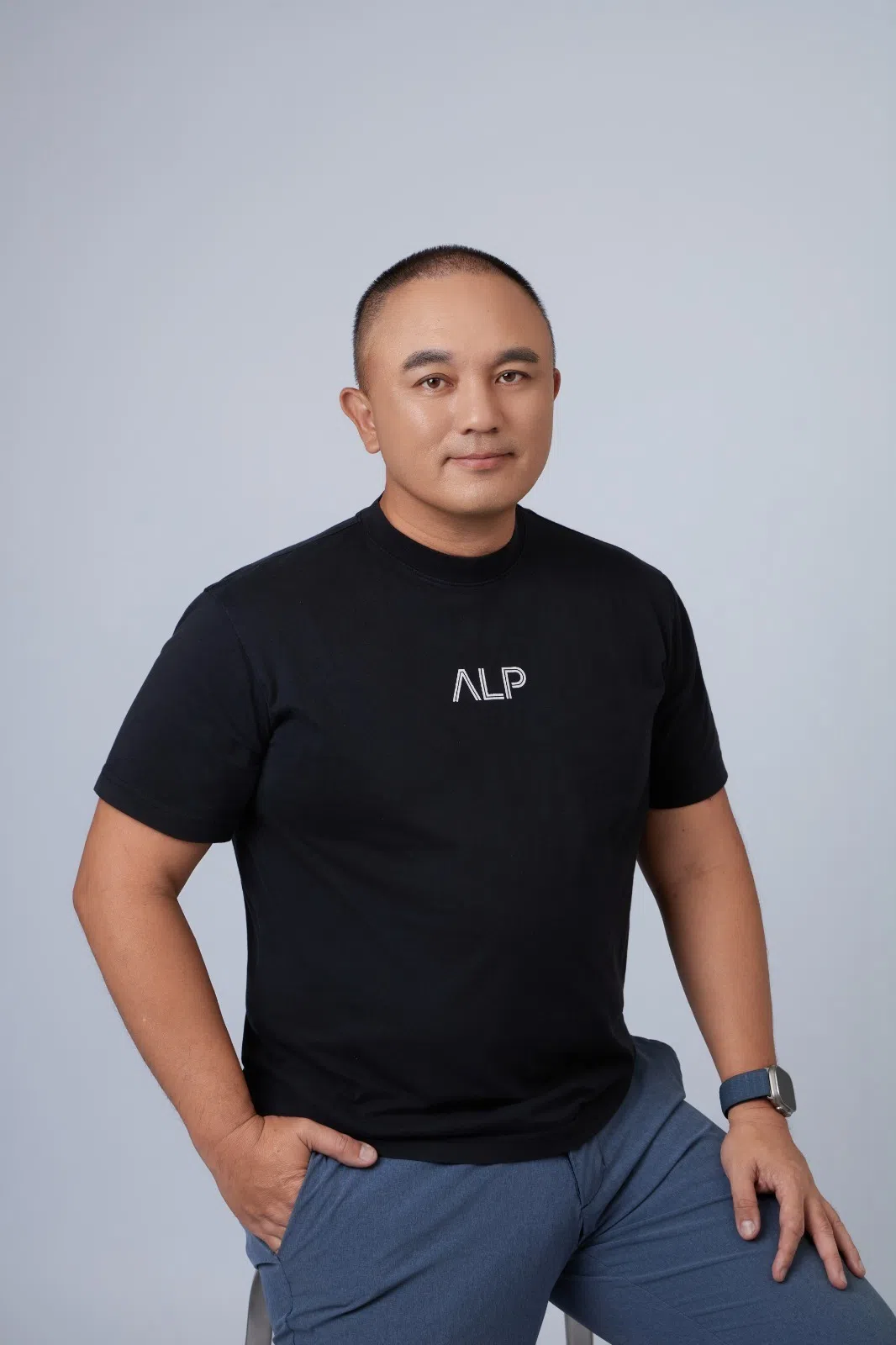
At ALP’s Omega 2 Yangmei facility in Taiwan, an e-commerce and retail logistics customer expanded from about 1,000 pallet positions to 65,000 in six months, and processed about 14,800 shipments a day over the 11.11 peak sale period, he said.
ALP’s modelling indicated that handling the same volume in a traditional warehouse would have required around 24 operating hours and 184 people. Instead, the job was done in about 10.5 hours and needed only 77 people at Omega.
Decoding Asia newsletter: your guide to navigating Asia in a new global order. Sign up here to get Decoding Asia newsletter. Delivered to your inbox. Free.
Copyright SPH Media. All rights reserved.
TRENDING NOW

DBS, OCBC, UOB rout lops billions off STI as inflation, rate concerns spook investors

Grab CEO’s wife Chloe Tong on life with Anthony Tan and finding her purpose

OCBC sheds S$8 billion in value as shares close nearly 6% down; analysts cautious on banks

Deal between tycoon friends sparks scrutiny of Philippine power sector

