
As pound slumps, cash-rich foreigners on the prowl for London homes
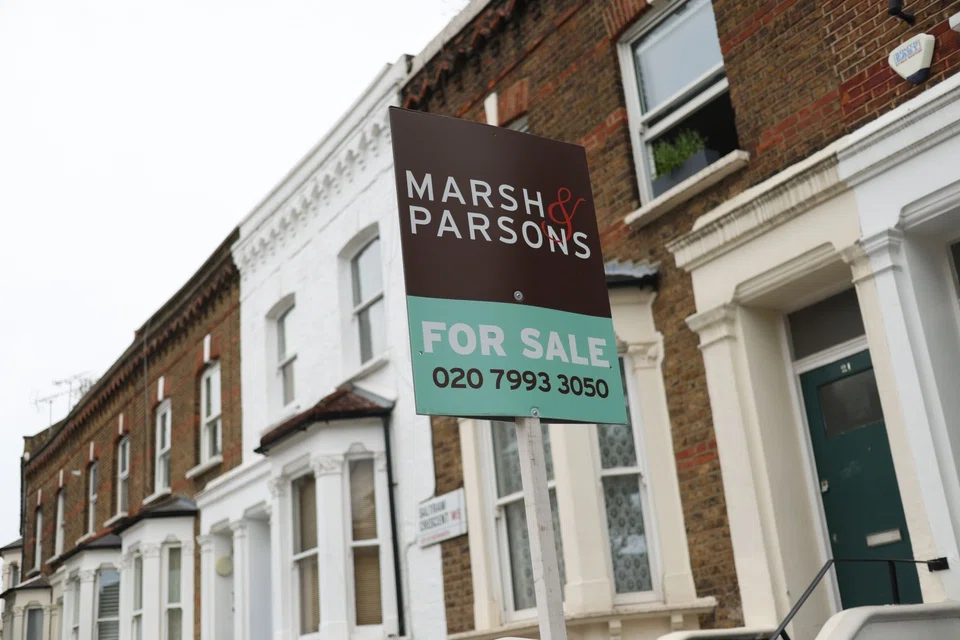
    • A "For Sale" sign displayed outside a residential property in London. Many investors believe the pound’s slump will not last, with agents noting that many are buying up British pounds to gear up for a potential home purchase in the UK.
    • A "For Sale" sign displayed outside a residential property in London. Many investors believe the pound’s slump will not last, with agents noting that many are buying up British pounds to gear up for a potential home purchase in the UK. PHOTO: BLOOMBERG
    Published Wed, Oct 5, 2022 · 05:50 AM

    WITH the pound hitting new lows over the last fortnight, investors from the US, the Middle East and Asia are looking to take advantage of the UK’s financial crisis and snap up London residential properties, said analysts.

    With mortgage rates surging and the pound in a slump, the UK’s residential property sector has become a two-tier market. In the first tier, local buyers who are mortgaged to the hilt are fearful that they won’t be able meet interest and capital repayments once their fixed mortgage deals end. Others who were previously keen to buy property can no longer afford to do so as banks want larger deposits and higher salaries to meet the jump in mortgage payments.

    In the second tier are high-net-worth international buyers. They hold foreign currencies that have appreciated significantly against the pound – notably US, Hong Kong and Singapore dollars, Swiss francs, and the Chinese yuan – and are waiting on the sidelines to pick up some bargains.

    A recent report in The Guardian newspaper revealed that house prices in the UK are likely to fall by at least 10 per cent in 2023 as mortgage providers pull deals and raise interest payments to levels not seen since just before the 2008 global financial crisis.

    The pound has recovered some ground from its fall against the greenback in the aftermath of Chancellor of the Exchequer Kwasi Kwarteng’s “mini budget” on Sep 23. But at US$1.13 today, it has still lost over 10 per cent in value against the dollar over the last six months or so.

    Real estate agent Savills estimates that the average prices of London’s prime residential property fell by 17.6 per cent, in sterling terms, from their 2014 peak to June this year. But due to the pound’s devaluation, the average prime property price in US dollar terms slid by 40 per cent during the same period in central London areas such as Mayfair, Westminster, Kensington and Chelsea.

    The fall in terms of Hong Kong dollars was 38 per cent, 35 per cent in Chinese yuan, 33 per cent in Singapore dollars and 21 per cent in euros.

    Wealthy foreigners who purchased London properties near their peaks eight years ago would likely be making a loss on their investment if they were to sell now, although average prices have risen by 3.3 per cent in the 12 months ended June this year. But there are new investors who believe the pound’s slump will not last, with agents noting that many are buying up the British currency to gear up for a potential home purchase in the UK.

    “Foreign investors are cautious in the eye of the financial storm, but once the pound’s volatility subsides, they may well start to buy again,” said Lucian Cook, the head of Savills residential research. “In recent months, for example, investors from the Middle East and Nort African have been active in London.”

    In the first half of 2022, there were 294 transactions for properties worth £5 million (S$8.1 million) or more, which added up to £2.99 billion in all, according to estimates by Savills. This is close to the full year turnover of 2019 prior to the Covid-19 pandemic. Transactional activity of these more expensive properties rose from £3.41 billion in 2019 to £3.81 billion in 2020 and £5.82 billion last year.

    Anthony Payne, director of Lonres, which has a large network of London agents, says that wealthy US, Hong Kong, China and Singapore investors were buying prime London properties earlier this year.

    “The key to the property outlook is whether interest rates will rise sharply,” he said. “Foreigners and local high-net-worth individuals may not be concerned about higher mortgage rates, but in outer London and in the rest of the UK, many people can’t afford to buy.”

    A year ago, for example, Barclays’ three-year mortgage rate was 0.97 per cent. It is now 3.75 per cent.

    Martin Lewis, a personal finance expert, said that as many as two million fixed rate mortgages are expiring soon. Since they will have to be renewed at much higher rates, he fears potential problems. Thirty-year mortgage rates have jumped to just under 7 per cent, the highest level since 1990. HSBC predicts that the rate rise could trigger a house price decline of 7.5 per cent.

    Andrew Wishart, a senior property economist at Capital Economics, was quoted in The Guardian last week as saying that the rise in market interest rates will push up mortgage rates to at least 6 per cent and reduce the size of loans that banks can offer. “The resulting drop in buying power makes a significant drop in house prices inevitable,” he said.