

Proposed en bloc reforms could bring ageing estates, commercial sites back to the market
But mismatched price expectations and project viability continue to shape outcomes, say market watchers


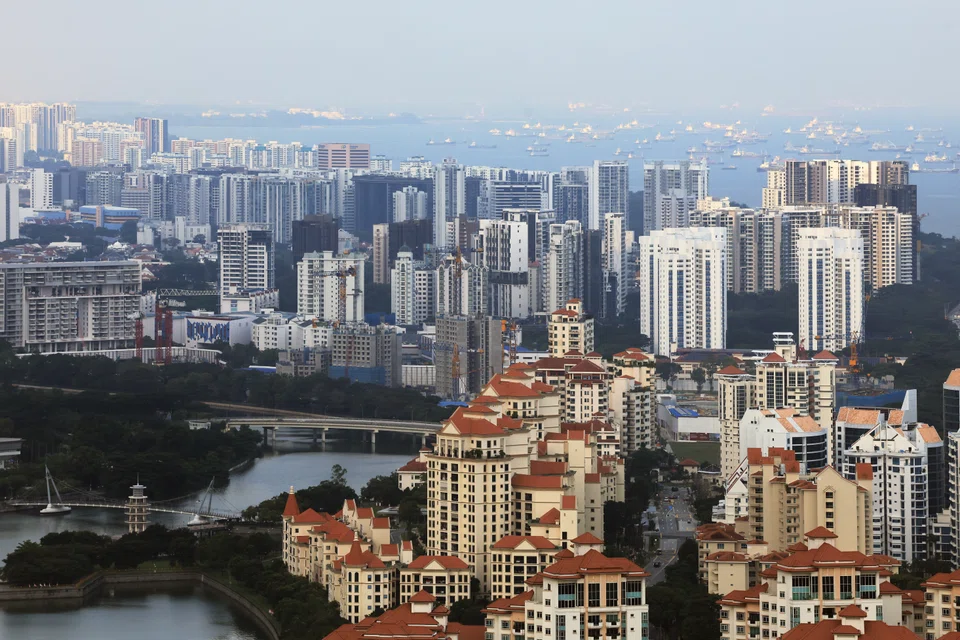
[SINGAPORE] Ageing developments sitting on huge sites that have struggled to secure owner support could get a fresh shot at redevelopment under proposed changes to Singapore’s collective sales regime.
For strata-titled commercial buildings in particular, the amendments could be a game changer, industry players said.
The amendments, unveiled by the Ministry of Law (MinLaw) on Tuesday, include lowering the consent threshold for an en bloc sale to 65 per cent for developments over 60 years old, and 70 per cent for those aged 40 to 59 years.
Other proposed changes include halving the signature collection period to six months, lengthening the restriction period after a failed attempt, and extending the collective sale regime to certain non-strata-titled private residential developments where flat owners hold long leases but do not own the underlying land.
While the proposals are expected to expand the pipeline of potential collective sales, property players cautioned that trade-offs and commercial realities remain.
SRI capital markets managing partner Low Choon Sin said: “In practical terms, the changes appear targeted at facilitating the renewal of genuinely ageing developments, rather than simply making (the en bloc process) ‘easier’ across the board.”
Alan Cheong, Savills Singapore executive director for research and consultancy, noted that much of the “low-hanging fruit” had already been redeveloped in earlier collective sale cycles, leaving a smaller pool of viable options today.
Three ‘compelling’ candidates for renewal
Among the more “compelling” remaining candidates are older, larger residential developments built in the 1970s and early 1980s, he added. “These estates typically occupy sizeable land parcels and, in many cases, possess significant redevelopment potential under current planning parameters.”
These include the 918-unit Braddell View, said to be able to yield 2,600 new homes if redeveloped; the 516-unit Laguna Park, which could offer 1,700 new homes; and the 660-unit Pine Grove, which could house over 2,000 new units.
The three condominiums, completed between 1978 and 1984, are now more than 40 years old and have each undergone unsuccessful collective sale attempts, PropNex chief executive Kelvin Fong noted.
Taken together with the recent changes to the ABSD remission framework for larger en bloc redevelopment projects, Tan Hong Boon, executive director at AlpsEdge Real Estate, expects the proposed amendment to encourage older and larger projects to restart collective sale attempts.
Lee Sze Teck, Huttons Asia’s senior director of data analytics, estimates that there are around 150 private non-landed projects aged between 40 and 59 years old, and fewer than 10 that are 60 years and older. These face mounting maintenance problems and expenses.
Around 40 per cent of these older developments are located in District 9, 10 and 11, he said. Examples include the freehold Pandan Valley, the 999-year Ridgewood condominium in the Holland area, and the 99-year leasehold Hillcrest Arcadia in Bukit Timah.
The amendments would also support the “timely renewal” of ageing commercial and mixed-use assets in established precincts such as the Central Business District and Orchard Road, and help keep Singapore’s “key commercial districts competitive and vibrant”, the Real Estate Developers Association of Singapore (Redas) said.
The lower consent threshold, in particular, could prove especially significant for commercial developments which are not subject to additional buyer’s stamp duty (ABSD), said Realion Group chief executive Desmond Sim.
“We’ve done a few where we missed the 80 per cent mark by fewer than five units, so (the lower consent thresholds) could be a game changer,” he said.
Lee said the debate surrounding the planned development of sites such as Gillman Barracks and Maju Forest highlights the limited options available for meeting future housing needs.
In 2025, only five out of at least 16 collective sale attempts were successful. The year before, just four sites put on the market found buyers.
Hurdles remain
Still, industry players say a lower threshold alone may not get collective sales across the finish line; pricing is still a key determinant.
“One potential obstacle to a collective sale is the reserve price, which may render redevelopment economically unviable,” said Cheong. That is particularly so when substantial Land Betterment Charges and lease top-up premiums are factored into development cost, he added.
Foreign owners who bought in before the higher ABSD regime came into force pose another challenge, he said. Since April 2023, foreigners have been subject to a 60 per cent ABSD rate when buying a residential property. Should the sale proceed, they may be outvoted and face significantly higher acquisition costs at prevailing ABSD rates when seeking a replacement home.
Sim said the government recognises that key projects from the late 1970s and early 1980s, including the former HUDC estates and Pine Grove condo, need a “helping hand” over the line. However, price expectations have to be realistic.
“At the end of the day, the sole determinant is achieving a price that’s agreeable for buyers and sellers,” he said. “You may have all the garnishes in the world, but the main course still has to work.”
Developers also have more “clear-cut” options in government land sales, Sim added. They do not require demolition, have clearly drawn road lines, and “no surprises, no objections”.
There is also a “very good choice of attractive sites” under the GLS programme, said Jeremy Lake, Savills Singapore’s managing director of investment sales and capital markets. “These are likely to remain the focus for most developers.”
The trade-off, however, is location. While the GLS programme includes “some pockets of prime land” such as the former Turf Club site, Sim said many other sites are in the outskirts, such as Tengah and Chencharu. En bloc sites, on the other hand, are typically located in established neighbourhoods with strong amenities.
The proposed changes could also present new challenges.
“Some owners will certainly be unhappy with the lower thresholds, and most probably, they will object vigorously,” said Lake.
The much shorter signature collection period could also make the process more demanding. SRI’s Low pointed out that while reducing the timeline from 12 months to six months protects owners from a “drawn-out” collective sale process, it also means the collective sale committees must “prepare thoroughly, communicate clearly and build good support from the ground before formally starting the exercise”.
The compressed timeline could prove particularly challenging for large non-residential developments such as industrial, commercial and mixed-use projects, where most units are held by entities rather than individuals, he noted.
Cheong also highlighted the potential knock-on effects on the housing market, in that a wave of successful collective sales would generate a large pool of displaced owners seeking replacement homes.
Given the ageing profile of some owners, Cheong reckons that many may choose to downsize to a resale HDB flat.
The removal of the 15-month wait-out period could push more displaced private homeowners towards resale HDB flats, potentially lifting demand and prices across the wider housing market, he said.
Meanwhile, the redevelopment of large sites into projects with substantially more units than before could eventually add significant supply and “cause indigestion in the spot rental market”, said Cheong.
TRENDING NOW
Stocks to watch: Clar, Seatrium, Sheng Siong, MPACT, NetLink NBN, Starhill Global Reit

Singapore government slaps loan curbs on individual private-hire car buyers

If Europe goes to war, the fallout will be felt in East Asia
DBS denies rumours of Indonesia unit merging with Bank Central Asia; analysts see sense in a deal

