

Residential en bloc sales get nudge with extended ABSD deadline, but pricing still a big hurdle
Property players say move is a ‘long time coming’ though it may not necessarily translate to more sites being sold

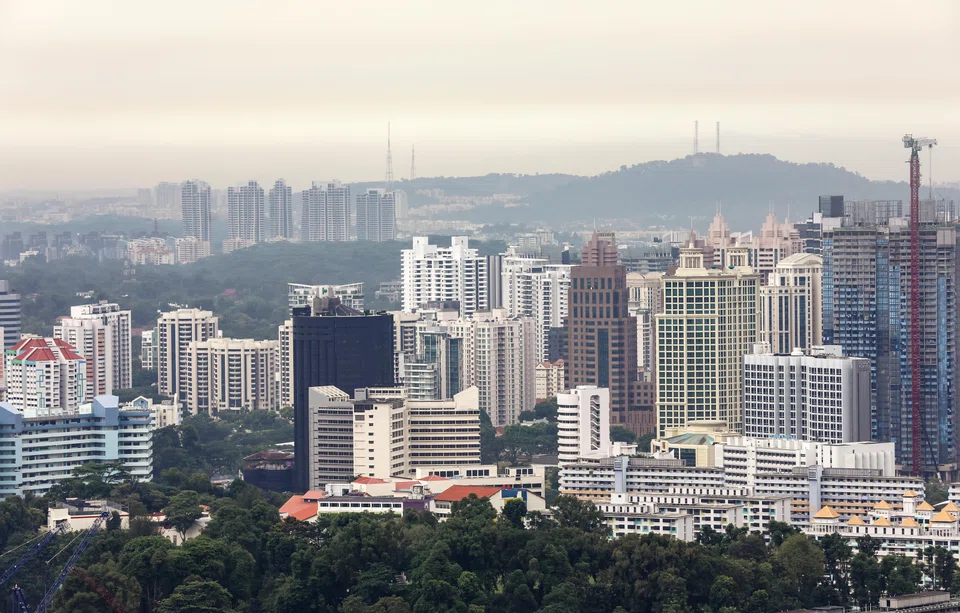
[SINGAPORE] A longer runway for construction and sales of mega en bloc redevelopments will put large collective sale sites back on developers’ radar, but price – not time – will still make or break deals, property players said.
Starting Wednesday (Jul 29), developers of large en bloc sites yielding at least 700 new homes will have a critical sales deadline extended by one year. This will give them six years to complete construction and sell all units before they have to fork out a hefty additional buyer’s stamp duty (ABSD) payment on the cost of the land.
For mega projects yielding at least 1,400 homes, the ABSD remission deadline will be extended to seven years, though developers must sell at least half the units by the end of the sixth year.
In a speech on Tuesday (Jul 28) announcing the changes, Minister for National Development (MND) Chee Hong Tat said the move aimed to “set the right incentives” for developers to rejuvenate large estates and encourage more land intensification.
Leonard Tay, Knight Frank head of research, described the move as “a long time coming”.
Historically, large-scale redevelopments faced materially different execution, construction and sales risks compared with “conventionally-sized” residential projects, yet were subject to the same five-year ABSD deadline.
“It is only logical that a sense of proportion-to-scale should be adopted into the policy, so that differences in size are recognised on a realistic and practical level,” Tay said.
A spokesperson at the Real Estate Developers’ Association of Singapore likewise noted that the “re-calibration” of the ABSD regime was timely, necessary and appropriate, to reflect the realities of large-scale en bloc redevelopments.
“(This will give) development projects the time required for safety, quality, sustainability and innovative concepts to be properly applied.”


Realion Group chief executive Desmond Sim saw the move as providing reprieve for developers, saying the ABSD remission deadline was “a band-aid that needs to be ripped off but is now being slowly pulled back”.
However, it is just one of many hurdles to closing a collective sale deal, Sim noted.
The largest obstacle, especially for massive sites carrying billion-dollar price tags, remains the asking price, said Sim, and the extension of the deadline might have the unintended effect of leading owners to stick to their positions.
While Sim expects to see more activity in the collective sale process as a result, he cautioned this may not lead to more sites being sold.
As Tay put it: “The revision does not fundamentally alter project economics,” and may not trigger a broad resurgence in en bloc activity.
Singapore’s collective sales market, once a hotbed of deals that yielded large windfall gains for owners of ageing condominiums, fell into an extended period of inactivity as owners’ asking prices reached levels judged as untenable by developers.
With the en bloc market now stirring again, the move to extend the ABSD remission deadline could give some potential sales a leg up.
The previously uniform deadline effectively pushed developers to “prioritise speed of sales over optimal launch phasing, pricing and product strategy”, or sometimes avoid taking on such large sites altogether, said Wong Shanting, Newmark’s head of research.
Extending the ABSD sales timeline should reduce the “size disadvantage” associated with such sites and reopen the window for older projects in need of renewal, she added.
At the same time, Tricia Song, CBRE’s research head for South-east Asia and Singapore, noted that larger sites are more efficient in “reaping economies of scale during construction”.
“They are also more transformational and thus better able to achieve ‘rejuvenation effects’ on the precinct, and ultimately offer better value to end-buyers with more facilities spread over lower maintenance costs,” said Song.
Long-subdued market
Alan Cheong, Savills executive director of research and consultancy, believes the longer ABSD runway could also “help break the logjam surrounding larger en bloc sites”, especially those on freehold and 999-year leasehold land.
The collective sales market has been subdued in recent years, with transactions falling from an estimated 17 in 2021 to just four in 2025, said Huttons Asia chief executive Mark Yip.
This is a far cry from the market’s pre-pandemic boom, when 28 deals worth a combined S$8.7 billion were completed in 2017, followed by another 38 totalling S$10.8 billion in 2018, said ERA chief executive Marcus Chu.
Still, DBS researchers said the market has begun to show signs of renewed momentum. Recent transactions include Thomson View by a consortium comprising UOL, Singapore Land and CapitaLand; Loyang Valley by a SingHaiyi-led consortium, and Tan Boon Liat building by Kingsford Group.
“With Singapore’s safe-haven status fuelling increasingly competitive GLS (government land sale)... bids, we expect more en bloc transactions to emerge, which could result in the cooling of land prices and hopefully prevent overall property prices from being too ‘bubbly’,” they said.
Renewed activity could come partly from large and ageing residential developments, especially those on 99-year leases, said Nicholas Mak, Mogul.sg chief research officer.
For instance, he estimated that Mandarin Gardens condominium in Siglap could yield 3,000 to 4,200 new homes if redeveloped. Pine Grove in Ulu Pandan, and Braddell View could similarly yield up to 2,050 and 2,500 units, respectively. Both projects have failed to secure buyers in previous collective-sale attempts.
Still, the large price tag attached to big sites is a challenge. Other key challenges include divergent owner interests and uncertain deal completion timeframe, said Song from CBRE.
“Developers generally prefer GLS sites due to greater transaction certainty with the government as the only seller, and thus a more straightforward and faster process,” she said.
Developers have also had “ample opportunities” to replenish their land banks through the GLS programme, said Newmark’s Wong.
In the second half of 2026, authorities will release around 4,745 private housing units on the confirmed list of the GLS programme. Sites on offer include two prime region parcels in Orchard and Holland Plain, three in the city fringe where new residential estates are planned, two in the suburbs on East Coast Road and Jurong East.
This brings the full-year confirmed list supply to 9,320 units, more than 50 per cent higher than the annual average confirmed list supply over the past decade, MND had said.
Yip of Huttons added that whether more en bloc sites launch for sale will depend on the proportion of foreigners and investors in the development.
“The prohibitive 60 per cent ABSD on foreigners will lead to a veto on a collective sale as the replacement home will likely cost more than what they can receive in the event of a successful sale,” Yip said. Investors may likewise oppose a sale because of the ABSD they could incur when buying another residential property.
Some market insiders also questioned why the longer timelines applied only to en bloc redevelopments, arguing that mega GLS projects, such as those in the Jurong Lake District, would benefit from some concessions given the massive undertaking it would require.
Decoding Asia newsletter: your guide to navigating Asia in a new global order. Sign up here to get Decoding Asia newsletter. Delivered to your inbox. Free.
Copyright SPH Media. All rights reserved.
TRENDING NOW

Once staunchly pro-China, Malaysian Chinese businesses are now distancing themselves from Beijing

Looking beyond looming CEO succession, should UOB potentially pursue a transformative merger?

Could stablecoins be the future of money?

Grab CEO’s wife Chloe Tong on life with Anthony Tan and finding her purpose

