Retail rents fell 14.7% in 2020; market will remain challenging, say analysts

Singapore
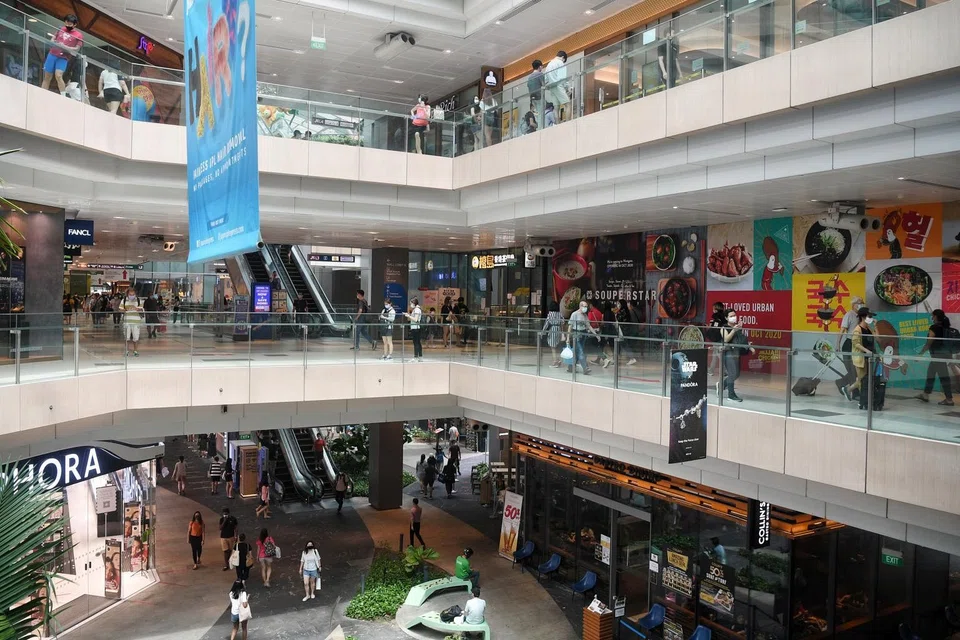
THE decline in retail rents gathered pace in the fourth quarter, taking the full-year drop in the Urban Redevelopment Authority's rental index of retail space in the central region to 14.7 per cent - in contrast with the increase of 2.9 per cent in 2019.
Property consultants expect retail property rents to continue languishing - at least in the near term.
Knight Frank Singapore's head of research, Leonard Tay, said Singapore retail rents might decline by about 5 per cent in the first half of 2021 before bottoming out in the second half - barring lockdowns as a result of recurring community infections.
Cushman & Wakefield's associate director of research for Singapore and South-east Asia, Wong Xian Yang, commented: "Given that mass air-travel is not expected to recover any time soon, and safe-management measures remain in place, we see a continued decline in retail rents in 2021.
"Nonetheless, the decline in rents is expected to slow as the economy recovers and retailers adjust to the new normal."
CBRE Research foresees retail rents stabilising over the course of 2021. "But recovery of the retail market is expected to be long-drawn, as risks and uncertainties linger on," said Desmond Sim, the South-east Asia research head at CBRE.
URA's rental index of retail space in the central region posted a 5.2 per cent quarter-on-quarter fall in Q4 2020, a bigger dip than the 4.5 per cent fall in Q3.
URA's fourth-quarter data also showed that prices of retail space in the central region fell by 2.1 per cent, reversing the increase of 2.2 per cent in Q3. For the whole of 2020, prices of retail space shrank 4.5 per cent, against 2019's rise of 1.3 per cent.
On a brighter note, island-wide net demand for retail space, reflected in the change in occupied space, rose by 24,000 sq m of net lettable area (NLA) in Q4 2020, compared with the decrease of 50,000 sq m NLA in the previous quarter. The stock of retail space fell by 26,000 sq m NLA in Q4 2020, after shrinking by 53,000 sq m in the previous quarter.
As a result, the island-wide vacancy rate of retail space declined to 8.8 per cent as at the end of Q4 2020, from 9.6 per cent as at end-Q3 2020.
For the full year, however, net demand contracted 162,000 sq m - reversing the positive 115,000 sq m in 2019. The 2020 figure was also "the worst ever experienced in a single year since year 2001", the furthest that this data set goes back to, said Colliers International Singapore research head Tricia Song.
Angelia Phua, consulting director at JLL Singapore, said: "The retail leasing market continued to be weighed down by the Covid-19 pandemic. Retailers remained cautious with operational plans and lease commitments, in view of uncertainties surrounding the sustainability of retail sales recovery beyond the festive period in December, the resumption of mass leisure travel and tourism demand and operational capacity constraints.
"Amid high vacancy rates, landlords remained flexible when negotiating lease terms and compromised on rents to support occupancy rate, resulting in the sharp fall in retail property rents in 2020."
Ms Phua further noted that even though new retail openings were observed, unsustainable businesses continued to cease operations while others consolidated operations when their leases expired.
"In the coming months, a new wave of unsustainable retail closures could emerge as government and landlord support eases and this could exert further pressure on retail rents in first-half 2021."
On a more positive note, she cited the effective containment of Covid-19 and the expected mass vaccination programme by H2 2021, among the factors that could lead to retail sales growth. "This could prompt more opportunistic retailers with a medium- to long-term perspective to expand and that could, in turn, support and stabilise rents in second half 2021." This will moderate the full-year decline in rents.
Ms Song of Colliers expects average retail rents to stay flat in 2021 and improve gradually thereafter, with some reprieve from limited new supply. This new supply is mostly concentrated in suburban and fringe areas, where there are well-defined population catchments.
READ MORE:
TRENDING NOW
Grab CEO’s wife Chloe Tong on life with Anthony Tan and finding her purpose
US trade chief to consider trade deal tariff caps in excess capacity probe
Bee Cheng Hiang customers’ e-mail addresses exposed in Singapore’s first case of AI-related data breach
DFI Retail to take over Starbucks business in Asia from Maxim’s Caterers