Retail S-Reits’ high occupancy, firm yields keep analysts positive
With landlords maintaining the upper hand, retail plays could gain with further rent hikes expected

[SINGAPORE] Interest in retail-focused real estate investment trusts (Reits) remains strong despite signs of slowing retail sales and a flurry of tenant exits, with malls maintaining high occupancy and firm earnings.
Retail Singapore-listed Reits (S-Reits) reported improved operating metrics in the latest earnings season, sporting higher distribution yields amid continuing tenant churn as rents rose. Low vacancy rates, positive rent reversions and revenue growth also helped drive capital values of retail assets, analysts said.
Islandwide retail rents rose 0.5 per cent in 2024 after creeping up 0.4 per cent in 2023, according to official data. Overall retail sales grew 1.2 per cent in 2024, slower than the 2.3 per cent in 2023. Top-tier retail Reits reported positive rent reversions of between 5 and 9 per cent in FY2024. With analysts expecting similar rent increases this year, retail plays could emerge as winners as landlords holding prime assets continue to have the upper hand.
Darren Chan, Phillip Securities’ senior research analyst, is overall positive on retail S-Reits as he expects rent reversions to stay in the “high single-digit range”, supported by “tight incoming supply”.
“In the current environment, we expect suburban malls to outperform, as a downtrading trend among tourists appears to be weighing on tenant sales at downtown luxury malls.”
Top-performing malls remain nearly filled as landlords are able to find replacement tenants and refresh the tenant mix, said Macquarie Capital’s research analyst Rachel Tan.
Analysts’ top picks include CapitaLand Integrated Commercial Trust (CICT), Starhill Global Reit and Frasers Centrepoint Trust (FCT).
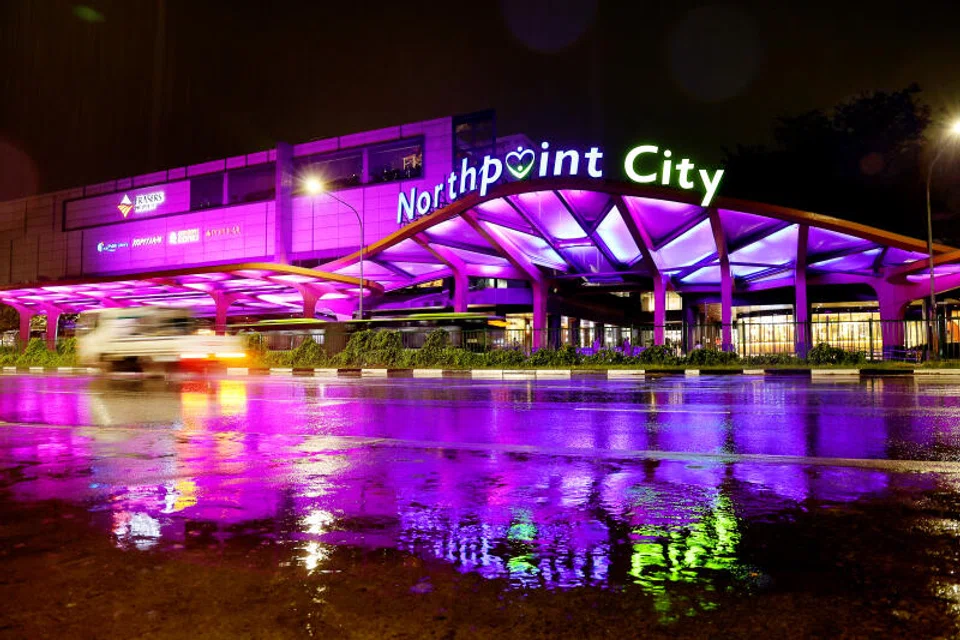
In the past year, Reits have traded retail properties as part of portfolio repositioning strategies – the most recent being FCT’s S$1.17 billion acquisition of Northpoint City’s South Wing from its sponsor. FCT acquired the North Wing in 2006.
Macquarie’s Tan said the deal further boosts FCT’s market share in Singapore suburban retail. “Good quality retail assets are limited in Singapore and will remain attractive depending on pricing,” she said. FCT has nine heartland malls in its portfolio.
RHB analyst Vijay Natarajan said: “We see FCT’s acquisition…as a near-term neutral but long-term positive for (distribution per unit) growth and share price performance.” The mega deal is expected to lift FCT’s FY2026 DPU by 2 per cent to S$0.1268.
Suburban retail-focused FCT posted a full-year DPU of S$0.12042 for FY2024, giving a distribution yield of 5.7 per cent. Portfolio occupancy stood at 99.5 per cent in Q1 FY2025, with shopper traffic up 2.7 per cent while tenants’ sales rose 2.5 per cent.
Natarajan maintained his “buy” call with a new target price of S$2.39 on the trust.
DBS analysts in March gave CICT a “buy” rating, with a price target of S$2.30, noting that markets are “undervaluing prime central assets” owned by S-Reits. They said CICT stands out for its central assets’ “superior” retail yields of 9.5 per cent. The counter currently trades at S$2.10.
HSBC similarly called a “buy” with a price target of S$2.25. “We think CICT offers among the best (distribution per unit) growth rates among the S-Reits we cover, even without tax transparency at Ion Orchard factored in our numbers,” it said. HSBC estimates that CICT would post DPU of S$0.111 to S$0.123 in FY2025-2027.
CICT posted a 1.2 per cent increase in its FY2024 DPU at S$0.1088, giving a distribution yield of 5.6 per cent. Rental income for the full year was S$1.5 billion, up 1.4 per cent on year.
The trust’s suburban and downtown malls recorded positive rent reversions of 9 per cent and 8.6 per cent, respectively – driven by “healthy leasing demand” from new and existing brands, said CICT in its annual report. Its Singapore retail portfolio has an occupancy rate of 99.3 per cent.
Malls managed by CICT include Bugis Junction and Westgate. It owns a 50 per cent interest in Ion Orchard, which it acquired from sponsor CapitaLand Investment last year for S$1.9 billion.
RHB’s Natarajan likes Starhill Global Reit as performance of its malls, Wisma Atria and Ngee Ann City, improved over the last year, with the latter signing a longer lease with Ngee Ann City landlord Toshin at higher rents.
“Mid-high single-digit rent reversion for Singapore retail and office assets are expected to continue in FY2025,” added Natarajan, who called a “buy” on Starhill last August with a target price of S$0.57. He estimates DPU to come in at S$0.037 to S$0.0402 in FY2025-FY2028. In FY2024, Starhill’s DPU stood at S$0.0363, with a distribution yield of about 7.3 per cent.
As at Dec 31, 2024, Starhill’s retail portfolio is fully occupied. Shopper traffic at Wisma Atria rose 10.3 per cent on the year in H1 FY2025, while tenant sales eased 6.1 per cent due to tenant transitions. Two luxury labels moved into the mall in November and December last year – British brand Burberry and Italian label Tod’s.
Starhill’s improved tenant mix, along with asset enhancement initiatives that were completed in 2022, led to a 5 per cent increase in rental reversions, noted DBS. The bank maintained its “buy” call on the counter, with a target of S$0.68. The counter last traded at S$0.50.
Retail assets showing positive carry
With occupancy rates holding near 100 per cent, top-performing malls are attractive assets for investors, said Alan Cheong, executive director of research and consultancy at Savills Singapore.
Michael Tay, CBRE’s deputy managing director and head of capital markets for Singapore, said: “While Reits faced pressure to lower their leverage during the past few years of elevated interest rates, this pressure has eased off as rates have fallen.”
Elevated interest rates since H2 2022 had resulted in “neutral carry” for most assets, affecting investors’ ability to transact in the market, he noted.
“Rate cuts in the last few months have lowered financing costs, and retail investments are currently yielding positive carry, making them more attractive to investors.”
Savills’ managing director of investment sales and capital markets Jeremy Lake expects asset yields to “remain around current levels” for the rest of 2025 as interest rates are not projected to drop further. “In 2024, there was a price gap which may narrow now that domestic rates have softened,” he said.
A JLL report released in January noted that the “bid-ask gap remains” and sellers are waiting for the right offer. “Institutional investors are looking for suburban retail opportunities due to resilient income streams, while family offices consider freehold, trophy, prime retail assets.”
Some US$1.9 billion worth of retail properties was transacted in 2024, according to JLL’s head of investor intelligence in Asia-Pacific Pamela Ambler.
Notable deals include FCT’s acquisition of 24.5 per cent stake in Nex from Frasers Property for S$523.1 million, Paragon Reit’s divestment of The Rail Mall for S$78.5 million, the sale of Seletar Mall to Allgreen Properties for S$550 million, as well as CICT’s purchase of Ion Orchard and its connecting underpass.
Acquisitions could also provide a lift to Reits’ operating metrics. CICT’s tenant sales per square foot (psf) rose 3.4 per cent in FY2024, driven by a two-month contribution from Ion Orchard. Excluding Ion’s input, tenant sales psf for CICT’s retail portfolio and downtown malls would have eased by about 1 per cent year on year, due to an increase in outbound travel.
Whether more S-Reits acquire retail assets in 2025 will depend on the availability of DPU-accretive deals, said Phillip’s Chan.