

Singapore construction costs persistently high, expected to climb further in 2027: JLL
They have risen 30.2% since 2021; land constraints add to pressures for industrial and logistics projects

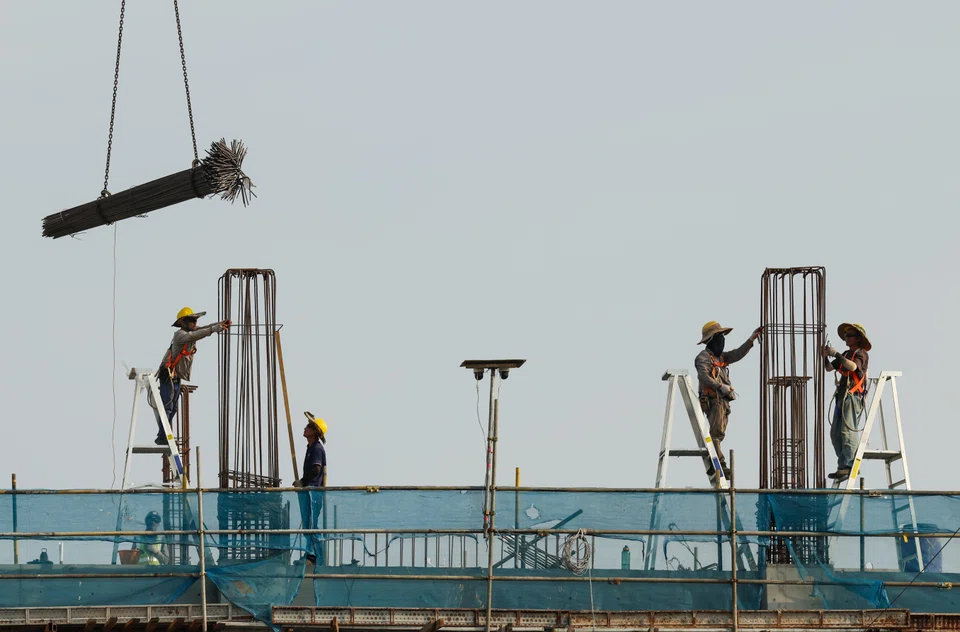
[SINGAPORE] Persistently high construction costs in Singapore continue to be a red flag for developers, with costs up 30.2 per cent since 2021 and set to climb further with imported material prices, labour constraints and land scarcity weighing on projects.
Tender price inflation is forecast to increase by 2.3 to 3.3 per cent in 2027, easing from an estimated 2.5 to 3.5 per cent this year, according to global consultancy JLL.
The slower pace of increases comes after five years of steep cost escalation, with construction inflation significantly outstripping the 17.7 per cent rise in consumer prices over the same period.
JLL’s Global Construction Costs Index 2026 report attributed the sustained pressure to a combination of geopolitical disruptions and supply chain vulnerabilities.
It also identified skilled labour shortages and rising demand for specialised facilities such as data centres and advanced manufacturing plants as contributing factors.
Singapore is particularly exposed to global price movements because of its near-total reliance on imported construction materials, said Shweta Choudhari, director of work dynamics research for the Asia-Pacific at JLL.

“Energy price volatility, transportation disruption and base materials costs all feed directly into regional tender prices,” she said, adding that contractors were increasingly pricing geopolitical uncertainty into projects as a permanent risk premium rather than a temporary measure.
The impact is already evident in base material costs, which rose 7.43 per cent in Singapore in the first half of 2026, against the 2025 average. This was the highest increase among the Asia-Pacific markets tracked by JLL.
The consultancy expects this increase to moderate to 1.1 per cent in H2 as supply-side responses and easing global prices begin to flow through. However, steel prices are forecast to rebound by 10.34 per cent in H2, after falling 1.45 per cent in H1.
Labour costs are adding to the pressure, although increases in Singapore have been more contained than in some regional markets. JLL said labour costs rose 2.93 per cent in H1, and are forecast to increase by a further 2.58 per cent in H2.
JLL attributed the “controlled” increase partly to Singapore’s “managed migrant workforce policy”, which balances competing demand for workers across public housing, commercial and mixed-use developments, and a growing pipeline of data centre projects.
Across key Asia-Pacific markets, construction wages rose between 8 and 35 per cent from 2020 to 2026, JLL found. Demographic shifts, insufficient trade training and competition from technical sectors such as data centres and advanced manufacturing mean skilled workers command “significant pricing power”, the consultancy said.
Urban cost premiums
Beyond these inflationary pressures, land constraints in Singapore and Hong Kong are driving up construction costs for industrial and logistics developments, despite such assets typically being among the most cost-efficient globally.
JLL estimated average global construction costs for industrial and logistics assets at US$1,010 to US$1,560 per square metre (psm).
In Hong Kong, however, costs approach or exceed US$2,500 psm – more than 60 per cent above regional averages, reflecting land scarcity, complex site conditions, vertical construction requirements and stringent regulations.
Singapore also faces a cost premium, with JLL estimating warehouse and logistics construction costs at US$1,324 to US$1,702 psm in 2026, rising to US$1,366 to US$1,756 psm in 2027.
JLL also cautioned that headline tender price estimates may not fully capture costs for projects requiring extensive mechanical, electrical and plumbing systems, such as data centres, which face above-average cost pressures.
Against this backdrop, developers and investors are increasingly considering alternative regional locations or cross-border logistics networks rather than absorbing the higher cost structures of gateway cities.
For those proceeding with developments in Singapore, JLL’s Daniel Malacchini, head of cost advisory and cost management for the Asia-Pacific, said owners should test project feasibility against live cost data and reassess it at each design and procurement stage.
“(Owners should) consider retrofit and repositioning where it can beat ground-up on cost, speed and carbon,” he added.
Decoding Asia newsletter: your guide to navigating Asia in a new global order. Sign up here to get Decoding Asia newsletter. Delivered to your inbox. Free.
Copyright SPH Media. All rights reserved.
TRENDING NOW

Higher rates, weaker spending: Is the Philippines entering stagflation?

Cabin fever: Airlines are rushing to refurbish plane interiors, but will their bets pay off?
Sheng Siong has fallen from its highs. Can its defensive appeal endure?

Nvidia heads for US$470 billion two-day wipeout as CEO affair fallout deepens

