

Singapore prime offices shine as URA rent index rises 0.8% in Q2
Islandwide vacancy rate inches up to 11%; this is seen as the result of a time lag in tenants moving into newly completed Shaw Tower

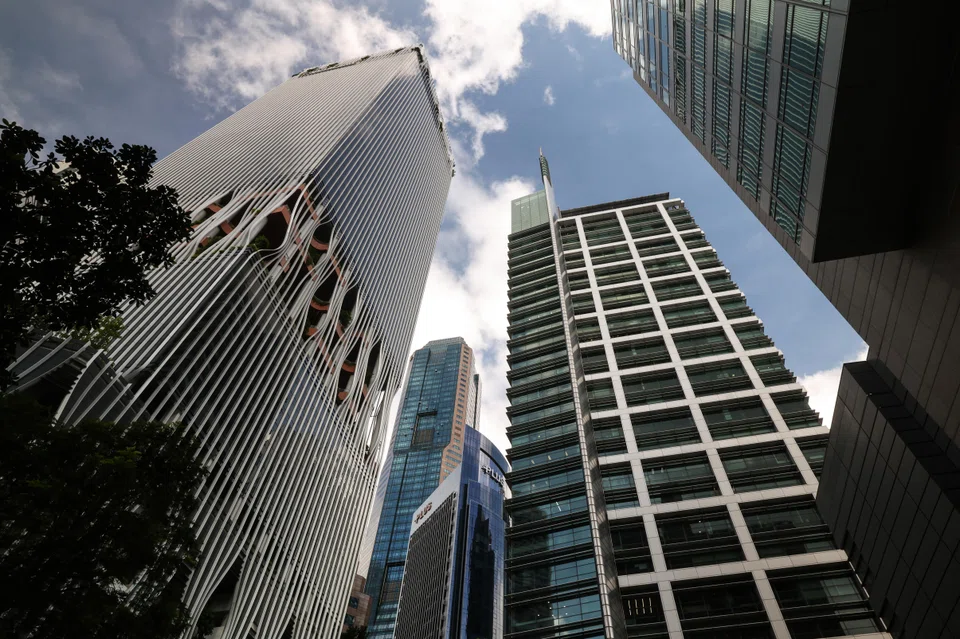
[SINGAPORE] Latest official data shows Singapore office rents firmed in the second quarter, with analysts attributing this to a strong showing for prime offices in the city area on the back of tight supply.
The islandwide vacancy rate, however, inched up to 11 per cent as at the end of Q2, from 10.8 per cent as at the end of Q1, partly due to the time lag between the completion of the new Shaw Tower in Beach Road, and when tenants can move in, said analysts.
The project, which has 435,000 sq ft of offices, received a Temporary Occupation Permit in mid-June 2026.
“It will take some time for the tenants to fit out their space and physically move into the building,” said Tricia Song, CBRE head of research for Singapore and South-east Asia.
Tenants secured so far in the building include Allianz, Adyen, Sanofi-Aventis Singapore and The Great Room. CBRE anticipates the islandwide office vacancy to improve in the second half of 2026.
URA data released on Friday (Jul 24) showed that its rental index for office space in Singapore’s central region rose 0.8 per cent in Q2 2026 over the preceding quarter. This contrasts with a 0.2 per cent quarter-on-quarter drop in Q1 2026. Year on year, the index is up 0.9 per cent in Q2.
“The thin pipeline of Premium, Grade A office buildings up till 2028 offers little reprieve to tenants.”
JUNE CHUA OF NEWMARK
CBRE’s analysis of URA transaction data showed that Category 1 offices – which cover better-quality office buildings in the city area – posted a broad-based firming in rents on a year-on-year basis.
Median rents for office spaces larger than 1,076 sq ft rose between 4.4 per cent and 12.4 per cent year on year in Q2 2026. The biggest gain was posted by office spaces of more than 5,382 sq ft and up to 10,764 sq ft. This was followed by units of more than 2,153 sq ft and up to 5,382 sq ft, which saw a 6.8 per cent increase in the monthly median rental figure.
Colliers’ head of research for Singapore, Catherine He, said: “Singapore’s office leasing market during Q2 2026 was underpinned by structurally tight supply and resilient occupier demand, reinforcing a landlord-favourable environment, particularly within the Core CBD (central business district) Grade A segment.”
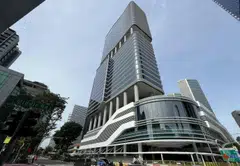
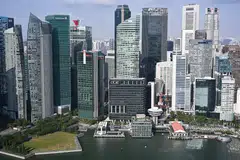

In a similar vein, CBRE’s Song observed that flight-to-quality momentum was evident across key Core CBD assets. “IOI Central Boulevard Towers, Marina One and Marina Bay Financial Centre remained focal points of active leasing activity. Moreover, AI companies of varying scales continued transitioning from flexible space into dedicated, self-managed offices in prime buildings,” she added.
URA’s data also showed that islandwide net demand – as reflected by the change in occupied office space – increased by 86,111 sq ft of net lettable area (NLA) in Q2 2026, after expanding by 279,861 sq ft in the previous quarter.

Wong Xian Yang, research head for Singapore and South-east Asia at Cushman & Wakefield, said that over the past four quarters (Q3 2025 to Q2 2026), the Downtown Core remained the strongest-performing office submarket, achieving cumulative net absorption of 484,376 sq ft. “This far exceeded demand in other submarkets such as outside central region, fringe area, Orchard and rest of central area.”
“This highlights the enduring appeal of the CBD, where occupiers continue to prioritise accessibility, availability of Grade A office space, corporate image and access to talent,” Wong added.
June Chua, senior managing director and head of Singapore leasing at Newmark, said: “Singapore’s appeal as a regional headquarters hub is continuing to underpin strong demand for premium and Grade A office space, offering firm support for their rents.
“Rather than trading down, major occupiers are right-sizing their space while maintaining high building and location standards. Furthermore, the thin pipeline of Premium/Grade A office buildings up till 2028 offers little reprieve to tenants.”
Most property consultants are upbeat about prospects for Singapore’s office leasing market, especially for the best stock in the CBD area, against the continuing backdrop of tight supply.
Why AI may not necessarily boost net office demand
Colliers’ He highlighted that the expansion of Singapore’s AI ecosystem is poised to become a key office demand driver. “With strong government support and growing regional prominence as an AI hub, a rising number of global AI firms are establishing and scaling operations in Singapore.”
While agreeing with this line of thought, Nicholas Mak, chief research officer of Mogul.sg, noted that “AI could also cause demand destruction in the office market as corporate decision makers look for ways to use AI to replace office workers”.
“Unless significant new office demand materialises in the next few years, the risk of an office glut after 2027 is relatively high,” Mak added.
Based on URA’s data, the islandwide stock of office space increased by 204,514 sq ft of NLA in Q2 2026, compared with the increase of 86,111 sq ft in the previous quarter.
As at the end of Q2 2026, there was a total pipeline supply of about 9.1 million sq ft of gross floor area of office space across the island, lower than the 9.3 million sq ft as at the end of the previous quarter.
URA’s price index for office space in the central region increased 0.4 per cent quarter on quarter in Q2, after rising 0.2 per cent quarter on quarter in Q1.
Decoding Asia newsletter: your guide to navigating Asia in a new global order. Sign up here to get Decoding Asia newsletter. Delivered to your inbox. Free.
Copyright SPH Media. All rights reserved.
TRENDING NOW

Once staunchly pro-China, Malaysian Chinese businesses are now distancing themselves from Beijing
Stocks to watch: HPL, Aims Apac Reit, Zico, Advanced Systems Automation, ComfortDelGro

‘How many will survive?’: Bubble fears arise as China’s humanoid robotics face reality check
Smaller board lots can’t fix a market run by three banks

