

Tech hub Seattle’s luxury homes languish as AI job cuts and taxes hit
A house asking for US$2.9 million has been on the market for more than 100 days
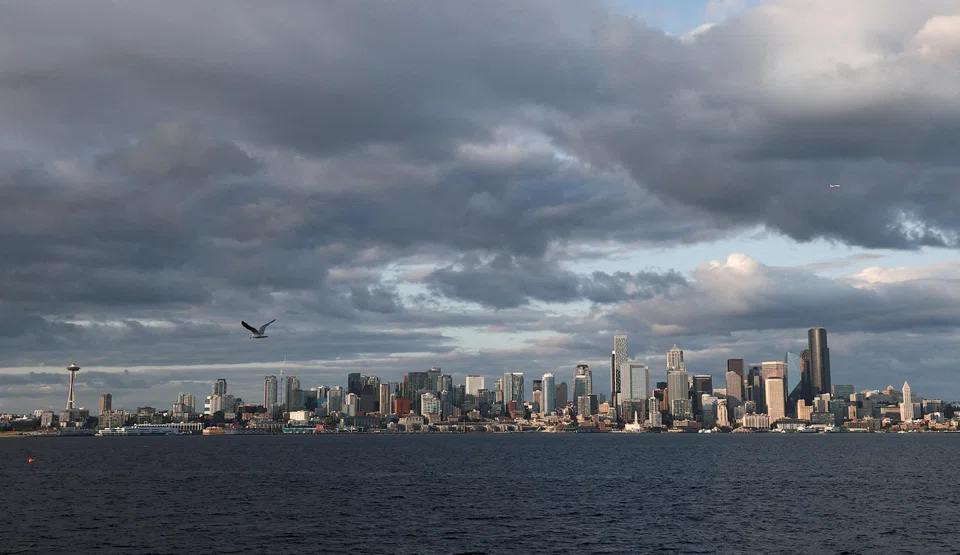
[WASHINGTON] Few places exemplified Seattle’s tech boom over the past two decades more than the suburbs east of the city, with their lakeside mansions and twisting cul-de-sacs that lured affluent workers from the likes of Microsoft and Amazon.
Today, a house in the hilly enclave of Sammamish asking US$2.9 million has been on the market for more than 100 days, and the seller is offering to help with financing.
Nearby, two homes right across the street from each other are listed for sale. On one initially listed for US$2.2 million and on the market since April, the real estate agent’s sign has a new price of US$2.1 million scribbled in ballpoint pen.
Homes languishing on the market are rare for the Seattle area, long attractive for its plentiful jobs, lush scenery and lower cost of living than San Francisco, its fellow West Coast tech hub.
But after years of benefiting from Big Tech employment and the accumulation of wealth that came with it, the area is becoming a test case for what happens when both are being challenged at once.
Companies including Microsoft, Amazon and Meta Platforms have slashed thousands of jobs in the region as artificial intelligence upends the tech industry.
At the same time, Washington is asking businesses and the wealthiest residents to pay more in taxes, including passing the first income tax in modern state history this year: a 9.9 per cent levy for households earning more than US$1 million annually.
The effects are starting to converge in the area’s real estate market, where pending home sales tumbled the most in the US in July, according to Redfin.
At the top 5 per cent of the market, pending sales tumbled 15 per cent from a year earlier in the three months till July, the brokerage’s data showed.

Across the US, the luxury market is relatively strong, with a 2.6 per cent increase in pending transactions over the same period.
Demand is particularly weak in the upscale suburbs that cater to the region’s wealthy.
In the six most expensive Seattle suburbs, including towns such as Bellevue and Sammamish, homes priced over US$2 million spent an average of 44 days on the market in the first half of the year, said Jeff Tucker, principal economist for Seattle-based Windermere Real Estate.
That compared with 25 days in the first six months of 2025 and just nine days in 2022.
“Buyers have no urgency,” said Eleanor Payne, a Seattle real estate agent. “Undeniably, there are fewer people moving to Seattle than there was before.”
Payne has seen the shifts in the local economy up close. Her husband was one of the Microsoft employees who recently accepted the company’s first-ever voluntary retirement programme, which was offered in addition to the job cuts.
The region also has plenty of areas of growth beyond AI, with local hubs for aerospace, life science, cloud computing and gaming, said Laura Ruderman, head of the Technology Alliance, a Seattle-based non-profit.
“We are not Detroit, where when you got laid off when all the car manufacturers were laying off workers, there was nowhere else for them to go, and we’re not Boeing of the 1970s, where when they laid off a whole bunch of machinists, there was nowhere for all these people to go,” she said. “There are plenty of places for engineers to go.”
Yet, the fate of Seattle’s tech workforce is only one part of the calculation for its housing market, particularly at the highest end.
For the state’s richest 10,000 households, the tax code looks entirely different than it did five years ago. A 2021 capital gains tax survived legal challenges and a ballot initiative to repeal it, and progressive advocates are gearing up to fend off similar threats to the new income tax, dubbed the “millionaire’s tax”, which would first be collected in 2029.
Lawmakers last year also raised the top estate-tax rate to 35 per cent – by far the highest in the country – before lowering it earlier this year back down to 20 per cent. It is now tied with Hawaii for the highest rate.
Some financial planners say their guidance to wealthy clients is to not die in Washington.
The tax code changes could affect Seattle’s draw as a tech alternative to San Francisco, said Daryl Fairweather, chief economist at Redfin.
“One of the reasons Seattle was so attractive to people leaving San Francisco in the 2010s was because it had zero state income tax,” she said. “If that changes, then maybe people will look to Nevada or Florida instead.”
Some major employers are also choosing to grow elsewhere.
Starbucks this year announced a second corporate headquarters in Tennessee, which has lower taxes and labour costs.
T-Mobile US, based in Bellevue, is quietly shifting more headcount to offices in Kansas and Texas, according to a person with knowledge of the matter, and has laid off more than 800 workers in Washington state in the past 12 months.
Meanwhile, prominent home-grown billionaires, including Howard Schultz and Jeff Bezos, have departed.
In Seattle proper, the most luxurious homes have fallen in value to where they were roughly 10 years ago, said Tere Foster, who has been selling real estate in the area for four decades.
That’s an opportunity for buyers who have been waiting years to get a mansion on Lake Washington, particularly those with cash who can avoid relatively high interest rates.
A waterfront mansion originally built for saxophonist Kenny G was put on the market in 2022 for US$85 million, at the time the highest price in the region’s history. It sold in May for US$38 million.
One of the most expensive homes currently for sale in the region was originally listed last year for US$75 million and recently relisted at a 40 per cent discount.
“For years we had all kinds of people moving into this area, and it brought jobs and new companies and everything,” Foster said. “I’m not sure that that is as attractive as it used to be any more.”
Destination markets for the ultra-wealthy have noticed an influx from the northwest. Joan Levinson, a Realtor focused on the affluent area around Scottsdale, Arizona, said her office worked with just one client from Washington last year, but has shown properties to more than seven this year.
“There were just a lot of Washington state calls – high end, looking for a house for maybe between US$10 million and US$12 million,” she said.
Near Las Vegas, about 24 of the 171 units at the Four Seasons Private Residences opening next year sold to people from Washington, according to Craig Eddins, the project’s executive director.
He said one common thread is buyers seeking to leave the state before “a major capital event” – retiring, selling a company or cashing out a stock position – that could trigger Washington’s capital gains tax.
Payne said the area’s talent and infrastructure supporting large tech companies means Seattle will always be a draw. And some companies are still hiring, such as the data centre startup where her husband recently began his first new job after 16 years at Microsoft.
But she said the combined uncertainty in employment and local politics is shrinking the pool of buyers just as inventory is starting to pile up.
“How does that play into maybe someone who’s a little bit younger or is maybe going to hold back on upgrading because they don’t know what’s going to happen over the next two to three years?” Payne said. “I see it playing into the market psychology.” BLOOMBERG
Decoding Asia newsletter: your guide to navigating Asia in a new global order. Sign up here to get Decoding Asia newsletter. Delivered to your inbox. Free.
Share with us your feedback on BT's products and services
TRENDING NOW

Once staunchly pro-China, Malaysian Chinese businesses are now distancing themselves from Beijing

Looking beyond looming CEO succession, should UOB potentially pursue a transformative merger?

Could stablecoins be the future of money?

Grab CEO’s wife Chloe Tong on life with Anthony Tan and finding her purpose

