

UK house prices fall unexpectedly as market feels Iran war impact
Average mortgage rates have climbed by almost a full percentage point since the start of the conflict
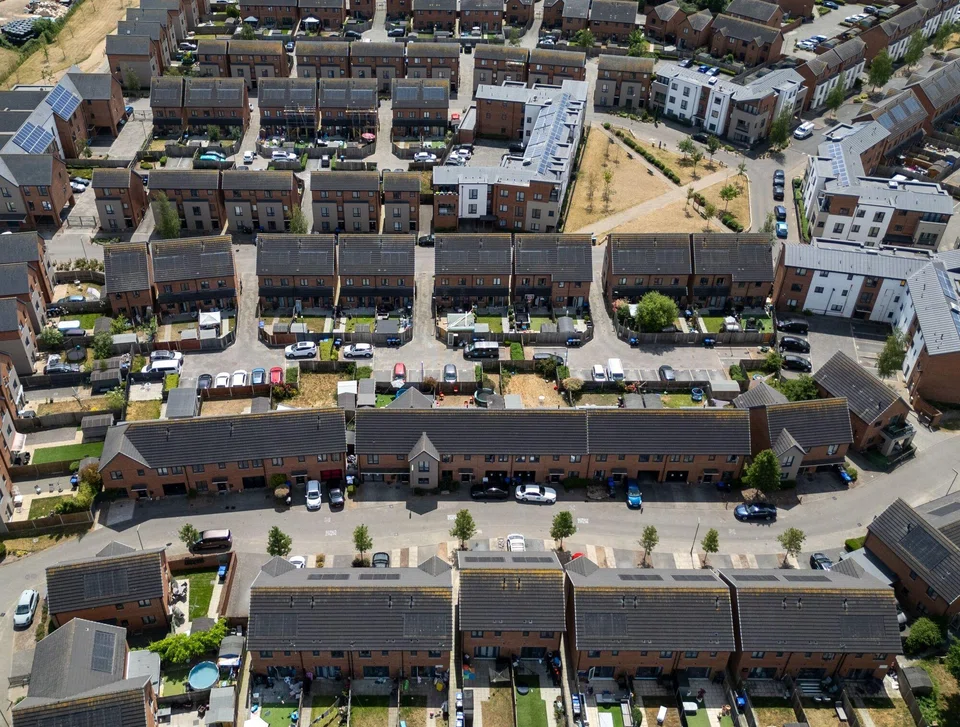
[LONDON] British house prices unexpectedly fell in May, according to data from mortgage lender Halifax on Friday (Jun 5), which represented the latest sign of a cooling in the market as higher borrowing costs and uncertainty caused by the Iran war weigh on demand.
House prices fell by a monthly 0.1 per cent in May, the same as in April, representing the third consecutive month-on-month fall, Halifax said.
A Reuters poll of economists had pointed to a rise of 0.1 per cent on the month. “Property price trends continue to reflect the uncertainty linked to developments in the Middle East,” said Amanda Bryden, head of mortgages at Halifax.
“Despite recent cuts to mortgage rates, higher inflation expectations have kept borrowing costs above the level seen at the start of the year, continuing to stretch affordability for many buyers and temper demand.”
Compared to a year ago, prices were 0.5 per cent higher, well below the 1.0 per cent rise forecast in the poll.
The survey chimed with findings from rival mortgage lender Nationwide, which in May recorded the first monthly fall since the start of the Iran war.
Data from the Royal Institution of Chartered Surveyors also showed a drop in house prices and demand in April.
Average mortgage rates in Britain have climbed by almost a full percentage point since the start of the US-Israeli war on Iran. The conflict also means that financial markets now expect the Bank of England (BOE) to raise interest rates later this year, rather than cut them.
Investors currently price in one or possibly two quarter-point rate rises by the BOE by the end of 2026, but see only around an 11 per cent chance of a move on Jun 18 after the central bank’s next meeting.


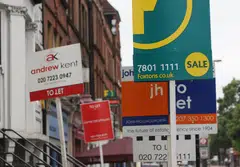

Despite the higher borrowing costs, lenders approved the most mortgages in 15 months in April, according to data from the BOE on Tuesday. REUTERS
Decoding Asia newsletter: your guide to navigating Asia in a new global order. Sign up here to get Decoding Asia newsletter. Delivered to your inbox. Free.
Share with us your feedback on BT's products and services
TRENDING NOW

S$8 billion wiped off OCBC value as shares slide 5.8% in heavy trade

Grab CEO’s wife Chloe Tong on life with Anthony Tan and finding her purpose

Brookfield denies accusation it cut Soilbuild out of Mapletree deal

8 public officers referred to police over property buys near unannounced MRT stations: Chan Chun Sing

