URA urges developers to take ‘risk-proportionate’ approach to anti-money laundering checks
Verifying sources of wealth and funds not required for most homebuyers, says the housing regulator

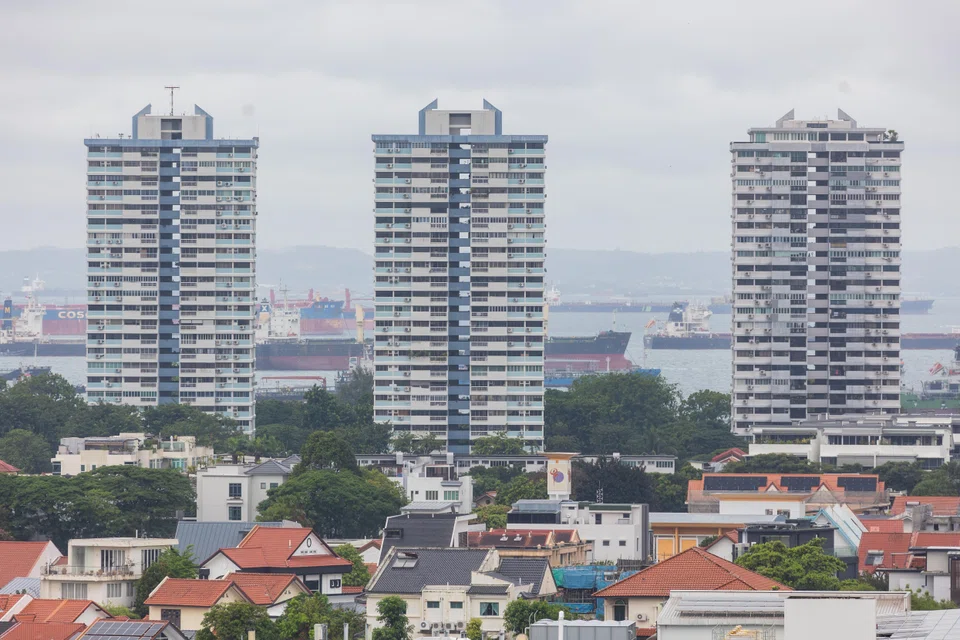
[SINGAPORE] Singapore’s housing regulator has told property developers to take a more targeted approach to anti-money laundering checks, making clear that source-of-wealth and source-of-funds verifications are not required for the vast majority of homebuyers.
The latest guidance follows industry feedback that anti-money laundering checks have become increasingly demanding for developers and agents.
In a circular issued on Tuesday (Jul 7,) the Urban Redevelopment Authority’s Controller of Housing (COH), Ling Hui Lin, said that developers should apply customer due diligence measures in a “risk-proportionate” manner, instead of taking a one-size-fits-all approach that may require excessive or irrelevant information from purchasers.
Checks should be “commensurate with the nature and complexity of the property transactions and in consideration of each purchaser’s risk profile”, she said.
A Real Estate Developers’ Association of Singapore (Redas) spokesperson welcomed URA’s latest guidance on anti-money laundering checks and the like. “We… are glad that developers’ concerns and practical challenges have been taken into account,” the spokesperson said. “This helps to pave a clearer and more practical way to comply with (these) requirements.”
The government’s latest guidance for property purchases echoes how Singapore’s financial regulator last year moved to keep a business-friendly environment for high-net-worth clients, while maintaining high standards in gatekeeping against money laundering.
The Monetary Authority of Singapore (MAS) worked with industry players to reduce the time taken for family offices to apply for tax incentives to three months, from 12 months. It also worked to reduce the time taken for private banking clients to set up accounts.
“We take a risk-proportionate approach, and not a zero-risk approach, because if we are overly kiasu, I think we will not be able to capture new opportunities,” Minister for National Development and MAS deputy chairman Chee Hong Tat told reporters one year ago.
In Tuesday’s circular to developers, URA said that for the vast majority of property buyers who are not assessed to pose higher risks of money laundering, terrorism financing or proliferation financing, developers are required to conduct only customer due diligence checks.
SEE ALSO



These include standard measures to identify and verify the identity of purchases and beneficial owners.
Developers may then proceed with the transaction if there are no matches with sanction lists and “adverse news”.
But if buyers are assessed to be of higher risk of these activities, developers must perform enhanced customer due diligence processes, investigating their sources of wealth and funds.
These include foreign politically exposed persons, as well as individuals linked to countries or jurisdictions flagged for weaker anti-money laundering or countering the financing of terrorism controls.
If the buyer is found on a sanctions list, Ling said that developers should stop dealing with them and file a suspicious transaction report. If there is “adverse news”, they should assess the risks before deciding whether to proceed with the transaction.
A suspicious transaction report should be filed if there is any suspicion of illicit activity, she pointed out.
Even when conducting additional due diligence checks on buyers to establish their source of wealth or funds, the COH emphasised that these measures should be “risk-proportionate, reasonable and take into account the unique circumstances and profile of each purchaser”.
For example, they can focus on obtaining relevant documents, such as income tax statements and audited accounts, without asking for “unnecessary information” such as long-dated financial or employment records.
Developers should also avoid “excessive measures and requests for irrelevant information” that are “disproportionate” to the government’s requirements and international standards, she said.
If the information already comes from reliable public sources, the COH said developers have “no need” to check it against multiple other sources.
They also do not need to verify “every single piece of source-of-wealth information gathered”, especially if it relates to wealth accumulation many years ago and records are no longer easily accessible.
Instead, Ling highlighted that developers should focus on verifying the more material and higher-risk sources of wealth, and assess whether any remaining unverified information poses an “acceptable” risk.
For standard single-property purchases at market-level prices, fewer checks are expected.
To streamline processes and improve developers’ understanding of the requirements, the COH has revised the guidelines for these activities in consultation with Redas.
The revised guidelines provide more detailed guidance on customer due diligence and simplify the risk assessment template that developers may use to assess their projects, Ling noted.
The COH will also partner Redas to organise seminars and workshops to share guidance and best practices on anti-money laundering as well as countering proliferation and terrorism financing.
Proliferation financing refers to the provision of funds or financial services for the illicit development and supply of weapons of mass destruction and related materials.
Decoding Asia newsletter: your guide to navigating Asia in a new global order. Sign up here to get Decoding Asia newsletter. Delivered to your inbox. Free.
Copyright SPH Media. All rights reserved.