A villa near Lake Como is just degrees away from being a crowd pleaser
The family treasure was sumptuous enough to host a pope in the 17th century, but for guests today, air-conditioning would enhance the appeal
[LAKE COMO, Italy] Over the past several years, Lake Como has exploded in popularity as a holiday location.
Each summer, the villas ringing its shores like diamonds in a necklace are booked solid. The best-known are reserved years in advance, and the wedding planners and deep-pocketed lodgers who seek them out because of their luxurious appointments and built-in privacy are now looking beyond the shoreline.
Giancarlo Valerio has long been fielding such requests for his family villa, a 20-minute drive from Lake Como in the hilltop village of Gironico al Monte.
“Yesterday, I got a phone call at home,” said the entrepreneur, who worked in luxury fashion before founding, and eventually selling, an F&B business. The call came from a couple who wanted to get married at the villa. “They found my number online,” he shared.
Valerio knows he has a jewel, whose convenient location and grandeur make it perfect for Italophiles seeking a one-of-a-kind holiday or party space.
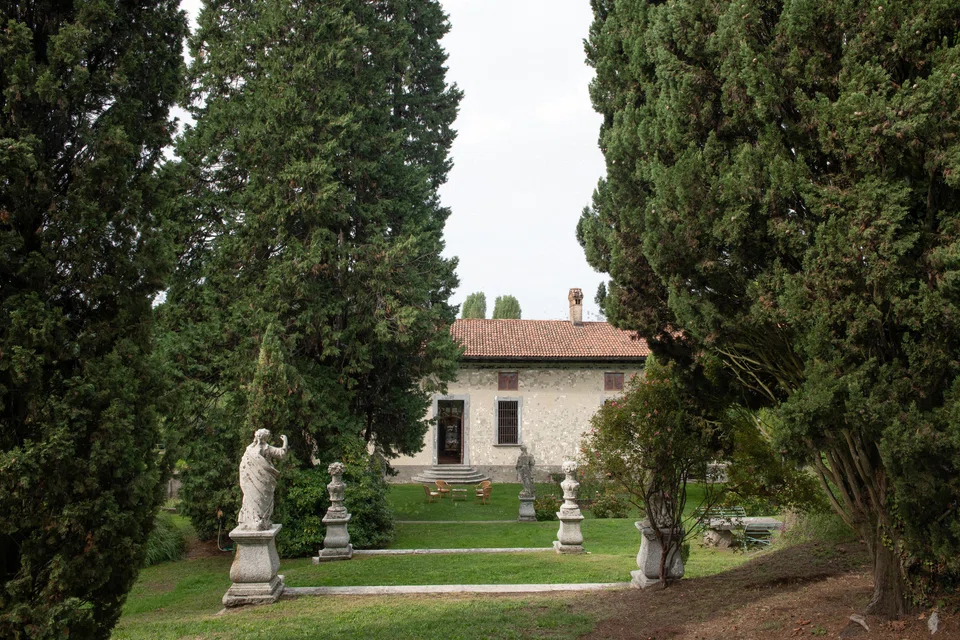
The nearly 14,000-square-foot villa, portions of which date from 1452, sits on nearly 5 acres of parkland atop a small hill surrounded by old-growth willow trees. Beyond its Italianate garden, with its sculpted topiary, rosebushes and hornbeams, the Milan skyline rises from the surrounding flatlands, just a 40-minute drive away.

It felt like a waste to leave the vast estate empty while he and his family lived in the city most of the week. But what would it take to transform this treasure into a location fit for the discerning public?
The Valerio family has enjoyed Villa Raimondi for four generations. In 1911, Giancarlo’s great-great grandfather Guido Valerio, an entrepreneur and a founding member of the AC Milan football team, and Guido’s wife, Olga Kogan, were winding through the verdant hills south of Varese, back to their apartment in Milan, when misfortune struck. The engine of their chauffeured car sputtered to a stop on a roadside just beyond a stately antique house. The driver sent them to seek refuge there while he fussed with the engine.
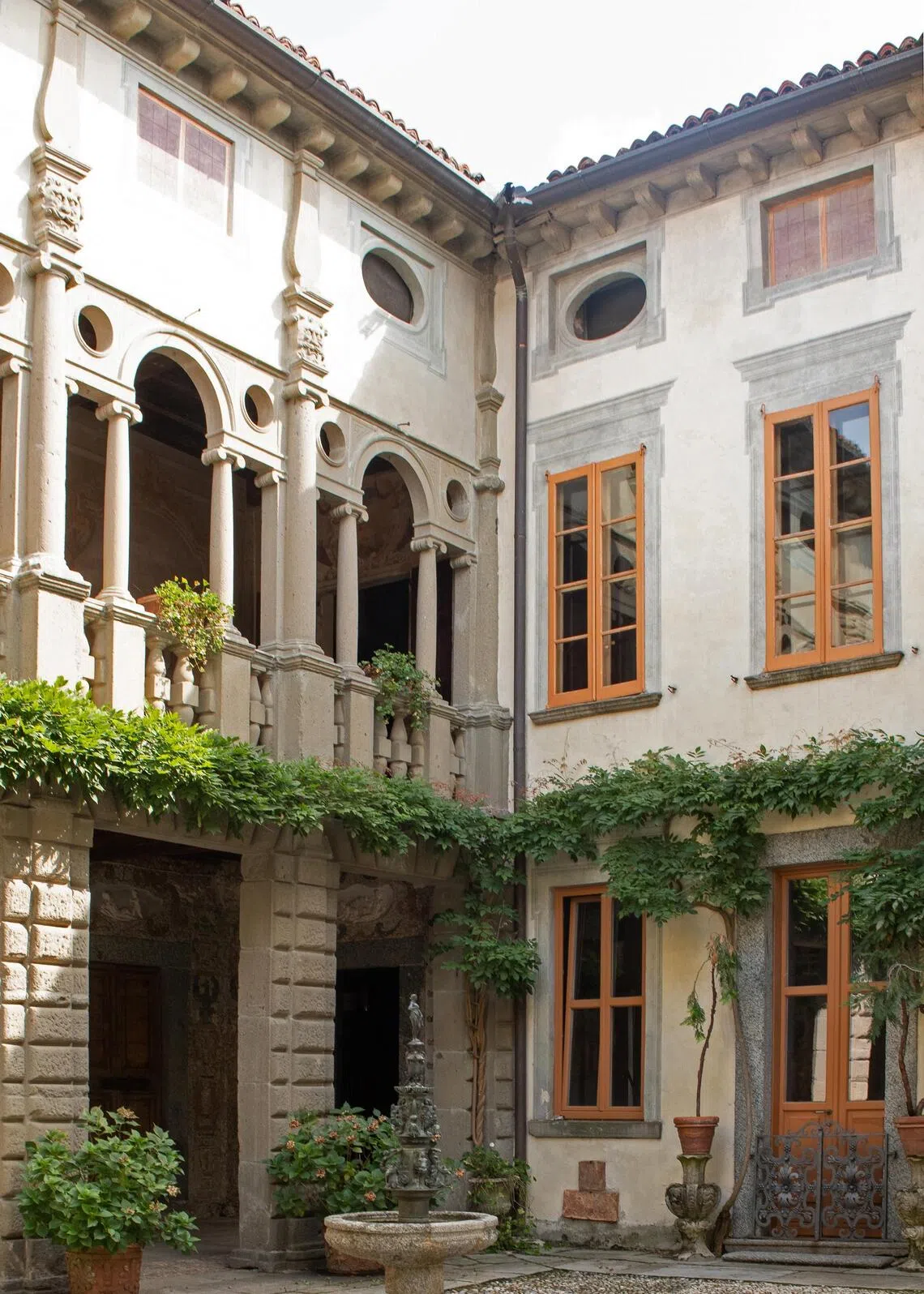
When the couple arrived at the gates, they got an eyeful of the villa’s extravagant baroque detail. The courtyard alone was a work of art.
Dating to the 17th century, it was decorated with painted eagles and lions, symbols of the aristocratic Rusca family, who originally built the home. The grottolike mosaic made of river pebbles depicted mythological scenes, and a rusticated double-height loggia punctuated by grotesque stone masks surrounded a stone fountain carved with writhing sea monsters.
The owner, Maria Rosnati, enthusiastically received the couple as impromptu guests. The widow of Marchese Giorgio Raffaele Raimondi, the scion of a noble Como family which had owned the villa since the 1820s, Rosnati showed the couple the home’s ancient charms: the sprawling suite – one of eight bedrooms – where Benedetto Odescalchi, also known as Pope Innocent XI, visited in the late 17th century; the armoury room with its museum-quality collection of antique Italian and Spanish weapons as well as a stucco relief of Vulcan, the Roman mythological arms maker; the 15th-century fresco of Christ, which overlooks the courtyard from the main floor.
By the time the driver had fixed the engine, Rosnati and the Valerios had made a deal: the villa, its contents and its property, including all the homes in the surrounding village, were to be sold to them. “They fell in love with the house and with its history,” Giancarlo Valerio recalled.
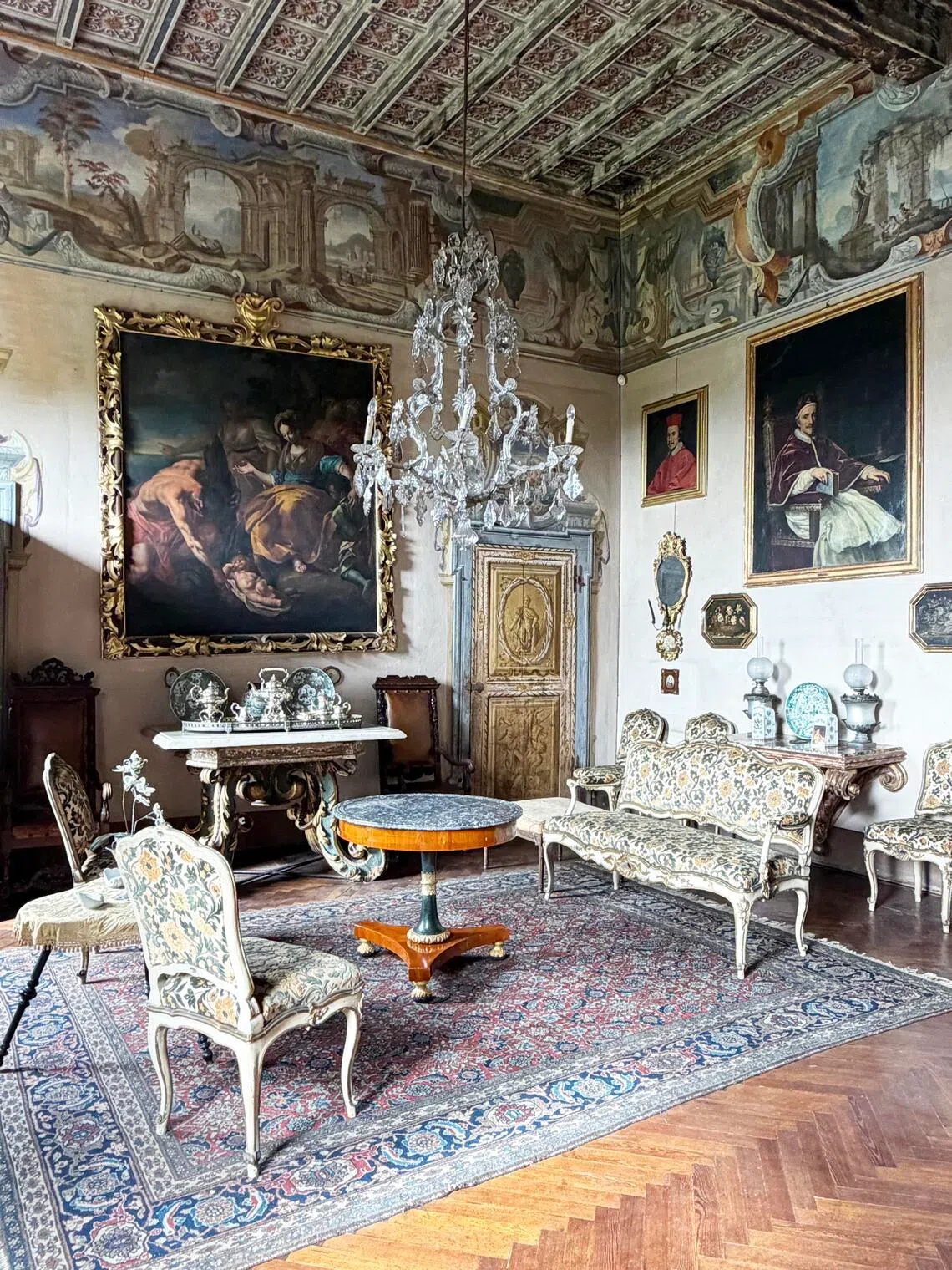
Over the next century, the Valerio family lovingly restored – and lightly modernised – the villa, replacing the floors in cotto lombardo ceramic tile, and refreshing the painted pastoral scenes in the second-floor loggia.
They fully restored the papal suite, cleaning the frescoes and adding a functioning bathroom. Several bedrooms were refitted with modern heating in the opposite wing, where the family stays when they visit.
The Valerios’ upgrades over 115 years, however, wouldn’t be enough to satisfy picky foreign guests. Visitors might clamour to sleep in the fresco-decorated alcove once inhabited by a pope, but would they do it without air-conditioning?
The family’s mission now is to transform this 600-year-old villa into a place that can provide modern luxury. But what does that really take in a country as protective of its heritage as Italy?
“We need to convert the house with modern comforts,” said Giancarlo Valerio. It will require air-conditioning to combat the northern Italian summer. Heating will be installed beneath the ancient wooden floors for the cool autumn and winter months, and modern, luxury-minded bathrooms will be added in each of the suites.
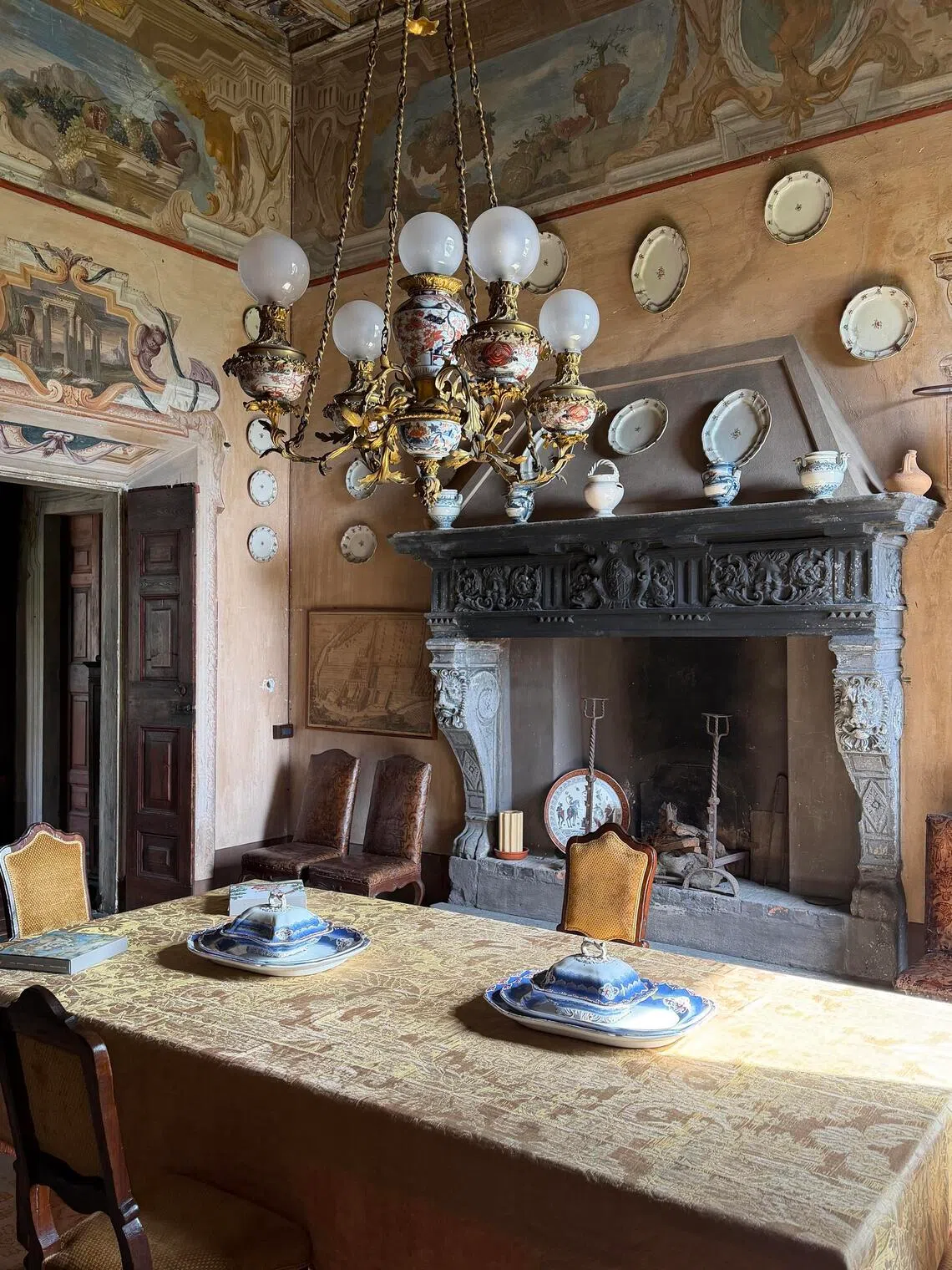
For the papal suite, Valerio has imagined a rain shower and a free-standing tub beneath the frescoes in the alcove where the pope’s bed now sits.
But it won’t be so easy. Any changes to the house must be authorised by Lombardy’s Soprintendenza, the government office that oversees the protection of cultural heritage. A villa with such a storied past will demand rounds and rounds of approvals.
The government is concerned even with the villa’s contents. Each object and decorative element is a treasure.
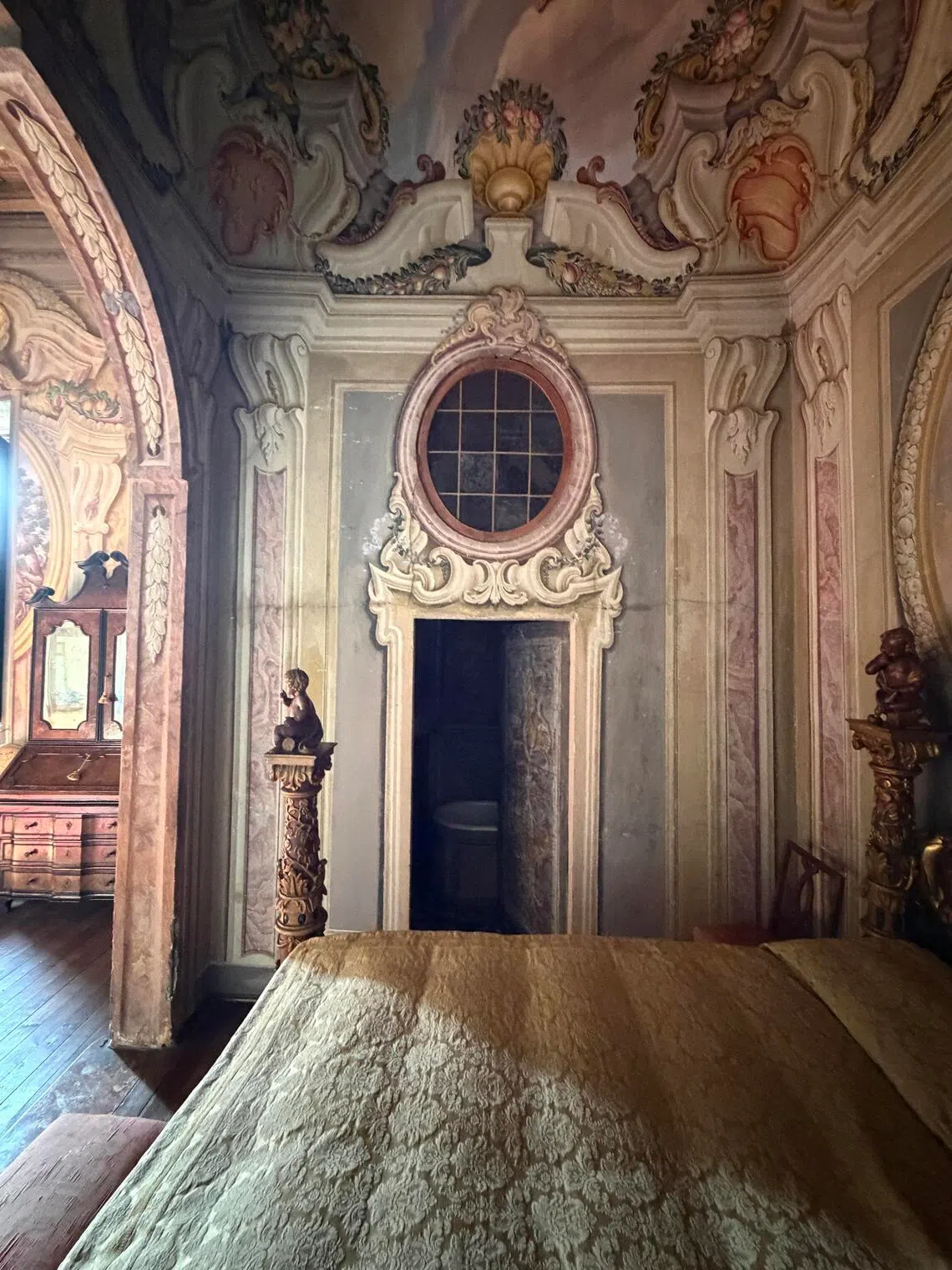
There are the tapestrylike leather curtains painted with heraldic crests that hang in front of interior doors to ward off drafts. The extravagantly carved wooden beds, similar to ones found on display in London’s Victoria and Albert Museum, are draped with hand-stitched embroidered canopies that have lasted hundreds of years.
And then there is the home’s most prized belonging, the arms collection, which will likely be placed in storage – away from tipsy wedding guests or unsupervised visitors.
All of this is still speculative. Anyone who has undertaken a renovation, especially of such an old and extensive property, will know that many surprises lie behind the walls and beneath the floorboards. Yet, Giancarlo Valerio hopes to have the villa up and running for short-term stays and events in the next two to three years.
“The idea isn’t to do a huge business; we want the villa to remain under our control,” he said of the project. “I wanted to share the beauty of the villa with the public. Because otherwise, it’s always closed.” NYTIMES
Decoding Asia newsletter: your guide to navigating Asia in a new global order. Sign up here to get Decoding Asia newsletter. Delivered to your inbox. Free.
Share with us your feedback on BT's products and services