

What’s behind a data centre’s asset valuation and business value?
Singapore is emerging as a haven for the hybrid assets, where constrained supply keeps pricing firm and returns high
[SINGAPORE] High valuations, rapidly mounting investments and the debt required to finance them are bringing data centre assets under scrutiny.
As investors wrangle with a boom-to-bust scenario and growing backlash against build-out, Singapore is emerging as a data centre haven where constrained supply keeps pricing firm and returns high.
Understanding the value and valuation of data centres will help investors and developers allocate their investments more effectively.
Far more than the industrial real estate they are housed in, data centres are crucial infrastructure underpinning all digital services in modern economies. One only has to look at Microsoft’s recent Outlook outage to understand the devastation that server downtime can wreak on everyday activity and global business.
Sending an e-mail, paying a bill, booking a private-hire ride, shopping online – these now-basic activities, and most other types of commerce today, rely on computing resources to process, store and exchange information.
Because individual and payment data is stored in data centres using advanced database systems, physical security, cybersecurity and operational reliability are central to data centre design.

Tech giants such as Meta, Google and Amazon Web Services (AWS) build their own AI-focused data centre campuses to train large language models (LLMs), used to produce inference and generative outputs.
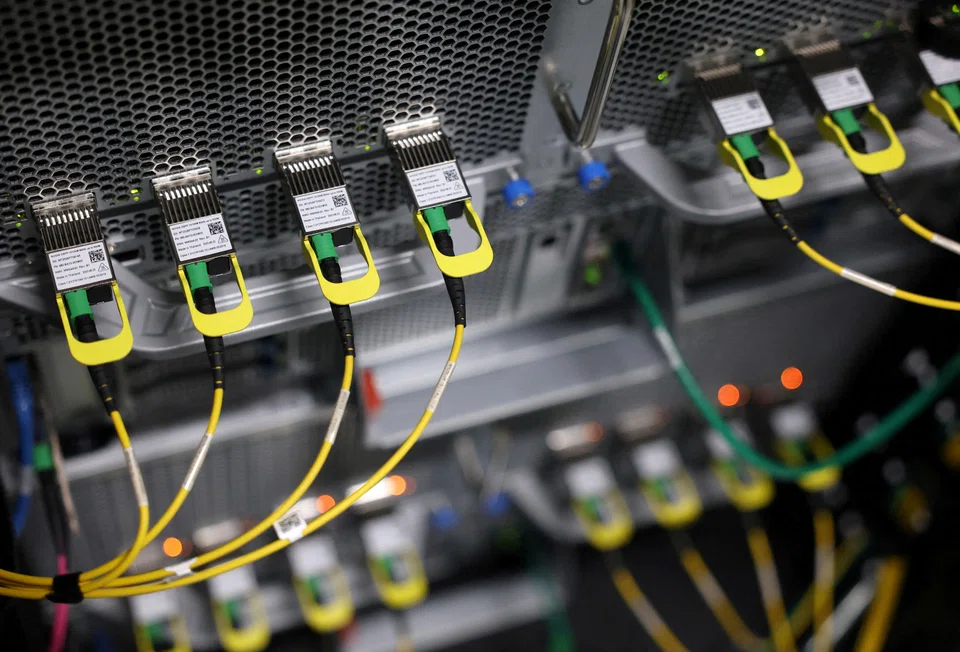
Nor do data centres operate in isolation. Servers connect through high-speed fibre-optic cables to servers in other data centres, creating virtual networks across multi-cloud environments. These interconnected resources distribute data and support application deliveries across different environments.
Not just real estate
Crucially, data centres require a reliable electricity supply, backed up by redundancy via batteries and standby generators.
SEE ALSO




Servers and computers densely packed in a data centre also generate intense heat, which must be cooled with air or liquid cooling systems, including multiple chillers and cooling towers, to prevent overheating.
Compared with conventional industrial buildings, data centres require substantial capital investment in backup power and cooling infrastructure to sustain continuous operations. According to Cushman and Wakefield’s Asia Pacific Data Centre Construction Cost Guide 2026, these systems account for an estimated 44 per cent of total development costs, while the building shell and land account for about 24 per cent.
The substantial investment required in mechanical, electrical and water systems leads some investors to view data centres as infrastructure assets, comparable to seaports, rather than conventional real estate.
Since lifting a three-year moratorium on new data centre projects in 2022, Singapore has pushed for “sustainable” data centres, giving out licences subject to strict energy standards. It has also announced plans to build a low-carbon data centre park on Jurong Island with up to 700 megawatts (MW) of capacity.
Licences for building new large-scale data centres in Singapore are allocated through competitive calls.
The Data Centre Call for Application (DC-CFA) framework is jointly administered by the Singapore Economic Development Board (EDB) and the Infocomm Media Development Authority (IMDA).
In August, four operators – Digital Realty, Equinix, Keppel Data Centres and ST Telemedia Global Data Centres – were each allocated 50 MW of new capacity, subject to strict green energy standards.
In such a supply-constrained market, data centre pricing is likely to hold firm against a global backdrop of increasing supply and uncertain returns.
Data centre operators are also expected to pay premiums for new data centre licences here.
Valuations and the business model
Long leases provide relatively predictable rental income that supports the purchase price, but valuation must reflect the lease terms, income risks and the landlord’s expenditure obligations.
Institutional investors will prefer a more complex discounted cash flow method to determine investment feasibility. However, valuers will apply three conventional valuation methods to determine the value of a typical co-location data centre: direct comparison, cost and income.
For a hypothetical co-location data centre with capacity of 5 MW, and based on an estimated total construction costs of S$23,270 per kilowatt (kW), the total construction costs for the building shell, standby power generators, cooling systems and land (excluding servers and IT equipment) are estimated at S$116.4 million, going by Cushman & Wakefield’s 2026 cost guide.
By direct comparison against transactions of two data centres sold in Japan in November 2025 and March 2026 for an average price of S$31.6 million per MW, according to CBRE’s 2026 Asia Pacific Data Centre Trends & Outlook, the 5 MW co-location data centre would be valued at S$158.1 million.
Using the income method, based on a monthly rent of S$400 per kW at a 95 per cent occupancy rate, and outgoing expenses of 35 per cent, we derive a net rental income of S$14.8 million per year for the co-location data centre space (without servers).
Using a discount rate of 6.5 per cent per annum, the estimated value of the 5 MW co-location data centre with a 30-year lease is about S$197 million.
The estimated value based on the income method is much higher than the values estimated using the contractor’s cost and direct sale comparison methods.
Based on the same net rental income, yields are estimated at around 12.7 per cent and 8.74 per cent for the values estimated, using the contractor’s cost method and past average transaction prices, respectively.
The differential yields also imply that investors will pay higher prices for data centre assets in Singapore relative to construction costs.
Aside from the valuations, investors must also conduct careful due diligence and understand the assets they purchase, including ownership rights of the IT servers and equipment and which equipment count as fixtures.
Mechanical and electrical standby generators, cooling plants and systems are fixed to the data centre’s shell and structure which belong to data centre owners; the fixtures thus belong to the data centre owners and cannot be removed.
Graphics processing units packed in server racks and other IT equipment are usually fixed and connected to the raised-floor system in data centres for security and operational reasons.
In co-location data centres, these servers and IT equipment are installed and owned by tenants; they are considered tenants’ fixtures and are removable on lease expiry. However, in managed hosting service data centers, operators install, own, and manage those server systems for their tenants and users.
In Singapore, the inelastic supply of data centres due to power supply constraints will hold up prices. Still, one factor that can affect value is the technological depreciation of servers and equipment, which are not usually owned by data centre asset owners.
Servers and other IT equipment generally have shorter economic lives than the building shell, mechanical and electrical infrastructure, and cooling plants. Technological advances accelerate obsolescence, and data centre investors and tenants must understand the useful life and set aside sufficient funds to account for depreciation.
Even when the equipment remains the tenants’ fixtures and is not included in the acquisition, investors who acquire the property interest are still entitled to existing leases that generate steady long-term cash flows.
Yet, tenants are responsible for replacing and upgrading servers and equipment, and may need to set aside funds for such upgrades and replacements.
Businesses with limited resources can procure on-demand cloud computing resources directly from hyperscale providers such as AWS, Google Cloud and Microsoft Azure, rather than managing their own server systems.
Sing Tien Foo is provost’s chair professor, and Alice Christudason is associate professor at the Department of Real Estate, Business School, National University of Singapore. The views expressed in this article are those of the authors, and do not represent those of the university and its affiliates.
Decoding Asia newsletter: your guide to navigating Asia in a new global order. Sign up here to get Decoding Asia newsletter. Delivered to your inbox. Free.
Share with us your feedback on BT's products and services
TRENDING NOW
Ex-Nvidia CEO Jensen Huang carried a secret for more than a year. It led to his downfall

Higher rates, weaker spending: Is the Philippines entering stagflation?

As Indonesia picks new vice-president to succeed Gibran, investors see risks and opportunities

Singapore to inherit South China Sea code talks with key issues unresolved

