

Hotel investment outlook brightens in Asia-Pacific

Singapore
A RESURGENCE of Asia-Pacific hotel investment sales is on the cards as more buyers eye the current environment as an opportunistic time to snag assets, although bid-ask spreads threaten to crimp deal volumes.
Industry players have observed an uptick in buying and selling interest in recent quarters as the sector looks set to ride the projected travel and tourism recovery. Some purchasers are also turning hotels into apartments, co-living properties or offices.
Speaking to The Business Times, Steve Carroll, CBRE head of hotels and hospitality, capital markets, Asia-Pacific, said the region could see more than US$10 billion in sales of hotels in 2022. "This is on the back of end-user demand being finally unleashed, given the rising Covid-19 vaccination rates, border reopenings and steady economic recovery."
He said investors are chasing opportunities with strong domestic demand potential and assets from which they hope to extract further value through refurbishment or repositioning.
Although CBRE expects some governments to be more cautious with new Covid-19 variants in the short term, it forecasts consumer and investor confidence to continue growing over 2022. Japan on Nov 30 banned the entry of foreign visitors after the Omicron variant emerged, and Hong Kong has tightened quarantine rules on arrivals from some African nations, for instance.
Carroll said: "With the high vaccination rates across countries, we predict governments to continue to progress from pandemic to endemic, and learn to live with Covid-19."
In January to September 2021, hotel transaction volumes reached US$6.5 billion, up 5 per cent from the same period in 2020. "The weight of capital looking to invest in hotels and resorts across the Asia-Pacific is at an all-time high," he noted.
Knight Frank forecasts deal volumes to top US$11 billion this year. Christine Li, the firm's head of research for Asia-Pacific, predicted that with countries veering away from a zero-Covid strategy, investments in 2022 will likely rise at a faster rate of 25 per cent to 30 per cent.
The capital profile has been diversified across sovereign wealth funds, insurance companies, private equity and family offices.
Carroll said: "The Asia-Pacific region is a growth engine for global portfolios. As such, investment platforms are increasing teams across all the gateway cities to enhance execution capabilities."
New pools of capital are emerging. In a recent research report, JLL highlighted burgeoning interest from investors in the Middle East and Europe, who have seldom ventured into the Asia-Pacific.
That said, a bid-ask spread persists for certain assets. Li from Knight Frank told BT: "One might think, given the current challenging environment, that it is a buyers' market. But this has not been the case." Given the compression of cap rates amid the fall in income, "deals have not come at basement bargains", she said.
Part of this stemmed from divergent views on the resumption of travel. That led to different pricing of risks and fuelled significant bid-ask spreads for some hotels, wider than in other property sectors, Li added.
Investors remain cautious in committing capital to an investment that may face protracted cash-flow risks, while sellers are generally unwilling to cough up discounts as they view the revival as an eventuality.
"With financing conditions and assistance from banks remaining conducive, there is no significant pressure to sell," she said.
Still, the size of the gap between offer prices and bid prices varies across the region. Markets with a huge domestic base to tap on continue to get deals done as there is an assured source of initial income, Li noted.
CBRE views Australia, Japan, mainland China and South Korea as the drivers of regional recovery. This is considering that some 80 per cent of hotel demand is originating from domestic consumers, Carroll said.
Australia and Japan saw the completion of several major deals during Q2 2021. In Japan, Blackstone acquired 8 hotels from Kintetsu Group for 60 billion yen (S$710.9 million), while Mitsubishi Estate and Tokyo Century made a forward purchase of a super luxury hotel, Tokyo Torch, for around 56 billion yen.
In Australia, Singapore sovereign wealth fund GIC, Melbourne-based fund manager Salter Brothers and Swiss-based private equity firm Partners Group bought a portfolio of 11 Travelodge hotels for a record A$620 million, from Mirvac and NRMA.
An Australian news website also reported in June that luxury hotel owner-operator Stamford Land was looking to sell 6 of its vacant properties in Australia and New Zealand for more than A$1 billion (S$1.02 billion).
Elsewhere in the region, resort markets - particularly Bali, Phuket, Da Nang and the Maldives - are expected to attract investors in the coming months, as the short-term themes of travel resumption and the release of pent-up demand combine to drive cash flow, said Carroll. "Positive demand and supply fundamentals in these markets are also generating buyer interest," he added.
"Resort markets with broad geographic source markets will provide solid risk-adjusted returns for value add and investors that are willing to upgrade and reposition assets," he said.
Also in demand are entire portfolios, given that investors looking to place large capital sums will focus on country-specific strategies. "Portfolio acquisitions will help them achieve their strategy faster, provide diversification and deliver greater upside potential."
As for whether there have been many fire sales after the pandemic's impact on the hospitality sector, Carroll noted that generally, there is limited distress at this time. Sellers were largely aiming to de-risk their positions and recycle capital.
Knight Frank's Li said that as distressed opportunities are unlikely to be substantial, transactions could be fuelled instead by value-creation strategies.
"Hotels in gateway markets are prime candidates to be turned into luxury residences or offices, as investors can readily leverage their prime location, structural layouts and existing facilities for repurposing," she said.
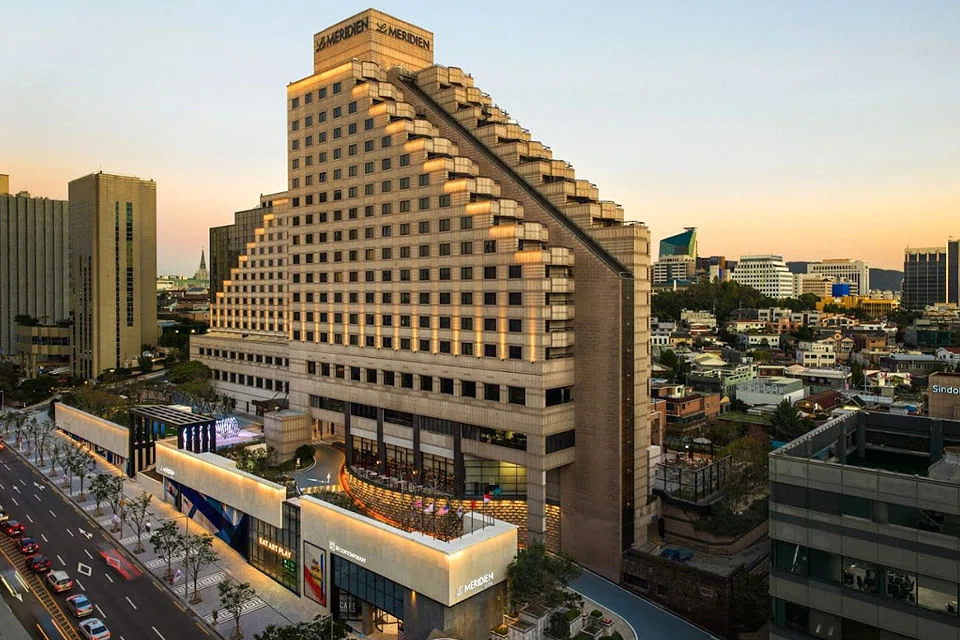
For example, the 336-key Le Meridien Seoul will be converted into luxury residences. The South Korean hotel was purchased by a joint venture of Hyundai E&C and Wealth Advisors in one of the largest deals this year, fetching some 700 billion won (S$803.2 million).
"Smaller ones in other cities have also been repurposed into co-living and co-working setups," Li said.
Operationally, Asia-Pacific's hotels are still recovering from the pandemic's impact, with borders only just reopening. CBRE noted that Singapore was among the outperformers in the 12 months ended July 2021, registering 72.2 per cent occupancy on the back of government contracts to use hotel rooms for stay-home notices and quarantine orders.
Sanya, a beach resort city on Hainan island, reported occupancy of 73.3 per cent as of July 2021. This reflected the popularity of resort destinations and mainland China's broad domestic tourism base, which has also helped the country's other major hotel markets record improvements in occupancy, Carroll said.
"Confidence is growing and when consumers can travel, they will. This will fuel the recovery of the market and a wave of transactions across the coming years," he added.
READ MORE:
- Increase in hotel investment reflects growing optimism in APAC: CBRE
- Stamford Land puts Australia, NZ hotels up for sale for A$1b: report
- Marriott wary of Delta impact after hit to Asia-Pacific recovery
- Park Hotel Management's creditor files winding-up application
TRENDING NOW

Government to bring forward raising of retirement age, give employers more financial support to create flexi-load jobs

If Europe goes to war, the fallout will be felt in East Asia
Former minister Maliki Osman, Revolut chairman join Asia Gulf Holdings advisory board

Small nuclear reactors could boost the Asean Power Grid: GE Vernova executive

