

The ‘5 am Club’: How early-morning routines work for business leaders
For some CEOs, beginning the day at the crack of dawn gives them some protected time before work demands flood in


[SINGAPORE] At 5 am, the Central Business District is still empty – but a small group of company heads are already up and about. This is when they exercise, reflect, plan or gain a head start at work, before the constant flow of e-mails, meetings and demands begins.
Many world leaders and top chief executives famously need as little as four hours of sleep at night, with genetics known to play a role in sleep requirements.
But early-rising CEOs do not necessarily sleep less. Rather, this “5 am Club” – a phrase popularised by Canadian writer Robin Sharma in his 2018 book The 5AM Club – may simply go to bed earlier.
Goh Wee Ping, CEO of Wee Hur’s fund management arm Wee Hur Capital, is among those who have embraced this discipline.
He did not do so because of Sharma’s book, which he has heard of but not read. Rather, he began waking up at 5 am in early 2023, partly so that he could drop his daughter off at school and partly to secure time to go to the gym before work.
Previous attempts to exercise at lunchtime or after office hours had not always panned out. There were often social events to attend at lunch; and the father of three prefers to spend his after-work hours with his family.
Over time, the morning routine has become second nature to him. Goh, who turns 40 this year, recently shifted to waking up even earlier, at 4 am.
When he started, he had to set multiple alarms, he recalls. Now, it has become easier: Once his alarm goes off, he can simply get up and begin his day.
His morning regimen – which begins at around 4.30 am – consists of not just going to the gym, but also includes sauna sessions and ice baths, commonly referred to as contrast therapy. This new lifestyle led to “a massive transformation”, he says. Within six months, from November 2023 to April 2024, his body fat reduced from 30 per cent to 11 per cent.
SEE ALSO





Goh still gets a good seven hours of sleep by going to bed at around 9 pm. As he deliberately ensures that he gets enough sleep, he feels that he has more than enough energy, despite the early start.
“What has truly changed my life over the past three years is being active again, and generally feeling good every day,” he shares.
Protected time
Dr Christopher Barnes, a professor at National University of Singapore Business School specialising in sleep and leadership, notes that “simple logistics” may be one reason that executives wake up early.
“They may not be able to find time during typical work hours to do the things that they do in their early-morning routines.”
Prof Barnes adds that “recovery” activities such as exercise, mindfulness, psychological detachment from work, and relaxation generally lead to good work outcomes.
Having a “protected time slot” makes it more likely that leaders will engage in these activities, and this can result in “these leaders bringing their best selves to work”, he says.
The concept of “protected time” can have deeper psychological benefits. Morning hours are valuable not just in terms of quantity, but also in the quality of that free time.
Eric Lim, stress-reduction teacher and co-founder of Somnus Sleep Wellness, says that early-morning hours appeal to leaders because they provide “one window in the day that belongs entirely to them and (is) within their control”.
“The moment the workday begins, everyone wants a piece of you. E-mails, decisions, people. That demand doesn’t stop,” he notes.
“The early-morning routine is not about waking up early for its own sake. It’s about choosing yourself before the day chooses for you. That’s a very intentional act of self-leadership.”
Salt Investments CEO Dennis Goh, 51, has not read Sharma’s book either – but he wakes up between 5 am and 6 am naturally, without having to set an alarm.
Partly inspired by tech giants who are known for waking early, he began doing so in his 40s with the aim of setting aside more time for himself.
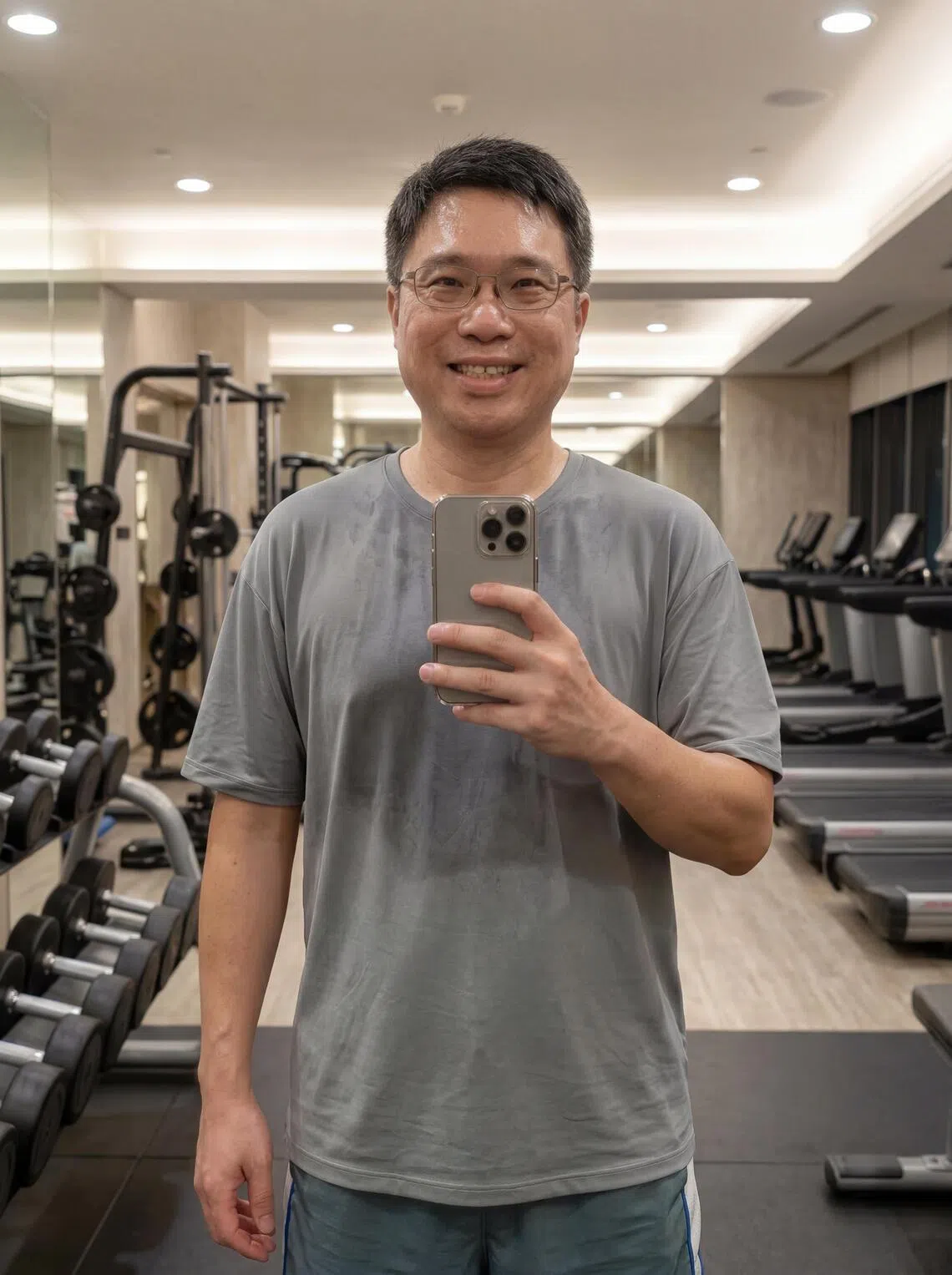
Investor meetings, last-minute calls and shifting priorities mean that his days are rarely predictable, he says. So waking up at the same time as everyone else likely means diving into meetings from the get-go. “Travelling takes some time too. So that’s why I am creating time for myself.”
While he occasionally exercises in the morning, what he prizes most is having the time to reflect. “I do a lot of self-reflection when I wake up, when it’s the quiet of the morning (and) the noise hasn’t come in yet, before I dive into the day.”
He adds: “The first thing I do when I wake up is to check in with myself and ask what I need to do that day.”
Guided by Apple co-founder Steve Jobs’ “less is more” philosophy, he identifies the top three priorities for the day. On days when a single issue outweighs the rest, he focuses solely on that one task.
Lim points out that this sort of “morning reflection practice” helps leaders build the capacity “to notice what’s happening inside (them), the mental clutter, the habitual reactivity, before (they) act on it”.
He believes it can thus improve leadership effectiveness, saying: “The protected space creates the conditions for mental clarity.”
But he also warns: “It’s important not to follow this early-morning routine blindly just because others are doing so, especially if waking up early is not matched to your body clock preference or chronotype.”
No “one timing fits all”
In contrast to Goh Wee Ping – who is not a relative – Dennis Goh goes to bed around midnight, thus getting five to six hours of sleep each night.
“I do wake up at 5 am (even if) I sleep late, but the key thing is that I want to create time for myself (and) have more hours in the day,” he says.
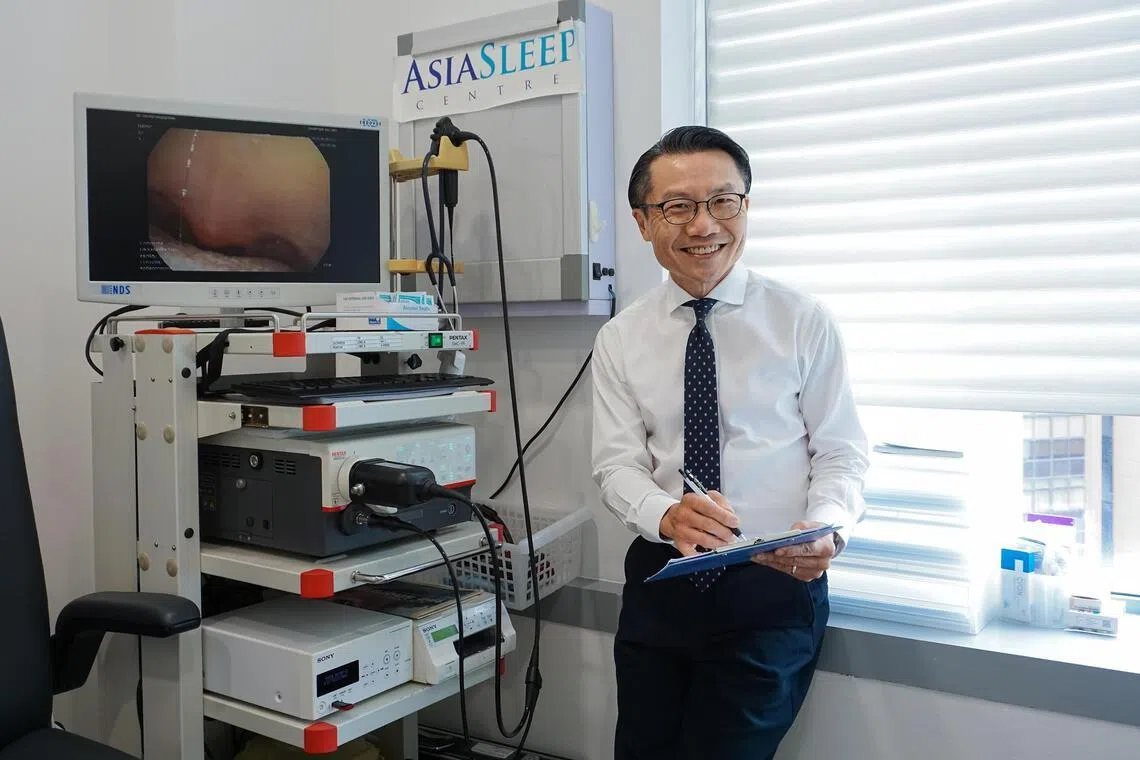
Dr Kenny Pang, a sleep specialist at the Asia Sleep Centre, notes that sleep requirements vary by person and differ with age, occupation and psychological constitution.
It is generally fine to wake at 5 am daily, especially if one is getting the recommended seven to nine hours of sleep each night, he says.
“There is no ‘one timing fits all’ situation,” he adds. Rather, it is vital to “listen” to one’s body. “Waking up at 5 am daily becomes a problem if it causes sleep deprivation, leading to lethargy, fatigue, tiredness, sleepiness, mood changes, irritability and poor concentration and focus.”
Dr Julian Lim, lead sleep psychologist and co-founder of Somnus Sleep Wellness, points out that waking early is advantageous for people who naturally prefer an early sleep window, but can be detrimental to those with a later preference, since it could mean insufficient sleep.

Experts agree that rising early without sufficient rest can be counterproductive.
For Prof Barnes, the main potential downside of the 5 am Club lifestyle “is that people may be sacrificing sleep in order to live up to their regimen”.
“I am sceptical that the restoration that they achieve from early-morning regimens will lead to as many benefits as sleep would,” he says.
In his own research, the professor has noted that sleep deprivation impairs decision-making, and he emphasises that well-rested leaders make smarter choices and motivate their teams more effectively.
Dr Lim warns: “In the long term, insufficient sleep increases the risk of a range of chronic conditions including cardiovascular, metabolic and mood disorders, dementia, and all-cause mortality.”
Dr Pang, who is also an ear, nose and throat specialist, highlights the importance of “sleep hygiene” as well, which includes sleeping at regular timings every night.
The optimal period is from 11 pm to 6 to 7 am, he says. This is because a hormone called melatonin – which helps to regulate sleep – starts to be released in the body at around 11 pm, peaks between 1 and 2 am, and tapers off afterwards.
Eating habits can also affect sleep. Goh Wee Ping has his last meal of the day by 2 to 3 pm, noting that avoiding late meals helps the body relax.
“One of the major parts about sleeping is (getting) your heart rate to below 60 beats per minute and if you have an undigested chicken in your stomach, you can’t,” he says.
He adds that research recommends finishing meals at least three hours before bedtime, though he prefers to finish much earlier.
Catching up?
Some early-rising executives may try to “make up” for short sleeping hours at night with daytime naps. Dennis Goh, for example, naps while travelling between meetings.
Dr Pang says that it is fine to take naps or play “sleep catch-up” on weekends, to help “repay the sleep debt”. Naps should be limited to 30 to 45 minutes, to avoid starting the sleep cycle again and waking up more tired than refreshed.
However, needing three to four naps daily may signal sleep deprivation or disorders such as sleep apnoea, he cautions.
Similarly, Dr Lim says: “Having a short nap can sharpen attention and reduce fatigue; and in high-performance settings, that can be valuable. But they are a supplement, not a substitute.”
Cutting one’s main sleeping time and relying on naps consistently can lead to a chronic sleep deficit, he warns.
“You may feel functional, but you are probably not operating at your full cognitive capacity; and over the years, that pattern carries health costs.”
Personal choice
Apart from the practical benefits, rising early might have an element of “impression management”, observes Prof Barnes, noting that early risers tend to be viewed more positively than those who wake up later.
While using early-morning exercise and wellness routines for impression management is not new, the rise of social media means that more platforms broadcast these as signals of discipline, he adds.

For Goh Wee Ping, however, rising early is a personal choice that he does not try to impose on others.
He acknowledges that everyone is different, and in different phases of life.
Waking up early is not a prerequisite for success, he says – though it has helped him personally.
“The amount of things that I am managing now, to an average person, will seem like a lot of things to juggle,” he notes. “But because of the way I optimise my time, I do feel that I have the capacity to manage them.”
Decoding Asia newsletter: your guide to navigating Asia in a new global order. Sign up here to get Decoding Asia newsletter. Delivered to your inbox. Free.
Copyright SPH Media. All rights reserved.
TRENDING NOW

Britain’s mansion tax shows the difficulty of targeting wealth

Once staunchly pro-China, Malaysian Chinese businesses are now distancing themselves from Beijing

The only common thing in S-E Asia is that we all eat rice: Cisco’s Asean president

Singapore data centre operator DayOne opts for US IPO at likely US$20 billion valuation

