Appeal to the young, don’t intimidate the old: Tong Heng’s fourth-gen heir on reinventing a 90-year-old bakery
Famous for its diamond-shaped egg tarts, the family business is one of 42 newly recognised SG Heritage Businesses

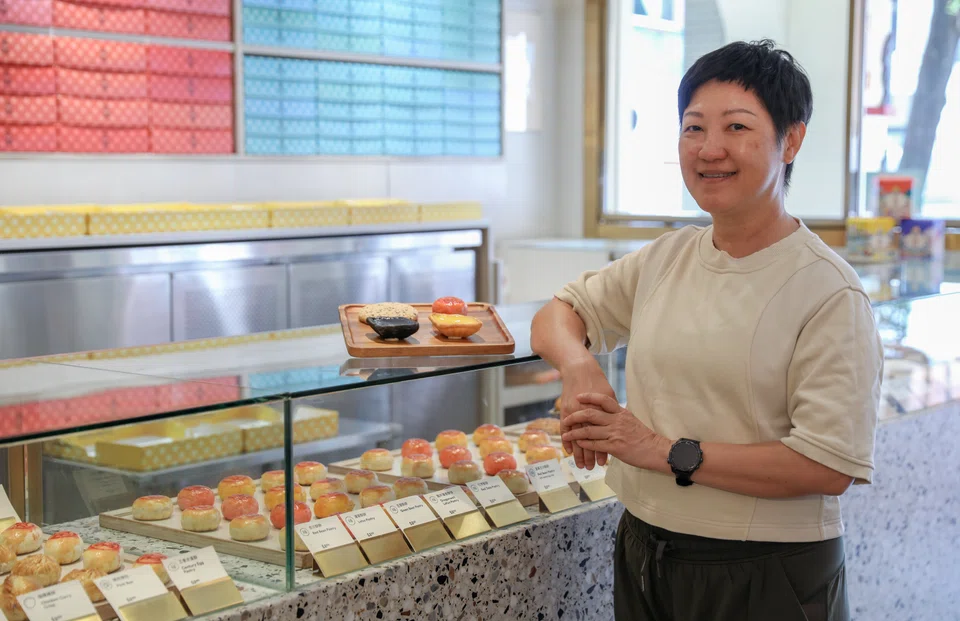
[SINGAPORE] Ana Fong, the fourth-generation showrunner of Cantonese pastry shop Tong Heng, hopes to someday open a retail space at Changi Airport.
There, the 90-year-old bakery could offer its products to Singaporeans looking for gifts for foreign friends, or tourists hoping to bring home a taste of the city-state.
But before her airport dream can come to fruition, Fong has to make sure that Tong Heng has souvenir-ready products.
“I can’t be selling my egg tart range,” she said. That would be encouraging customers to take them out of the country – something she doesn’t suggest.
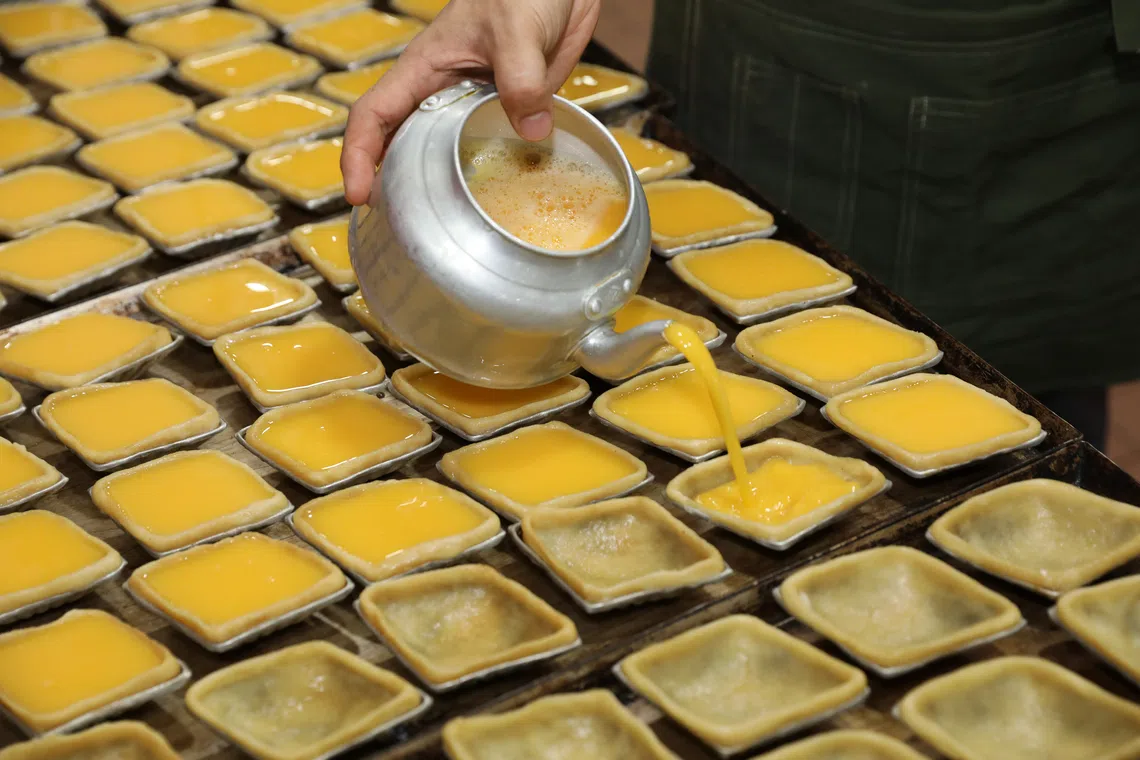
Tong Heng’s iconic diamond-shaped egg tarts are best enjoyed fresh from the oven. For that reason, Fong sometimes dissuades tourists from taking them on a plane back home.
“I said, ‘Would you buy a packet of French fries and take it on an aircraft for six hours, then take it home maybe 12 hours later (for) your family to enjoy?’ You won’t, right?”
“It still tastes like French fries, but the texture is discounted,” she told The Business Times in an interview at Tong Heng’s flagship store in Chinatown, where all the pastries are made by hand.
That is also why Fong is hesitant to expand overseas. It is difficult to recreate the same taste and texture in a place where the ingredients and even water may be different, she said.
For her, expansion lies in widening Tong Heng’s product range to include souvenirs and gifts that can cross borders.
Last year, the company tapped the National Heritage Board’s Organisation Transformation Grant to repackage its kaya into a box set of three mini jars.
This year, Tong Heng applied for the inaugural SG Heritage Business Scheme – and was one of 42 businesses recognised as such in October.
“(The scheme) can help us to preserve our century-old Cantonese pastry-making craft and ensure these skills are passed down to future generations,” said Fong.
“Most importantly, it reflects the brand’s commitment to contributing to Singapore’s cultural landscape and keeping a treasured part of local history alive.”
Calling the recognition a privilege, she hopes the scheme can provide support for Tong Heng to further expand its product range.
Modernising a traditional business
When Fong joined the family business 13 years ago to learn the ropes, she found that it had a loyal following of customers, mostly in their 40s – and that was the problem.
The business, founded by her great-grandfather in 1935, would do well to update its image to appeal to younger customers, she felt.
The youth of that time were the millennials, and Fong did not think the shop’s old-fashioned packaging – red-and-white designs filled with Chinese characters – would draw them in.
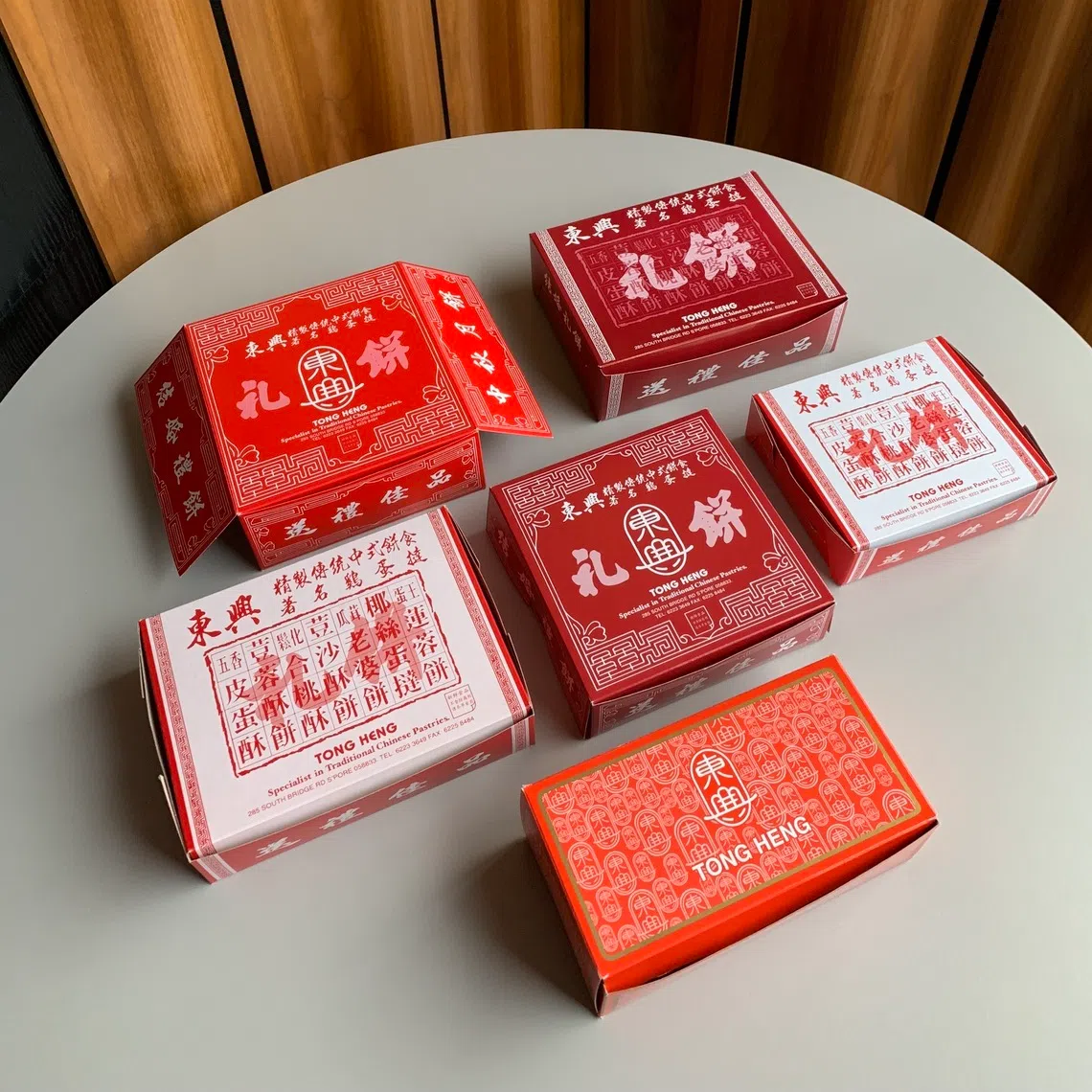
“Even for me, who is way past millennial age, it does not appeal… so how can it possibly appeal to the millennial?”
“(For) the younger generation, the phone camera gets to eat or drink first,” she quipped. “These are the people who do not mind how much they spend so long as they get to flex a bit.”
It would be another three to four years before her bosses – two of her paternal aunts – agreed to revamp the shop.
Fong spent at least eight months picking a creative agency for a deceptively simple task: appealing to younger customers, without intimidating those who have been patronising them for decades.
The agency proposed new packaging with boxes in bright red, yellow and blue, as well as art deco designs – a look which Fong’s aunts “hated”.
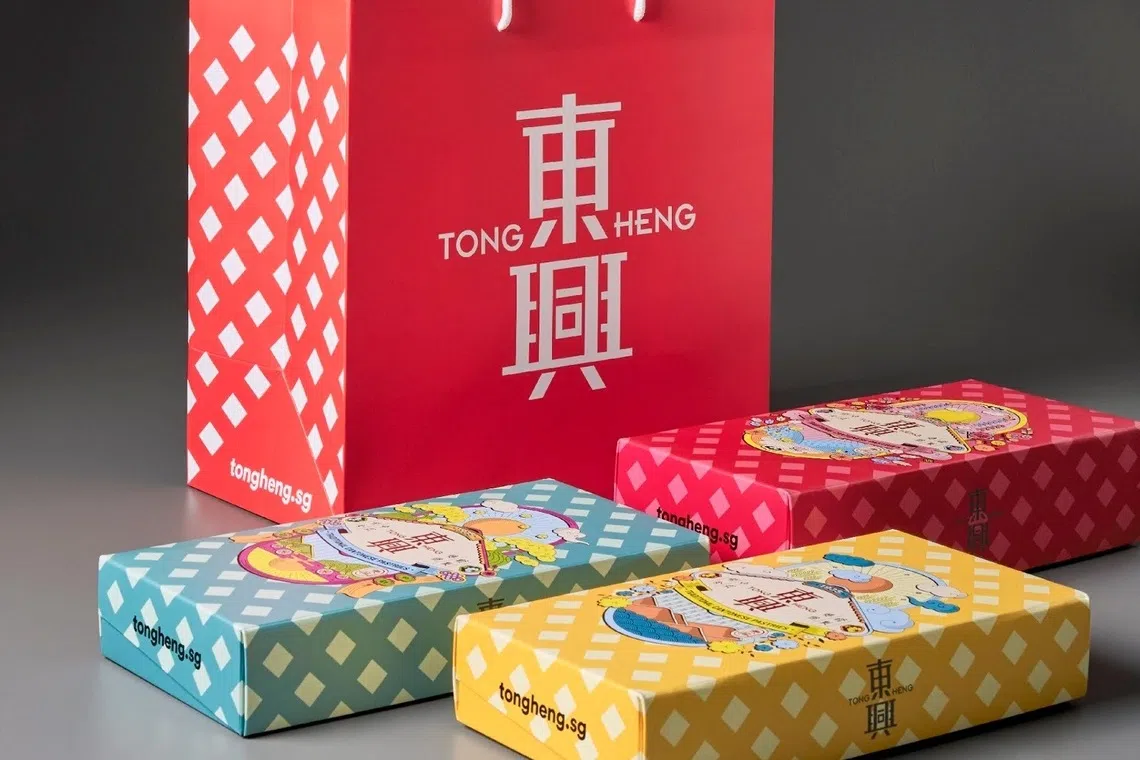
It did not appeal to Fong either, in fact. But if this would attract the young, then she was prepared to go with it and manage her aunts’ resistance.
Those efforts seem to have paid off. On the brisk weekday afternoon of BT’s interview, several students in school uniform dropped by for pastries – and asked politely if they could snap some photos.
“I like that every time students come in, it means that we’re being recognised and… they are aware of the brand,” Fong told BT.
Fong emphasises that she is not the boss – the company is still owned by her aunts – even if, as chief operating officer, she has spearheaded several initiatives to modernise the family business.
These began with offering cashless payments and digitising records, then establishing a social media presence and getting a corporate WhatsApp account.
When Covid hit, the business had to close temporarily. “But by the second week, we rolled out delivery and with that, we actually gained more customers.”
The shutdown of international travel turned out to be a tailwind, as the inability to go abroad meant people had to buy local.
From Japanese occupation to Covid-19
Still, the pandemic made its presence felt in other ways. Many workers reevaluated their priorities – and some quit their jobs.
Tong Heng’s kitchen staff strength halved to six or seven workers, and has not grown since. When there’s a manpower shortage, Fong and her bosses step in to help.
Covid-19 was a defining challenge for Fong, who noted that each generation of owners has had to face one.
For the first and second generations, it was the Japanese Occupation – though this turned out to be a catalyst for the business.
Many people died during the war, and survivors were gripped by a sense of unpredictability about the future, she noted. Those with money were determined not to be “hungry ghosts” and wanted to spend on eating what they liked, she said, adding that business was “not bad” then.
The third generation – Fong’s aunts – were spooked by the arrival of a major competitor in the early 1990s. Hong Kong’s Saint Honore Cake Shop came in with a bang, splashing full-page ads in local newspapers.
“They were better known for egg tarts then. Coming to Singapore, (they gave us) a run for our money, so that’s when my two bosses were panicking,” she said.
But the arrival of a rival unexpectedly brought wind at Tong Heng’s back. “Our business was also brisk because locals started to compare... So that helped us, and it turned out actually they liked it, so it was not so bad.”
About two decades ago, Tong Heng brought an investor on board and embarked on an expansion plan. But the rapid proliferation of outlets did not end well.
“That’s where we got our fingers burnt,” Fong said. “It was too much to handle, then I realised we paid a high price.”
Having too many outlets meant the business was spreading itself too thin, leading to a compromise in quality and affecting how consumers viewed the brand. Tong Heng now runs just one other store, in Jurong Point.
The experience left such a bitter taste that the owners became convinced the business should only be handed down to a family member.
Work to groom the fifth generation – Fong’s niece – has already started. Fong sees it as a learning opportunity as well, since her niece, a recent graduate working in consulting, belongs to the very demographic to which Tong Heng hopes to appeal.
Cantonese but Singaporean
What defines Tong Heng’s pastries as Cantonese? For Fong, it is about sticking to Chinese ingredients and not turning to “Western” flavours like chocolate or fruits. While Western bakers tend to use butter, Tong Heng has always used lard.
These days, Fong draws inspiration from the kitchens of her mother and late grandmother, and visits her neighbourhood Chinese medicinal hall in search of “traditional ingredients”.
This is even as she recognises that egg tarts are not quite traditionally Chinese, with their origin likely in Portugal.
In fact, though her great-grandfather hailed from Guangdong in China, Tong Heng’s earliest offerings already had a uniquely Singaporean twist: the use of kaya.
“He embraced the local culture, and he probably had a sweet tooth, and therefore he enjoyed and liked the aroma of kaya,” Fong said.
This is part of a series on companies recognised under the National Heritage Board’s SG Heritage Business Scheme.