

Beyond coffee, Joe & Dough serves up wholesale bakes and new formats overseas
The Singapore cafe chain is trying out bigger ideas in Indonesia
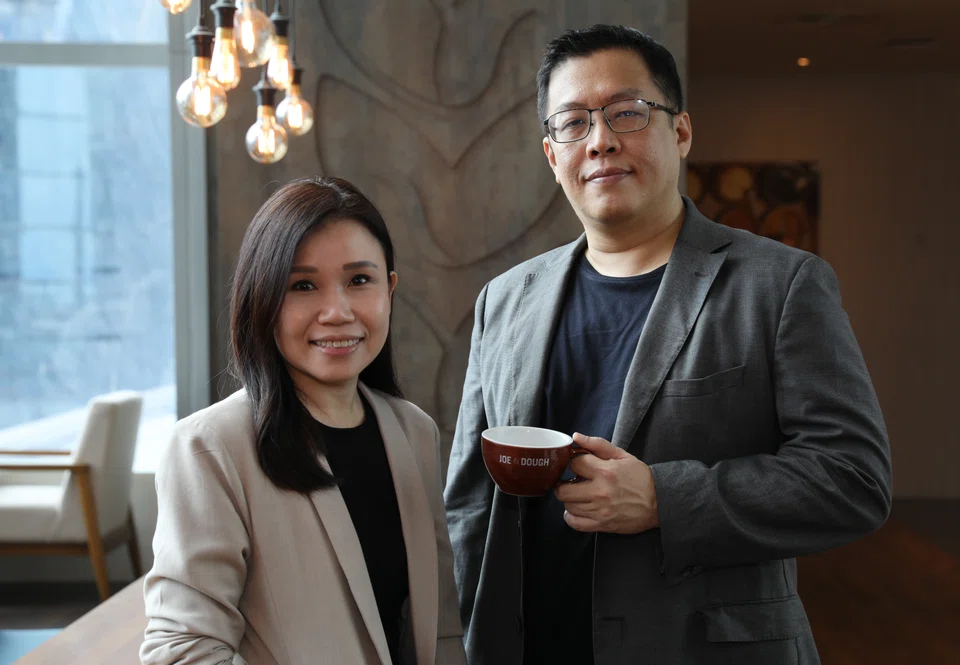
[SINGAPORE] Set up to bring good coffee to the masses, cafe chain Joe & Dough now does much more: from supplying pastries to hotels and restaurants, to opening new concepts in Indonesia, including a Thai buffet restaurant.
In 2009, couple Damien Koh and Dawn Wee opened Joe & Dough, a cafe located in Hitachi Tower in the Central Business District.
“We were interested in the coffee segment, and thought it would be nice to be able to work towards a common dream,” said Koh. “So the initial premise was very simple: we just wanted to make good coffee accessible.”
The cafe began with a modest coffee menu, before introducing artisanal sandwiches – such as parma ham with apricot chutney – which ended up contributing 70 per cent of revenue.
But soon after, in 2010, their sandwich supplier passed away. Koh and Wee responded by setting up a bakery arm, dubbed Bakeri, to take production in-house.
In doing so, they knew that production capacity would be too high for Joe & Dough alone. The company therefore started supplying bread, pastries and cakes to hotels, supermarkets and restaurants. Today, their bakery arm contributes about 35 per cent of revenue.
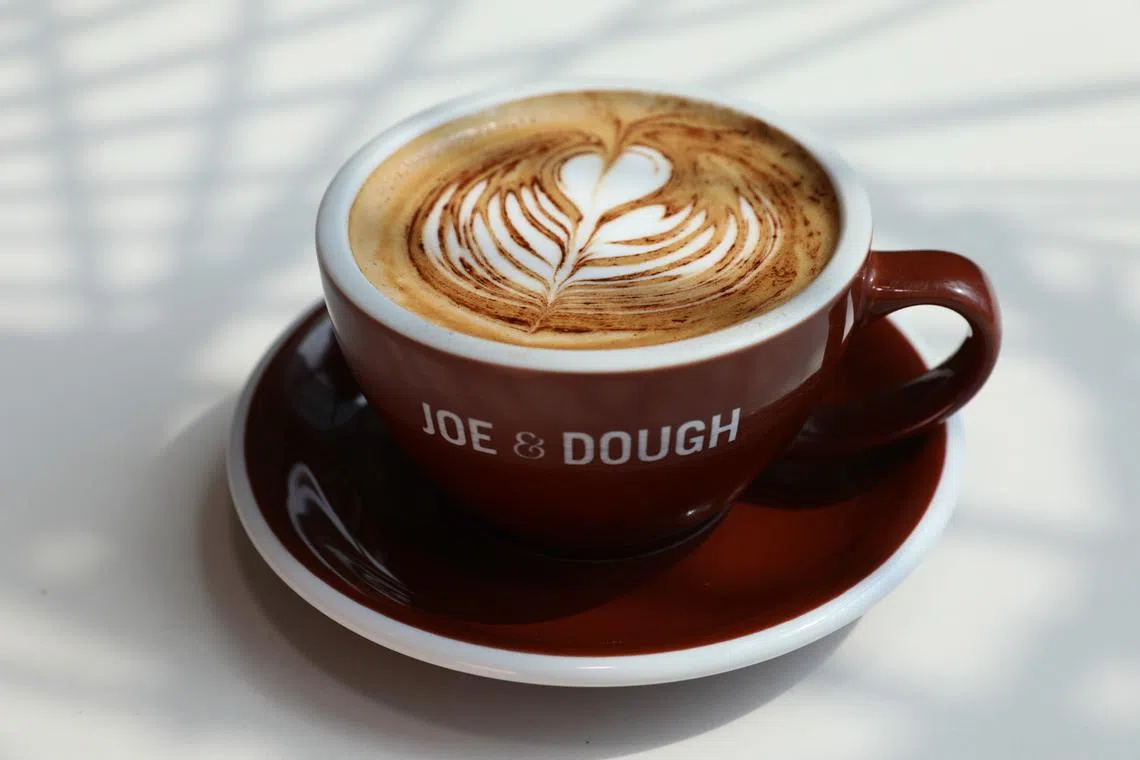
“The bakery was a painful process that took time to build, but it gave us capabilities that made us more competitive,” said Koh, noting that this vertical integration helped the company manage costs and boost margins.
After setting up their second and third outlets – in Suntec City in 2010 and Marina Bay Link Mall in 2011 – Koh and Wee decided to expand Joe & Dough more aggressively.
Between 2013 and 2014, Joe & Dough opened six more outlets. This was supported by moving its central kitchen to a space spanning 11,000 square feet, up from 2,200 sq ft before, with a 15-time increase in production capacity.
But with rising competition in the CBD, Koh found that expansion did not necessarily mean better performance. “We felt like we were duplicating the business without necessarily working on it.”
This prompted a shift in strategy. Rather than saturating the local market, the company explored opportunities in Indonesia, where Koh saw a gap for regional cafe brands with local flavours.
Explorations in Indonesia
The company partnered Indonesian consumer goods conglomerate Maspion Group to open its first outlet in Jakarta in 2018. This was a full-fledged bakery cafe that Koh and Wee expected to have greater lifestyle appeal, compared to the lean model used in Singapore.
“In Singapore, we focus a lot on productivity and streamlining,” Koh noted. “But overseas, it’s also about brand identity and standing out. We positioned ourselves as having the best croissant in Indonesia, something that would anchor the brand and keep us top of mind.”
Indonesia’s lower operating costs also allow for offerings such as edible cookie cups, which would not be cost-effective in Singapore, observed Koh. “What works there can’t always be transplanted back.”
Today, Joe & Dough has 21 outlets: 15 in Singapore and six in Indonesia, with two more opening in Jakarta and Surabaya this year.
But with Jakarta’s cafe space also becoming saturated, Koh and Wee have branched out into two new concepts there: Thai buffet restaurant Noya, launched last December, and Japanese retail bakery Kooma, opening this September.
“We want to leverage our existing knowledge and network in other markets to try out new business formats that are complementary,” said Koh. “Joe & Dough is a cafe, Kooma is a small takeaway shop and Noya is a full-service restaurant.”
Koh hopes to open another five to 10 outlets annually across the three brands, over the next three to five years. The company is also considering new regional markets.
Joe & Dough’s overseas strategy focuses on identifying strong partners and markets where the cafe model can be sustained.
Cafes typically have lower revenue per square foot and lower average customer spend than fast casual restaurants, said Koh. With entry to Indonesia already costing between S$70,000 and S$100,000, it is important to evaluate new markets carefully before entering, he added.
In 2024, the group’s revenue was over S$10 million, with 65 per cent from business-to-consumer channels and the rest from business-to-business (B2B) sales by Bakeri. About half of the B2B sales are from supermarkets, and the rest from wholesale contracts with restaurants and hotels.
Despite Singapore’s sophisticated consumer base, Koh sees limited examples of local cafe brands achieving significant regional or international scale.
“We operate in a tough environment with tight labour and high costs. You need a clear proposition to succeed abroad.”
Citing reports that Singapore’s F&B industry is making a loss overall, Koh said: “If you come in and your eyes are not wide open, just wanting to be another cafe, the odds are stacked against you. So understanding your reason and knowing what you have to offer is very important.”
This is the first in a series on how veterans of Singapore’s cafe scene are adapting to stay relevant
TRENDING NOW

Nvidia reinstates Jensen Huang as CEO; Trump says move poses no national security risk

Indonesia’s coal tycoon Low Tuck Kwong replaced as Bayan Resources president-director

Nvidia surges 33% after reinstating Jensen Huang, reviving AI trade; stocks soar in US and Europe

Consider lowering homeownership barriers for some non-resident foreigners

