

ComfortDelGro H1 profit falls 19.7% as group focuses on long-term transformation
Revenue rises 5.7% to S$2.6 billion from S$2.4 billion, supported by public transport segment

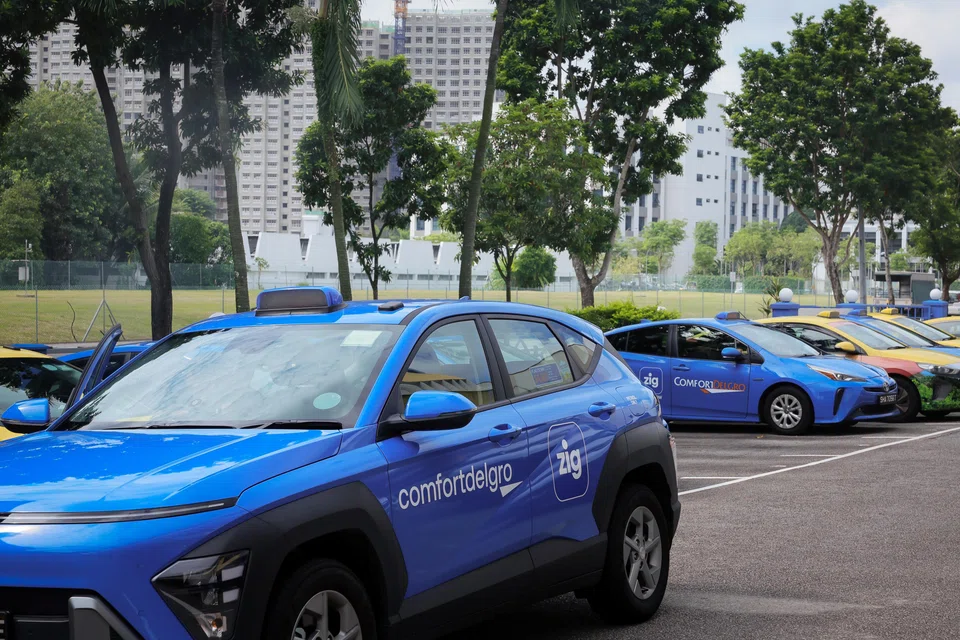
[SINGAPORE] Singapore-headquartered transport operator ComfortDelGro’s (CDG) net profit fell 19.7 per cent year on year to S$85.1 million for the six months ended Jun 30, 2026, from S$106 million.
This was despite an increase in revenue, which expanded 5.7 per cent to S$2.6 billion, from S$2.4 billion. This was mainly due to contributions from its international public transport operations in Australia, New Zealand, the United Kingdom, Sweden and France.
H1 operating profit for CDG’s public transport segment rose 4 per cent year on year to S$79.7 million. The segment accounted for 55.9 per cent of the group’s operating profit.
Net profit fell mainly due to a sharp drop in its taxi and private hire business. Operating profit for that segment dropped more than 40 per cent year on year to S$35.5 million.
This was due to factors including cost-of-living pressures and disruptions to international travel arising from the Middle East conflict, said the company. CDG has taxi and private hire services in Singapore, China, Australia and the UK.
Operating profit for the taxi and private segment contributed to 24.9 per cent of the group’s overall operating profit of S$142.6 million. Other business segments for CDG include its inspection and testing services.
Shares of CDG closed flat at S$1.35 on Friday before its H1 results were released, and the counter is down 9 per cent year-to-date.
CDG’s board declared an interim dividend of S$0.0391 per share, unchanged from the previous year, citing strong operating cash flows, a growing base of contracted and recurring earnings, and confidence in the group’s long-term strategy.
That long-term strategy involves transforming the group’s taxi and private hire business.



A need to transform the taxi business
CDG’s CEO Cheng Siak Kian said in an interview with The Business Times ahead of the earnings release that the company realises it needs to up its game with its taxi and private hire business.
“We are now very clear-eyed. We’re not looking to compete with ride-hailing platforms in terms of the number of vehicles they have, but what we want to do is to be very focused on the specific areas we do well,” Cheng noted.
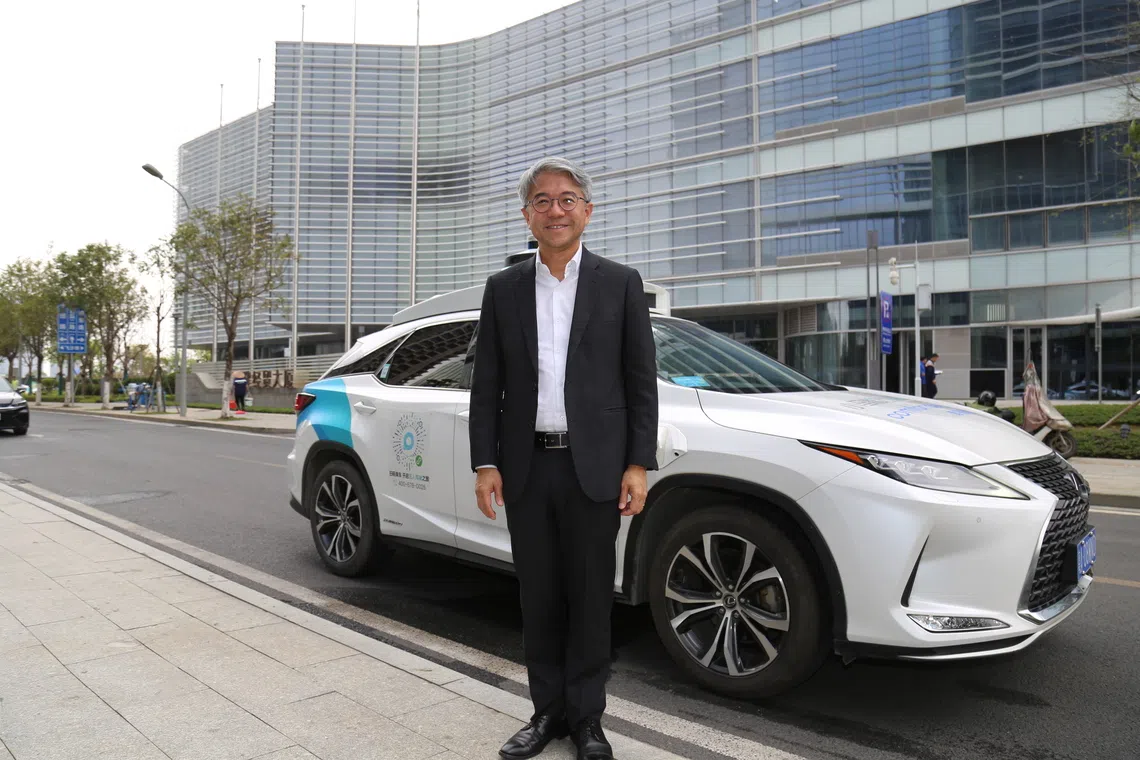
He explained that these specific areas involved leveraging CDG’s expertise and reputation as a pure-play transport operator to go after specific market segments such as premium travellers or hospital transfers in Europe, the UK and Australia.
In Europe, CDG’s recent acquisitions of the likes of Addison Lee, a black cab service in the UK, and CMAC, a ground transport management and accommodation network specialist, are expected to play an important role in Europe and the UK.
For example, CMAC works with airlines to facilitate crew transfers while Addison Lee, on the other hand, is a transport operator.
CDG will look to integrate these platforms and direct jobs from CMAC’s work with airlines to Addison Lee’s black cab services.
Separately, Addison Lee also has contracts with companies to transfer corporate travellers from airports to hotels, and Cheng said the company is also actively looking to increase such contracts.
In Australia, CDG runs a2b, the country’s largest taxi network with a fleet of about 7,500 vehicles that include premium taxis.
Cheng sees an opportunity to replicate the play in Europe and the UK in Australia, and also an opportunity for a2b to work with medical providers to facilitate hospital transfers.
“The point-to-point transformation is specifically targeting premiums and enterprise level jobs,” Cheng said of the Australia, UK and Europe market.
Its long-term strategy in its home market of Singapore does not differ greatly from its overseas markets, but Cheng pointed out that driver preferences are changing in the city-state and the company needs to acknowledge that.
For example, he said that CDG has been increasing its private car rental fleet to account for slowing demand for taxi rentals. The company’s private hire driver base rose 28 per cent from last year and it now has more than 4,000 active private hire drivers on its Zig platform.
Cheng added that these are some early examples of a transformation to its taxi and private hire business that could take up to 36 months.
The company is also keen to expand its autonomous vehicle fleet and is looking to enter either the Beijing or Shenzhen market later this year. CDG has been running a sandbox AV programme in Guangzhou since March 2025.
Cheng argued that CDG, being a pure-play transport operator, is in a good position to grasp the AV opportunity as it is experienced with handling large fleet networks and the ancillary services that support the fleet.
Successfully transforming its taxi and private hire business is key for CDG due to the margins. While the public transport segment is bound by long-term contracts and currently represents the biggest chunk of revenue, its margins are significantly lower when compared to its taxi and private hire business.
The company revealed that public transport margins are in the mid-single digits while margins for its taxi and private hire segments are “in the mid-teens”.
The transformation would not be “done overnight”, Cheng explained, but it is something the company is keen to get right because ultimately the company needs to keep making money to pay its shareholders.
“We want to make sure we can continue to do so, and it’s not about doing everything our competitors are doing but identifying the key areas we can be strong in,” the CEO added.
Decoding Asia newsletter: your guide to navigating Asia in a new global order. Sign up here to get Decoding Asia newsletter. Delivered to your inbox. Free.
Copyright SPH Media. All rights reserved.
TRENDING NOW

Once staunchly pro-China, Malaysian Chinese businesses are now distancing themselves from Beijing

Looking beyond looming CEO succession, should UOB potentially pursue a transformative merger?

Could stablecoins be the future of money?

Grab CEO’s wife Chloe Tong on life with Anthony Tan and finding her purpose

