Defa opens Asean opportunities for Singapore SMEs, but many may not be ready
Business leaders say smaller firms may need more support to tap the pact’s benefits

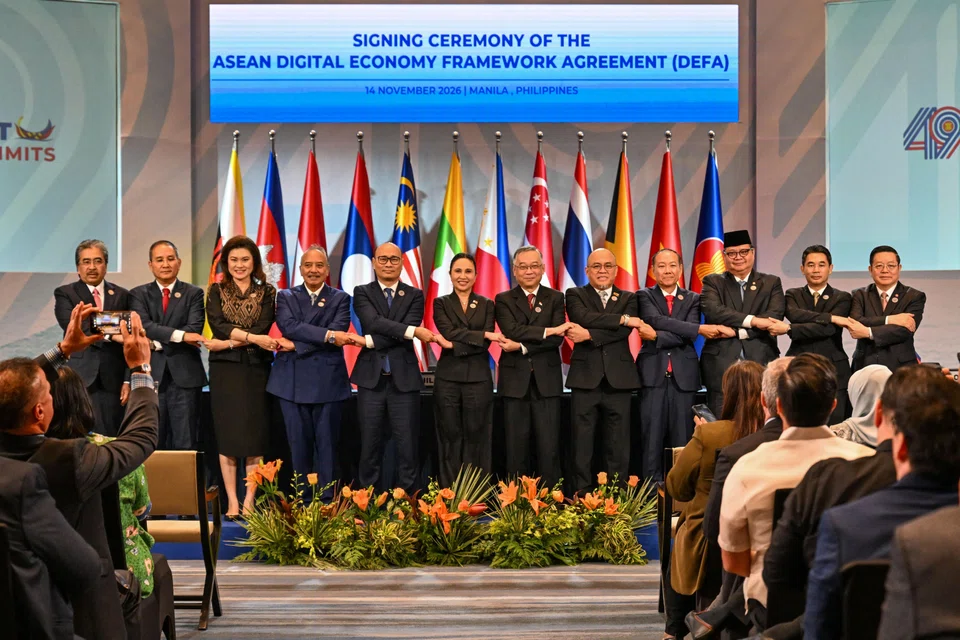
[MANILA] A new Asean digital trade pact could make it easier for Singapore’s small and medium-sized enterprises (SMEs) to expand across the region, but many may lack the resources and expertise to take full advantage of it.
Business leaders said the agreement could help firms enter new markets and manage regional operations more efficiently, although smaller companies may struggle to translate its provisions into commercial gains.
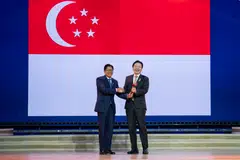
The Asean Digital Economy Framework Agreement (Defa), signed in Manila on Nov 14, aims to reduce digital trade barriers across the 11-member grouping, including by facilitating cross-border payments, electronic trade documentation and data flows.
Carmen Chan, deputy head of global transaction banking at OCBC, said SMEs face fragmented payment systems, currencies, regulations and documentation processes when doing business across Asean.
They may also lack visibility over foreign exchange conversion rates, when suppliers will receive payments and whether the full amount will be received.
“For SMEs with lean finance and treasury teams, managing these complexities across multiple markets can become a significant operational and administrative burden as they expand regionally,” she said.

Uneven legal recognition of electronic trade documents also means some transactions still require physical paperwork, slowing processing and increasing costs. Greater interoperability could ease these burdens and facilitate quicker access to trade financing, Chan said.
Making sense of Defa
But understanding how to make use of such agreements remains a challenge for smaller businesses.
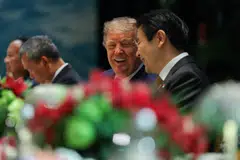
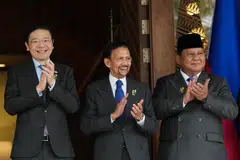
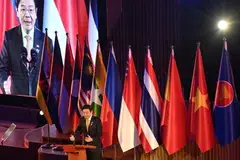
Speaking to Singapore journalists at the conclusion of the 49th Asean Summit on Tuesday (Nov 17), Prime Minister Lawrence Wong said Singapore would work with other Asean governments to raise awareness of Defa and develop practical guides for businesses.
SEE ALSO

He noted that companies often struggled to understand how existing free trade agreements applied to them.
“What does it mean for me as a business? How do I make use of this?” he said, recounting questions businesses commonly raise.
A survey of 184 firms across eight Asean markets found that 35 per cent were unfamiliar with Defa, while another 49 per cent knew about it but had not assessed its implications. Only 4 per cent had an action plan.
The findings, from the 2026 Asean Business Outlook Survey conducted by the American Chamber of Commerce in Singapore, Accenture and Google, broadly reflected the experience of Ang Yuit, president of the Association of Small and Medium Enterprises.
He said the difficulty went beyond understanding an agreement. Businesses also needed to interpret its provisions, assess their relevance to individual operations and work out how to act on them.
That could require a dedicated internationalisation team, something smaller companies may not have the resources for, Ang noted.
Maneesh Tripathi, senior adviser to SME Centre@SICCI (Singapore Indian Chamber of Commerce and Industry), agreed.
“They don’t have the manpower,” he said, noting that SME owners were often occupied with paying salaries, managing expenses and keeping their businesses running.
“They also do not have deep pockets to make a mistake,” he added, noting that finding reliable overseas partners was another major hurdle that trade agreements alone could not resolve.
Guna Chellappan, immediate past co-chair of SGTech’s AI, Cloud & Data Chapter, similarly observed that many Singapore businesses tended to wait until the practical implications of new agreements became clearer before acting.
Greater opportunities, more competition
While Defa could make regional expansion easier, it could also intensify competition for Singapore SMEs, which already face pressure from overseas businesses.
Tripathi warned that digital service providers in lower-cost markets such as Indonesia and Vietnam could offer similar services more cheaply than Singapore firms. He cited digital payment platforms as an example, where lower operating costs could translate into more competitive transaction fees.
“There will be severe competition,” he said, noting that startups and SMEs could come under pressure.
Ang raised another concern: easier cross-border payments could encourage Singapore consumers to spend more overseas, particularly if transaction fees and exchange rates become more attractive.
Singapore already has payment linkages with countries including Malaysia and Thailand, but more seamless transactions across Asean could encourage further overseas spending.
Domestic merchants could benefit from spending by incoming tourists, although Ang cautioned that the gains might be uneven. “The benefit to the local businesses here may not be that strong, or it will be uneven,” he said.
Chan similarly acknowledged that greater digital integration could lower barriers for regional businesses seeking to serve customers in new markets.
“In that sense, Defa is a double-edged sword: it can create new growth opportunities for Singapore SMEs while also increasing competitive pressures,” she said.
Asked by The Business Times about competition from lower-cost regional rivals, PM Wong acknowledged the concerns but said businesses would have to adapt.
“The competition is going to be there whether we like it or not. Companies will have to embrace the competition,” he said. The government would provide more support to help SMEs transform their operations, improve productivity and use digital and artificial intelligence tools to compete more effectively, he added.
Chellappan pointed to Singapore’s technological capabilities, infrastructure and regulatory environment as advantages that local businesses could draw on despite their higher operating costs.
Still, SMEs would need help navigating the opportunities available.
Ang suggested clearer government channels through which businesses could seek assistance when encountering difficulties applying trade agreements overseas.
Chellappan favoured a single coordinating organisation to guide SMEs through the available support schemes, rather than leaving them to approach several agencies.
Tripathi took a different view, saying the government had already done “considerable work” educating businesses. Trade associations should now play a greater role, he said, suggesting briefings before overseas trade missions and regular explanations of trade agreements in their newsletters.
For Singapore SMEs, understanding Defa will be only part of the task.
“Businesses will still need to differentiate themselves through product quality, innovation, customer service and specialised expertise to compete effectively in a larger and more interconnected Asean marketplace,” Chan said.
Decoding Asia newsletter: your guide to navigating Asia in a new global order. Sign up here to get Decoding Asia newsletter. Delivered to your inbox. Free.
Copyright SPH Media. All rights reserved.