

Budget ‘goodies’ should be modest in 2023, big cash payouts unlikely: economists
The promised ‘Valentine’s Day present’ may be mainly for the vulnerable
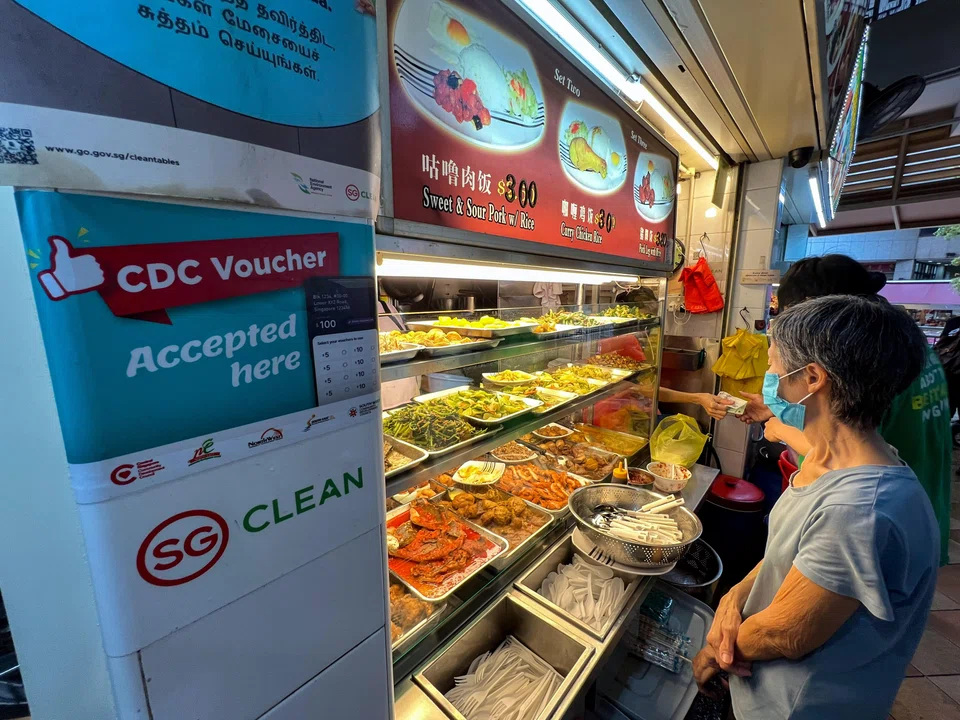
THOUGH Finance Minister Lawrence Wong has called the Feb 14 Budget his “Valentine’s Day present” to Singaporeans, not everyone may receive a gift. Inflation fears will likely be tackled by boosting support schemes for vulnerable groups, rather than giving handouts to all, said market watchers.
While the size of the Budget could be comparable to those in recent years, analysts expect the “present” to take the form of specific enhancements to the existing multibillion-dollar package meant to buffer against the goods and services tax (GST) hike.
“The government will take very calibrated measures,” said DBS senior economist Irvin Seah, referring to help for lower-income groups specifically. “It won’t be broad-based; it won’t be a massive, generous Budget.”
In 2020, the government set aside S$6 billion for the Assurance Package, aimed at cushioning the impact of higher GST rates on households. It added another S$640 million in Budget 2022, then earmarked a further S$1.4 billion last November, with details to come in this year’s Budget.
The package includes cash payouts to all adult Singaporeans, utilities rebates for selected households, and grants for community self-help groups.
Last October, a separate Cost-of-Living Special Payment of up to S$500 in cash was announced, for about 2.5 million adult citizens. This was part of a S$1.5 billion support package funded from a better-than-expected fiscal showing.
Wong, who is also Deputy Prime Minister, said on Jan 3 that the government was weighing Budget measures to support Singaporeans in the face of cost-of-living issues and inflation, “especially those in the more vulnerable and lower-income groups”.
Alvin Liew, senior economist at UOB, said: “That announcement definitely raises our – and market – expectations of a special payout to households and/or individuals in Budget 2023.”
Top-ups to the Assurance Package are “one of the most straightforward measures the government can take”, he said. “We see the amount increased further by S$500 million to S$1 billion.”
Still, when asked how support measures in Budget 2023 might compare with previous rounds of spending, OCBC chief economist Selena Ling said “it will be hard to match” the S$8 billion already committed to the Assurance Package.
She added: “It may be prudent to keep some dry powder, given that an economic global recession storm may be approaching. To tackle income inequality, the principle of greater help to those in need still applies.”
Even as the economic threat of the pandemic recedes, the government is likely to keep a prudent grip on the purse strings, said analysts.
The current administration, which is constitutionally required to keep a balanced budget over each term of government, began its term in 2020 with record deficits and an unprecedented drawdown on national reserves.
Past Budgets have seen special payouts in both bumper years and lean ones. Budget 2018 contained the SG Bonus of up to S$300 a head, funded by a better-than expected economic showing. In 2020, there was instead the Solidarity Payment of up to S$600 for each adult citizen during the Covid-19 pandemic.
But such broad-based one-off cash grants – often dubbed “hongbao” or red packets – are less likely to feature in 2023.
The high-inflation outlook means “the package should be sizeable”, said Ling, but she expects that “the target audience is mainly the lower-income Singaporeans and households”.
Similarly, Liew thinks support is likely to be “skewed heavily towards the lower-income group and the vulnerable, while the amount paid to the middle and upper-income would be very nominal”.
Upcoming moves are likely to involve programmes such as Community Development Council (CDC) Vouchers, ComCare social assistance, MediSave and Edusave top-ups, and the Workfare Income Supplement, said market watchers.
Jod Gill, global employer services director at professional services firm Deloitte Singapore, said payouts would be “potentially similar in quantum” to the S$300 in vouchers recently given to each household under the Assurance Package and a separate inflation support package. Neither should businesses expect extensive wage subsidies or cash payouts, as per the Jobs Support Scheme and Rental Support Scheme in 2020 and 2021.
Rather, watchers expect the government to beef up grants in specific areas such as productivity, internationalisation, digital adoption, and skills training.
“One-off cash payouts to firms are less probable since it doesn’t address specific objectives like encouraging innovation or skills training and upgrading,” Ling added.
UOB’s Liew observed that most ongoing support measures have been temporary, so that they “will not morph into something structural that will drain the country’s reserves”.
While initiatives such as CDC Vouchers “will on the margin help provide some support for retail and food and beverage sales”, the intent of such measures is “to help Singaporeans, especially the low-income group and the vulnerable, cope with the rising costs of living” – not stimulate economic activity, he added.
Meanwhile, Seah said: “Creating more inflation through fiscal impetus is the last thing (policymakers) want. Therefore, the spending cannot be broad-based, and it will not involve a massive fiscal outlay...
“We are not at a stage where we need to pump-prime the economy or rescue the economy from a recession.”
But if there is indeed “a significant slowdown”, as Nomura South-east Asia economist Euben Paracuelles anticipates, he believes the government might combine targeted aid with wider one-off cash transfers “to help support near-term economic growth”.
His team forecasts a fiscal deficit of 0.5 per cent of gross domestic product in Budget 2023.
Separately, tax analysts were mixed on the possibility of a smaller income tax burden on individuals. See Wei Hwa, a partner at KPMG, said lower and middle-income workers might receive personal income tax relief, “which would help boost their after-tax income”.
But Deloitte partner Michele Chao told The Business Times that individual income tax rebates have been given infrequently and remain unlikely this time, because they “do not provide much support to a significant portion of the population that pays little to no tax”.
TRENDING NOW

Grab CEO’s wife Chloe Tong on life with Anthony Tan and finding her purpose

What role can Japan play in Asean’s future?

He built the Vingroup empire. Now South-east Asia’s richest man is handing some key roles to his sons
Asean’s challenge is to become resilient against global geopolitics: former Indonesia trade minister

