F&B operators cheer doubling of dining limits but fret over labour crunch

Sharon See
Published Thu, Mar 24, 2022 · 09:50 PM

    Singapore

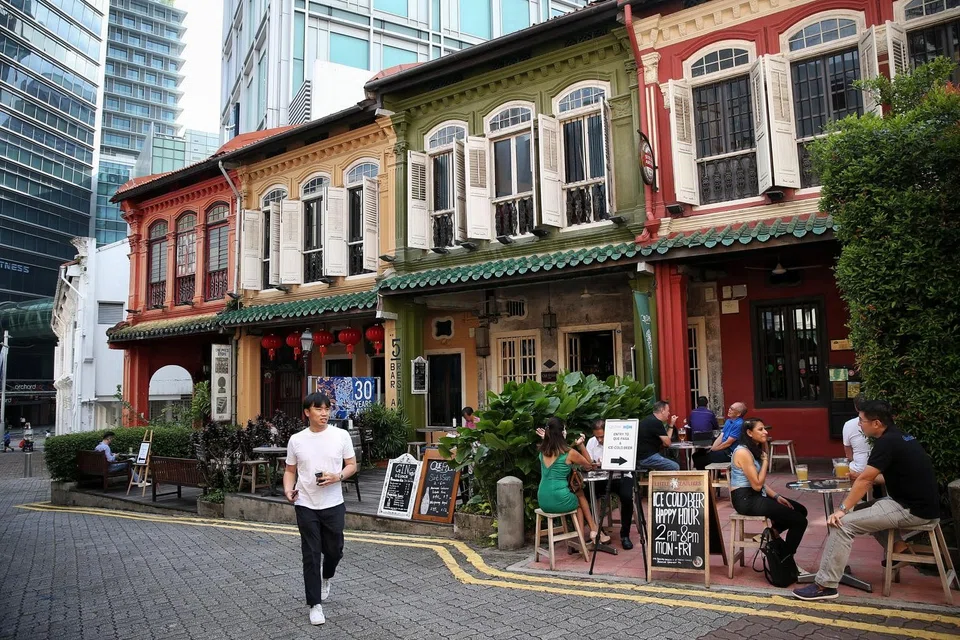
    WITH dining limits soon to be doubled to 10 vaccinated persons in Singapore, food and beverage (F&B) operators, although overjoyed, are finding themselves in another pickle: labour crunch.

    But the excitement was palpable among several F&B operators that The Business Times (BT) spoke with on Thursday (May 24), shortly after the Covid-19 multi-ministry taskforce announced Singapore's "decisive moves" to live with Covid-19 in a live broadcast.


    Said a spokesperson for the Restaurant Association of Singapore: "Today's announcement is a long-awaited signal towards a recovery for our F&B community which has been plagued by the effects of Covid-19 the past 2 years. Clearly a joyous day for the F&B community and our customers!"

    From Mar 29, dining capacity will be raised to 10 vaccinated customers from 5. To ease their burden, all eateries will be allowed to seat groups of up to 5 if they do not want to implement checks at the door, although they may be subject to random spot checks.

    Alcohol can also be served beyond 10.30 pm and live performances will be allowed - long a bugbear for many bars and restaurants.

    The changes took some in the industry by surprise, particularly because Singapore has not allowed more than 8 to dine in together since the pandemic started in early 2020.

    Joseph Ong, chairman and managing director of 1-Group, said there is a big difference between having a table of 10 and two tables of 5, adding that the former is much more "efficient".

    "We try to get big groups if we can. The vibrancy is there, they drink more, they eat more, they talk more - there's a genuine higher level of enjoyment, usually," said Ong, who operates several bars and restaurants including The Summerhouse and 1-Altitude.

    Casual dining restaurants such as Thai Express and Poulet under the Minor Food Group are unlikely to see such large groups, said the company's chief executive Dellen Soh, adding that most groups come in 4 or 5.

    "We've been hoping this 1-metre (distancing) rule can be lifted because with this 1-metre rule, we still cannot operate at 100 per cent. We're still hovering around at most 70 per cent," he said, adding that the distance would be even more crucial for smaller cafes.

    Nonetheless, the wider reopening will go a long way to boost consumer confidence, which Soh believes would benefit everyone in the industry. But restaurants anticipating an influx of bookings following the relaxation are now pulling out all the stops to ease the manpower crunch, which they believe could be exacerbated.

    "We are understaffed currently, so the immediate concern is we're going to be short on manpower and definitely we cannot be capitalising on the 10 pax that we are allowed to cater for," said Elton Seah, head chef and co-founder of HolyCrab.

    Ong said eateries may consider cutting hours or operate on fewer days. Soh added: "Now we may have business coming in, but we don't have people to serve, so this will be a major issue."

    The reopening of the Singapore-Malaysia land border on Apr 1 could go some way towards relieving the crunch, although some restaurateurs said they are also squeezed by quotas on work permits.

    "Right now, we can't be too picky. If there's an interviewee that comes in, we would just hire because right now everyone is desperate for manpower," said Seah.

    Meanwhile, nightlife operators, including bars, pubs and karaoke establishments, would have to wait longer to reopen, as taskforce co-chair and Finance Minister Lawrence Wong said it is generally difficult for them to comply with prevailing safe-management measures (SMM).

    Ong, who is also president of the Singapore Nightlife Business Association, said the nightlife industry is in need of a new business model. He added that nightlife businesses would just have to adapt to SMMs the way the F&B industry had done so over the last 2 years.

    "If my bar can only take 8 people instead of 10, then I would just adhere to it," said Ong. "More importantly, it will have to be adhered to by the individual operators and I believe that individual operators will all say this is what they're willing to do in order to get business going again."

    While vocalisation activities such as singing will now be allowed with masks on, Wong said, in response to a query, that singing in a karaoke joint is right now not permitted even though individuals can participate in karaoke activities at a community club.

    Jackson Teo, chief executive and founder of Teo Heng, told BT in Mandarin that he found the ruling "perplexing", especially since his karaoke studios are frequented by families with young children.

    Teo has shut 10 outlets so far, with 4 currently operational after he pivoted the rooms to study rooms and co-working spaces, an endeavour he described as "loss-making".

    But Thursday's announcements and the fact that F1 will return this year fuel his optimism the nightlife industry will be resuscitated soon.

    "It's a huge international event, and so I'm very hopeful," he said.

    READ MORE: Mask rules, group size cap, border curbs eased as Singapore reaches 'turning point'