

GovTech retrenches 93 staff in first phase of agency’s 2-year workforce transformation
Its chairman says this is ‘not an AI-driven downsizing exercise’, but a change in operating model


[SINGAPORE] The Government Technology Agency (GovTech) has launched what it calls a workforce transformation exercise, retrenching 93 employees in the first phase of a two-year restructuring that is expected to affect between 7 and 9 per cent of its workforce.
The agency, which has roughly 3,900 employees, said on Wednesday (Jul 15) that as it supports a wide range of ministries and statutory boards, carrying out its workforce transformation in phases will not only “minimise disruption to public services”, but also give its employees “sufficient time and support to make the transition successfully”.
The first phase, which affects a total of 302 employees in GovTech’s headquarters as well as those deployed to six other public agencies, has been completed, it added.
Of the 302, 102 will be retained in their current roles, while 110 will be retrained into new roles under apprenticeships.
As for the 93 officers “transitioning out” of GovTech, they will be offered what the agency described as a comprehensive support package.
Based on a statement from the Amalgamated Union of Statutory Board Employees (AUSBE), this package includes a collective agreement provision of one month’s payment for every year of service, capped at 25 years of service.
Gabriel Ng, the union’s general secretary, noted that since AUSBE had been notified early of GovTech’s restructuring plan, it was able to secure additional support measures for the affected employees.
Among these are a three-month ex gratia payment to “better support their reskilling amid the broader restructuring and rapidly evolving skills in the tech sector”, as well as a pro-rated performance bonus.
In a separate statement, the Ministry of Manpower said the newly formed Skills and Workforce Development Agency (SWDA) is also working closely with GovTech, the Public Service Division and other public agencies to facilitate redeployment within the public sector.
SEE ALSO





The ministry added that SWDA will also provide career coaching, job matching and employment support.
This includes curating job opportunities, recommending reskilling pathways based on individual needs, and working with appointed employment agencies to broaden access to outplacement opportunities.
Critical systems at risk
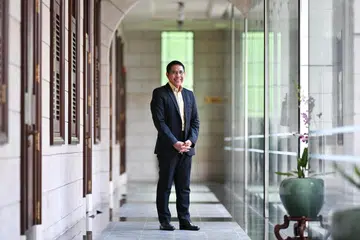
In an internal memo to staff, a copy of which was released to the media, GovTech chairman Chng Kai Fong stressed that the agency’s workforce transformation is “not an AI-driven downsizing exercise”.
Rather, it is because GovTech has to move from managing projects delivered by vendors to owning and running products itself, he said.
“While many systems can be delivered well by vendors, critical systems increasingly demand in-house capabilities so (that GovTech) can respond and adjust quickly to national needs,” added Chng, who holds concurrent permanent secretary appointments in digital development and information, Smart Nation and cybersecurity.
He noted that as the world becomes increasingly digital, the need for critical government digital infrastructure has grown significantly. Without change, legacy systems become harder to secure, more difficult to adapt, and increasingly vulnerable to failure, he said.
Although GovTech could have “stretched this transition over many years and relied mainly on natural attrition”, it chose not to, Chng said. This is because delays would only leave critical systems older and widen “the gap between what Singaporeans need and what (its) current model can deliver”.
He noted that while some of the officers leaving the agency had performed well, they were in roles GovTech will need fewer of.
“The judgment we made is narrow: whether there is a credible fit with a specific role in the future organisation,” he said.
“We will not put someone through months of retraining without a genuine opportunity to convert at the end. It is not a judgment on your commitment, your performance or the value of what you have contributed.”
A different GovTech
That said, he noted that GovTech expects to employ more people at the end of its transformation than it does currently.
“We need people inside GovTech who can define the problem, shape the architecture, make sound build-or-buy decisions, defend our systems and improve critical services every day,” Chng said, adding that the agency will need more software engineers, product managers, designers, data specialists and cybersecurity professionals.
“GovTech is changing shape, not shrinking,” he also said. “It will be a different GovTech, and not every current role maps onto it.”
The agency’s press statement said it has already redeployed and converted “a substantial number of officers” into new roles, and will continue to internally redeploy as many of its officers as possible.
For employees in project and vendor management roles that are affected, GovTech said it is offering full-salary apprenticeships and structured retraining programmes that combine technical and on-the-job training.
This would enable them to transition into product ownership and related capabilities, the agency added.
GovTech was established in October 2016 to spearhead the digital transformation of the public sector and drive Singapore’s Smart Nation agenda.
It has since developed widely used digital services such as Singpass and OneService. It also led the development of the TraceTogether contact-tracing app and SafeEntry digital check-in system during the Covid-19 pandemic.
In 2022, the government launched a mass hiring exercise under the Tech for Public Good initiative to recruit around 700 technology professionals across the public sector, including in GovTech’s Open Government Products division.
The programme came amid a wave of layoffs at technology firms such as Meta, Twitter and Shopee.
While public-sector jobs are often associated with greater employment stability, workforce reductions are not unprecedented, although they have generally involved relatively small numbers.
Precise figures for public servants who have been retrenched are not publicly available, but labour market data showed that layoffs in the broad “public administration and education” industry totalled 50 in 2023, 210 in 2024, and 120 in 2025.
Decoding Asia newsletter: your guide to navigating Asia in a new global order. Sign up here to get Decoding Asia newsletter. Delivered to your inbox. Free.
Copyright SPH Media. All rights reserved.
TRENDING NOW

Government to bring forward raising of retirement age, give employers more financial support to create flexi-load jobs
Former minister Maliki Osman, Revolut chairman join Asia Gulf Holdings advisory board

Is Manila Asia’s new dining hot spot?

Simba at risk of losing operating licence over spectrum misuse

