

How much should Singapore’s leaders be paid?
The revised ministerial salaries point to not just economic goals but also social vision
Annabeth Leow
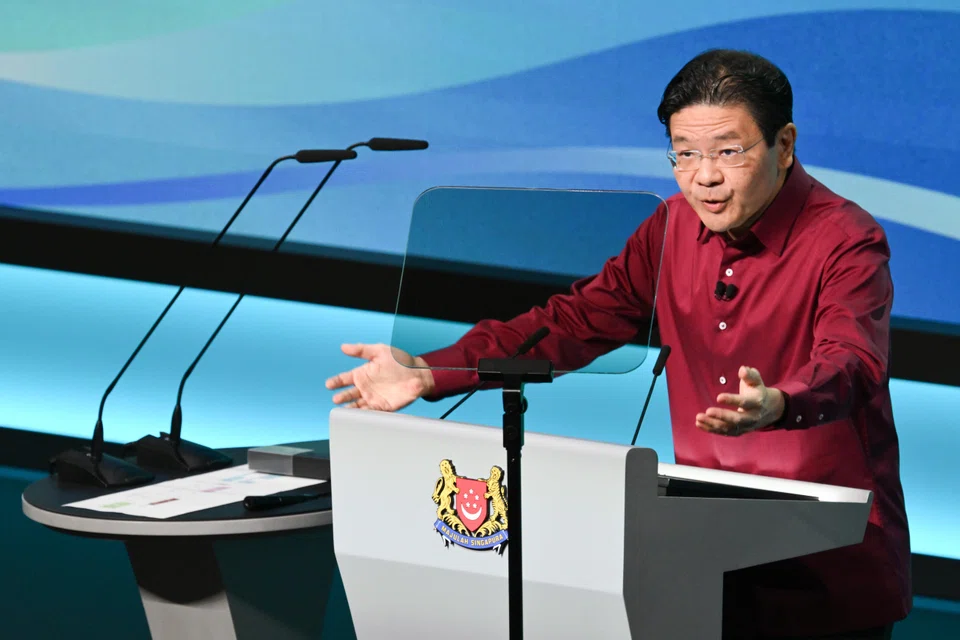
[SINGAPORE] Long deferred as the decision has been, the upcoming upward revision to Singapore’s political salaries should not come as a surprise to most.
Prime Minister Lawrence Wong on Tuesday (Sep 8) announced that ministerial salaries and MP allowances would go up for the first time in more than a decade.
When annualised, the change represents a measured pay increase for political officeholders.
More crucially, though, the salary review marks a chance to size up how Singapore is expected to fare in challenging times – and to reflect on how the country is meant to be run.
Setting benchmarks
Officeholders’ salaries are determined with reference to a so-called “MR4 minister benchmark”, or the potential annual income of a starting-grade minister.
Standing at S$1.8 million as of the latest adjustment, the benchmark is derived from the median income of the top 1,000 Singaporean earners, with a 40 per cent discount for public service.
The latest adjustment sees the benchmark go up from S$1.1 million to S$1.8 million, although current ministers will not immediately go to that level. Instead, the government has opted to give a one-off adjustment of up to 9 per cent, which means a minister at the MR4 level would get S$1.2 million if she or she receives the full adjustment.
The benchmark pool includes senior executives such as chief executive officers, chairmen and directors, as well as professionals such as bankers, lawyers, accountants and doctors.
But, on top of monthly salaries, the employment and trade income of these private-sector high flyers includes bonuses, commissions, stock options and partnership income.
On the other hand, Singapore’s political salaries have famously been framed as a “clean wage” that excludes benefits such as housing or tax breaks.
They incorporate a fixed component of 65 per cent, as well as a variable component of 35 per cent – including bonuses pegged to both individual and national performance.
When the salary framework was introduced in 2012, the parliamentary debate on ministerial pay touched on the share of the benchmark rate that should be allocated to the fixed and variable components.
The opposition Workers’ Party called at the time for a higher fixed component of 81 per cent, and a smaller variable component of 19 per cent.
But, as then Deputy Prime Minister Teo Chee Hean later noted in 2018, such a formula would have handed ministers a bigger cash payout “regardless of individual performance or national outcomes, and even if the outcomes were not achieved”.
“This would have made the link between salary and performance weaker,” he added.
The latest political salary revisions are set to be debated in Parliament on Thursday.
An independent review has affirmed the prevailing ministerial salary formula, and the breakdown between fixed and variable components is unlikely to be the centre of contention.
“The higher proportion of variable pay in the private sector is to incentivise top executives to take commercial risks for greater rewards, which may be less applicable for political appointment holders,” the review committee noted in its report.
Stretch targets
Instead, Parliament may also opt to debate how the national performance bonus is calculated.
In line with the committee’s recommendations, the government is tweaking all four targets used to measure national performance: citizen unemployment; real income growth for citizens at the median and the lowest 20th percentile; and real gross domestic product growth growth.
Singapore must hit targets in these four metrics for officeholders to get the full national bonus. Bonuses may also be bigger or smaller, depending on the economic situation.
The GDP goal has been adjusted to between 2 and 4 per cent, down from between 3 and 5 per cent – the result of moderating growth as the economy matures.
Still, despite the more prosaic economic outlook, the targets for unemployment and real income growth are being tightened under the revised salary framework.
Even though the committee noted that the new unemployment target rate of 3 to 3.5 per cent “may be a challenge to sustain”, it added in its report that it “is important to ensure that the government remains focused on creating good jobs for Singaporeans”.
Similarly, the committee characterised the new targets for real income growth as “stretch targets” that are higher than the actual average real income growth rate in the last decade.
The level of these targets thus drives home PM Wong’s point that the benchmark ministerial salary “is not a target salary that every minister must eventually reach”.
Perhaps, in a business-as-usual scenario, this benchmark salary might not be reached at all.
Yet the targets are pragmatically designed – they acknowledge Singapore’s mature economy, while also emphasising room to improve what is most important – average citizens’ lives.
Lately, there has been anxiety in numerous countries about the prospect of headline growth that benefits the owners of capital but leaves ordinary workers behind.
But the structure of the national bonus demonstrates Singapore leaders’ commitment to the idea that such an economic situation would be both undesirable and unacceptable.
Flexibility for the future
The salary review has raised another intriguing point for the House to take up in its debate: The report suggested potentially including “other indicators to measure quality of life and social progress”, which could also be taken into account in determining the national bonus.
While the committee acknowledged that there is no standard now available to measure these, it recommended that the government study developing such a metric for future use.
How can Singapore best measure social development?
Might the Gini coefficient, post-taxes and transfers, be a good gauge of equitable redistribution despite income inequality? Could the total fertility rate speak to Singaporeans’ confidence in the country’s future?
Should the committee’s proposal come to pass, the choice of indicator would be another sign of the government’s priorities and principles, as well as its competence and credibility.
An earlier ministerial salary review, which was due in 2023, was deferred over “other pressing issues”. Coordinating Minister for Public Services Chan Chun Sing had cited global economic and geopolitical uncertainties as the reason behind the deferral.
Nonetheless, PM Wong has signalled that action must now be taken – to honour the bipartisan principle of a transparent, competitive wage, and to preserve capable leadership.
At the same time, the Prime Minister has reserved for himself considerable discretion and flexibility. The revised salary framework permits a larger range of ministerial salaries, according to realistic but ambitious targets around economic success and social welfare.
Decoding Asia newsletter: your guide to navigating Asia in a new global order. Sign up here to get Decoding Asia newsletter. Delivered to your inbox. Free.
Share with us your feedback on BT's products and services

