

Laid-off locals take longer to find work in Q2 2026; job vacancies shrink 6.4%: MOM
Retrenchments stand at 4,620 for the three months, higher than earlier estimates
Annabeth Leow
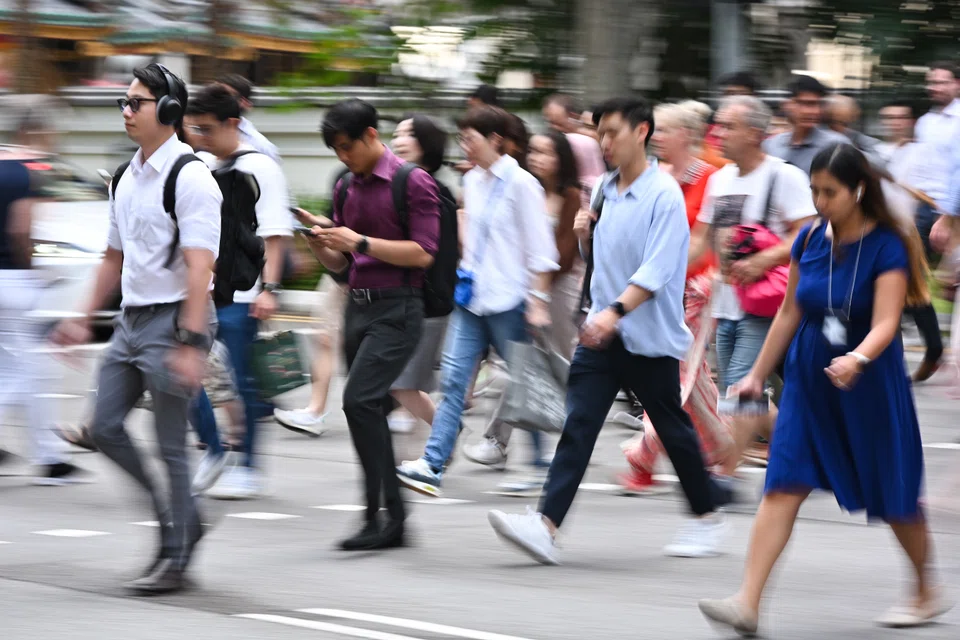
[SINGAPORE] Retrenchments in the second quarter increased by more than previously estimated, even as a lower share of laid-off residents found new jobs, according to figures released by the Ministry of Manpower (MOM) on Monday (Sep 21).
Some 4,620 employees were given the pink slip in the three months from March to June, higher than the estimate of 4,500 in flash data, showed MOM’s quarterly Labour Market Report. Layoffs rose by 20.6 per cent over the prior quarter, when 3,830 workers were let go.
Meanwhile, job vacancies shrank by 6.4 per cent to 68,600 in June, down from 73,300 in March, on fewer open positions for professionals in financial services and information and communications. Entry-level professional, managerial, executive and technician roles made up 45.3 per cent of all vacancies.
On the sidelines of a visit to global cybersecurity provider Acronis’ Singapore office, Acting Minister for Manpower Jasmin Lau said: “There are certainly still job opportunities, but moving from one job to the next one can be challenging. Our government will support workers to learn and adapt, and to prepare for roles that they can move into.”

Quarterly retrenchments were at their highest since end-2020 – when 5,640 workers lost their jobs – and mainly in the outward-facing sectors such as manufacturing, information and communications and financial service, with business reorganisation and restructuring cited as the predominant driver.
“Two consecutive quarters of increase (in retrenchments) – they do warrant close monitoring,” Ang Boon Heng, director of MOM’s manpower research and statistics department, told the press. He added: “What we are seeing right now is that the retrenchments are not increasing on a broad-based basis... They are very, very focused and very targeted (in) a few sectors.”
At the same time, 54.9 per cent of residents who were retrenched found work within six months – lower than the figure of 60.7 per cent as at end-March 2026.
As retrenched workers take longer to find new jobs, they might need “a larger financial buffer to navigate extended job-search periods”, DBS senior economist Chua Han Teng wrote in a note.
Total employment beat advance estimates to grow by 11,400 in Q2 – albeit mainly on the back of foreign workers in construction and manufacturing. Resident employment was up by just 2,200, compared with 5,400 in the three months prior.



That was as the average monthly recruitment rate dropped to 1.4 per cent in Q2, from 1.6 per cent before, while resignation rates were unchanged at 1 per cent.
“Mixed picture”
Dr Chua Hak Bin, regional thematic macroeconomist at Maybank, told The Business Times that the data shows that the boom in artificial intelligence investment and Singapore’s strong Q2 gross domestic product growth of 5.9 per cent are not bearing fruit in jobs growth.
The economy “should be generating more than 20,000 jobs a quarter”, but is falling short of the historical trend, he commented. “A K-shaped economy may become more pronounced if the current AI boom does not translate into broader employment growth and wage gains.”
Unemployment stood at 1.9 per cent in June, against 2 per cent in March.
Citizen unemployment was 3 per cent, unchanged from March; and resident unemployment – which includes permanent residents – held steady at 2.9 per cent.
Still, MOM noted that the resident long-term unemployment rate ticked up to 1 per cent as at end-June, from 0.9 per cent as at end-March. The seasonally adjusted ratio of vacancies to each unemployed person stood at 1.48 for the quarter, compared with 1.46 in March.
MOM also found that 48.7 per cent of employers polled in July were planning to hire in the next three months, up from 43.9 per cent in June, but that the share of employers intending to raise wages dipped to 27.9 per cent in July, against 29.3 per cent the month before.
“Both hiring and wage expectations remained below their February 2026 levels, suggesting that firms remained cautious about expanding headcount and raising wages,” the ministry said.
Citing continued employment growth and low unemployment, MOM called the labour market resilient, but added: “Conditions became less favourable for some resident workers.”
Ang noted: “We have a lot more moderate resident employment growth, fewer job vacancies, and a lower proportion of retrenched workers returning to employment within six months.”
He said that the labour market is showing signs of softening despite low unemployment levels, with forward-looking indicators pointing to “a positive but very cautious labour market outlook”.
Chua from DBS remarked that the data offers “a mixed picture” of the labour market, which he expects to “remain broadly stable” in the second half of the year.
Even as policymakers keep an eye on external cost drivers, “domestically driven inflation and demand-pull price pressures are likely contained amid restrained unit labour cost growth”, he told BT, ahead of the August inflation print scheduled for release on Wednesday.
Decoding Asia newsletter: your guide to navigating Asia in a new global order. Sign up here to get Decoding Asia newsletter. Delivered to your inbox. Free.
Share with us your feedback on BT's products and services
TRENDING NOW

DBS, OCBC, UOB rout lops billions off STI as inflation, rate concerns spook investors

Grab CEO’s wife Chloe Tong on life with Anthony Tan and finding her purpose

OCBC sheds S$8 billion in value as shares close nearly 6% down; analysts cautious on banks

Deal between tycoon friends sparks scrutiny of Philippine power sector

