

NDR 2026: New workplace policies for parents add options to labour market
Changes to childcare measures could boost flexi-work, gig economy, say watchers
Annabeth Leow

[SINGAPORE] Recent policies designed to better support parents at work could inject more employment options into Singapore’s labour market, analysts have said.
That is as larger parental leave entitlements, more government support for employers, and greater subsidies for infant care and childcare will alter the dynamics of the workforce.
“In the near to mid term, we may see greater fluidity in the job market and a net plus to the gig economy,” Associate Professor Reuben Ng, a behavioural scientist at the Lee Kuan Yew School of Public Policy, told The Business Times.
Temporary help wanted
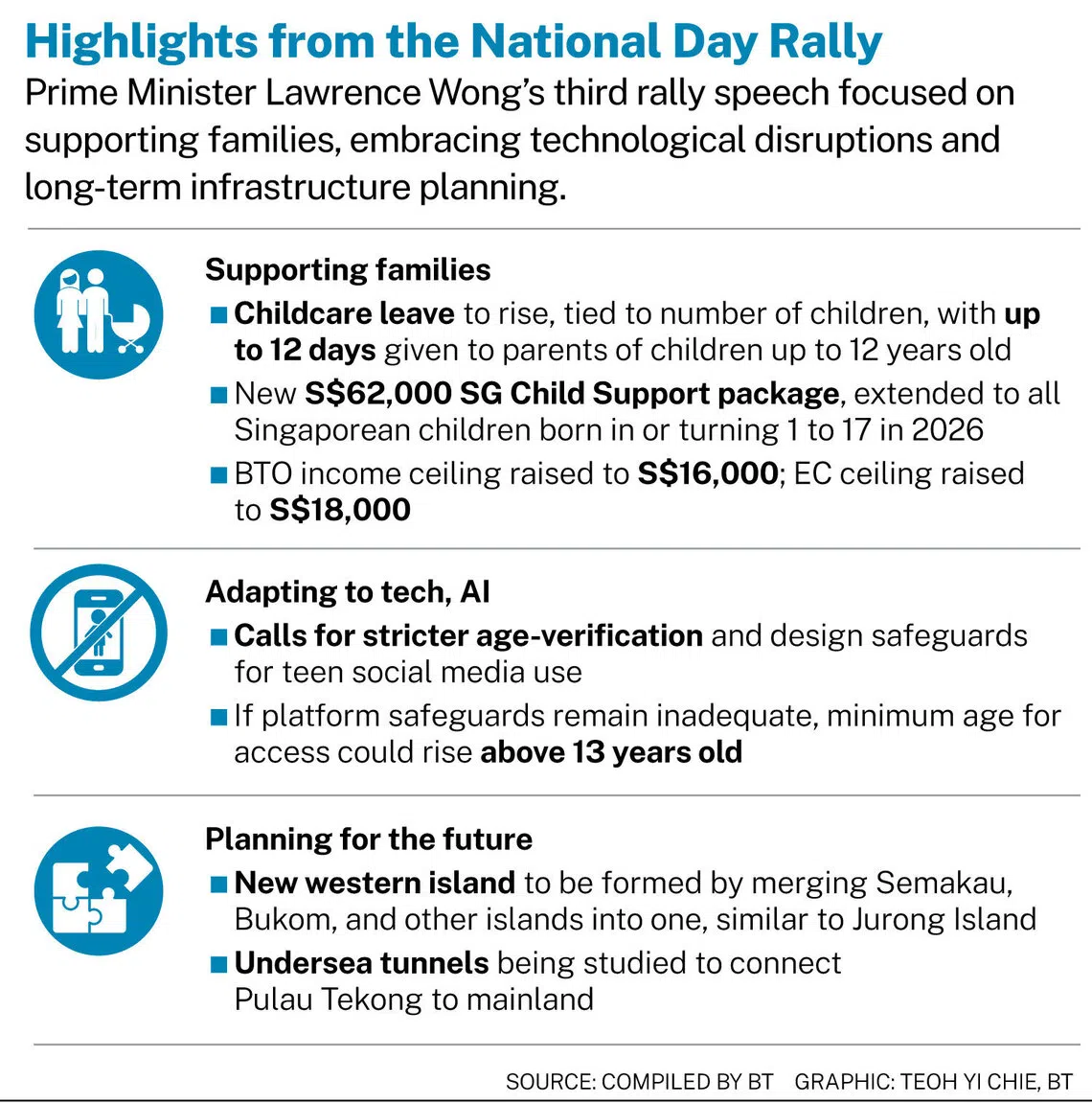
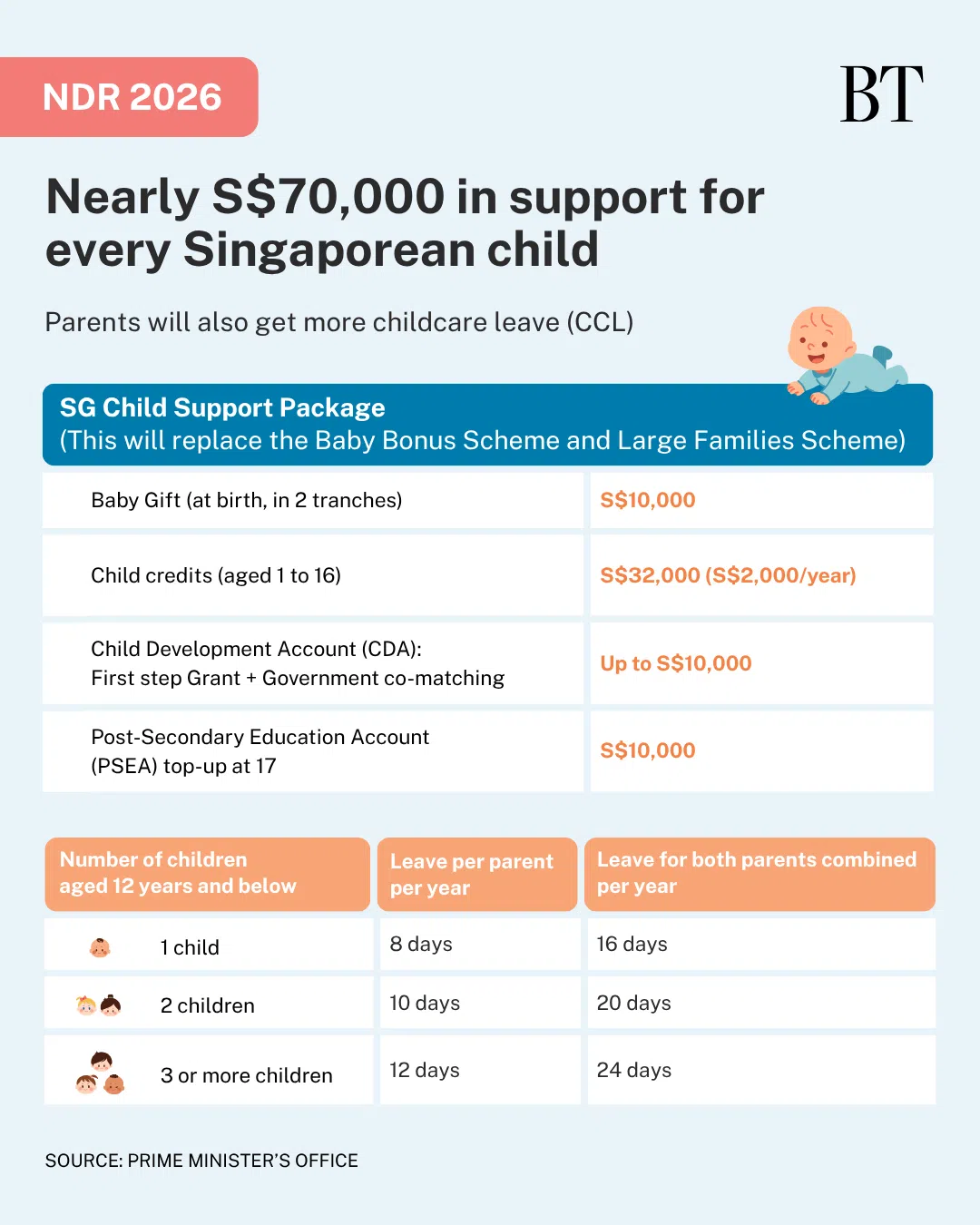
Statutory childcare leave entitlements will rise to as many as 12 days a year, while the government will reimburse employers more fully for all forms of parental leave, Prime Minister Lawrence Wong announced at the National Day Rally on Sunday (Aug 23).
Workforce watchers observed that expanded childcare leave will prompt demand for temporary manpower coverage, such as temporary staff on fixed-tenure contracts, as well as older workers or parents hired under flexible or part-time arrangements.
Meanwhile, employers can use their reimbursements “to bring in temporary coverage or redistribute resources”, said Linda Teo, country manager at ManpowerGroup Singapore.
While there may be more demand for foreign workers to fill the gap, Terence Ho, executive director of the Institute for Adult Learning, said the increased need for part-time workers could also drive up wages and improve the labour force contribution of locals.
“The pool of potential workforce entrants includes women with family responsibilities, many of whom prefer part-time work,” he added, noting that the workforce participation of women aged 25 to 64 in 2025 still lagged that of men by more than 10 percentage points.
But Teo from ManpowerGroup warned that whether that demand for short-term workers can be met will vary by the availability of suitable workers in that industry or role, “particularly for positions requiring specialised skills or institutional knowledge”.
SEE ALSO





Anarane Thng, senior manager at recruitment firm Robert Walters Singapore, added: “As childcare leave is usually taken a few days at a time, many office-based employers may choose to manage the absence internally instead of hiring a replacement.”
Rejoining the workforce
Parental participation in the workforce could get another lift from greater government subsidies for infant care and childcare, which will see fees fall to as low as S$150 a month.
Notably, the new measures ensure parity between non-working applicants – defined by default as mothers – and working applicants who earlier enjoyed a higher tier of subsidies.
Said UOB research head Suan Teck Kin: “As costs of childcare fall and availability rises, some parents, especially mothers, may be motivated to return to, or stay in, the workforce.”
Still, Thng noted that the impact on labour force participation will also depend on the availability of pre-school places and flexible working arrangements: “We may see more parents return to work, but it is unlikely to happen immediately or in very large numbers.”
Instead, Prof Ng said that the move will benefit parents who no longer need to work at least 56 hours a month to qualify for higher infant care or childcare subsidies. They can now “move between caregiving and part-time work, invigorating the gig economy”, he said.
Teo added: “While the policy may encourage workforce participation among some parents, its broader value may lie in removing one potential barrier and giving families greater flexibility to make employment decisions that best suit their circumstances.”
All the same, the enhanced pre-school subsidies will be rolled out only from 2028 onwards, while the implementation of the expanded parental leave is pending feedback from tripartite partners.
These changes were among a slew of pro-parenthood policies announced at the National Day Rally, alongside a sizeable new SG Child Support Package that Maybank economists estimate could contribute to nearly S$1.9 billion in cash payouts to children in 2027.
“The immediate impact may be more around employers reviewing their manpower plans, as they wait for the announcement details and rollout,” Thng commented.
“The actual hiring impact will likely happen progressively over the next few years.”
Decoding Asia newsletter: your guide to navigating Asia in a new global order. Sign up here to get Decoding Asia newsletter. Delivered to your inbox. Free.
Share with us your feedback on BT's products and services
TRENDING NOW

DBS, OCBC, UOB rout lops billions off STI as inflation, rate concerns spook investors

Grab CEO’s wife Chloe Tong on life with Anthony Tan and finding her purpose

OCBC sheds S$8 billion in value as shares close nearly 6% down; analysts cautious on banks

Deal between tycoon friends sparks scrutiny of Philippine power sector

