

Singapore factory output up 17.6% in April on AI-related electronics surge, beating forecasts
All clusters, except chemicals and biomedical manufacturing, record growth

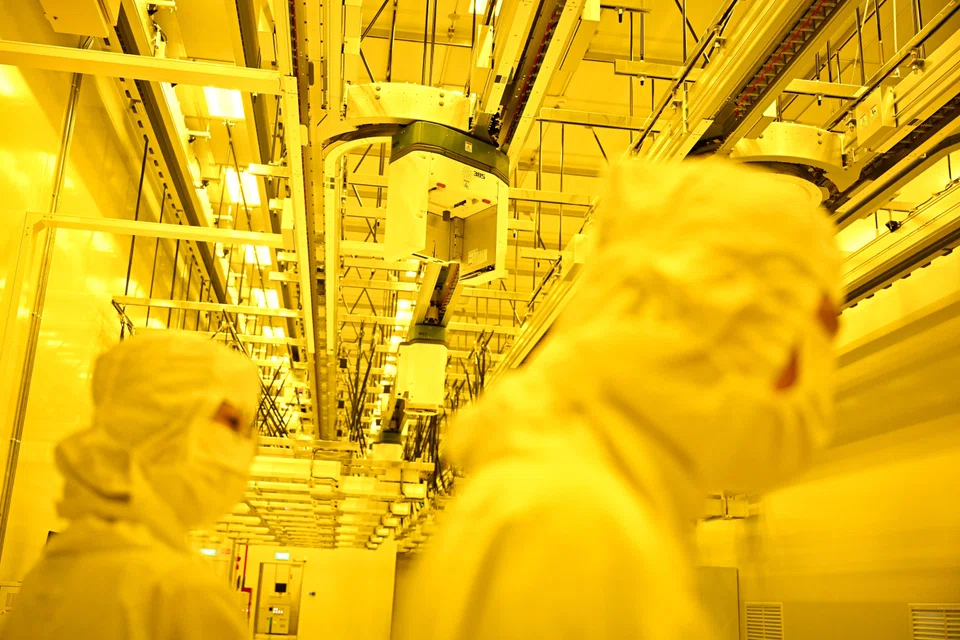
[SINGAPORE] Economists believe resilient artificial intelligence-related tailwinds will support the Republic’s manufacturing growth in the near term, even as disruptions from the Middle East conflict continue to weigh down the chemicals cluster.
This comes as Singapore’s factory output jumped 17.6 per cent year on year in April on a surge in electronics manufacturing from AI-related demand.
This exceeded the previous month’s downwardly revised 9.2 per cent rise, data from the Economic Development Board on Tuesday (May 26) showed.
April’s performance beat forecasts by private-sector economists, who had predicted a median 12 per cent expansion in a Bloomberg poll.
Excluding the volatile biomedical manufacturing cluster, industrial production surged 21.5 per cent, versus a revised 12.4 per cent increase in March.
Maybank economists Chua Hak Bin and Brian Lee expect the AI capital expenditure boom to be sustained into the second half of 2026.
This comes as major US hyperscaler tech firms ramp up capital expenditure guidance further in the latest earnings season, “implying that electronics growth will likely stay strong”, they said.
UOB associate economist Jester Koh said that April’s strong outturn supports the bank’s assessment that AI-related tailwinds will continue to bolster growth in the second and third quarters of 2026.
This will likely fully offset the associated drag from energy and petrochemical input supply disruptions due to the Middle East conflict, he added.
SEE ALSO



However, he warned that his forecast was subject to “significant left-tail risks, contingent on the extent of the supply disruptions”.
One such risk is material disruptions to critical semiconductor inputs, such as helium, bromine and sulphur, which could slow down regional semiconductor production.
In addition, the development of new data centres and deployment of AI-related capex – given their high energy requirements – by companies could be delayed “with potential knock-on effects on financial markets”.
Cluster performance
All clusters recorded growth in factory output in April except chemicals and biomedical manufacturing.
The linchpin electronics sector surged 44 per cent for the month, extending March’s 29 per cent rise. This marked the fastest pace of growth since August 2024.
Growth was led by the segments of infocomms and consumer electronics as well as semiconductors, on the back of robust AI-related demand.
General manufacturing was the next best-performing cluster, growing 16.9 per cent. This was due to higher production of structural metal products and beverages.
Next was precision engineering, with output jumping 15.1 per cent. The machinery and systems segment was driven by higher production of semiconductor equipment, while the precision modules and components segment saw increased output of optical instruments, electronic connectors, metal precision components, and dies, moulds, tools, jigs and fixtures.
The transport engineering cluster grew 10.1 per cent for the month, as the aerospace segment saw higher production of aircraft parts and sustained maintenance, repair and overhaul jobs from commercial airlines. The marine and offshore engineering segment also recorded increased activity in ship repairing and the construction of oil rigs and platforms.
Conversely, chemicals recorded a 17.6 per cent dip in April – marking a third straight month of decline. This was on account of lower output in the petroleum and petrochemicals segments due to disruptions in feedstock supply.
DBS senior economist Chua Han Teng noted that the chemicals cluster continues to bear the brunt of the Middle East conflict and expects the outlook to remain negative in the coming months, as unresolved disruptions in the Strait of Hormuz continue to curtail and constrain feedstock supply.
He added that rising input cost pressures and longer delivery lead times faced by the energy-intensive manufacturing sector will persist the longer the conflict drags on, “posing downside risks to the current strong factory momentum”.
Meanwhile, the Maybank duo pointed out that weakness from the chemicals cluster “is not spreading to other manufacturing segments”, with electronics, transport engineering and general manufacturing showing strength.
Biomedical manufacturing dipped 16.1 per cent for the month – its fifth straight month of decline – as the medical technology and pharmaceuticals segments fell on softer demand for medical devices and lower production of biologics, respectively.
On a seasonally adjusted monthly basis, manufacturing output rose 5.8 per cent in April, extending March’s 3.5 per cent rise.
Excluding biomedical manufacturing, production rose 5.8 per cent on the month, extending the previous month’s 2.2 per cent rise.
Decoding Asia newsletter: your guide to navigating Asia in a new global order. Sign up here to get Decoding Asia newsletter. Delivered to your inbox. Free.
Copyright SPH Media. All rights reserved.
TRENDING NOW

LTA proposes combining car COE categories, adding rebate-surcharge system

StarHub to acquire MyRepublic’s mobile business amid ongoing telco consolidation

DBS, OCBC, UOB rout lops billions off STI as inflation, rate concerns spook investors

Grab CEO’s wife Chloe Tong on life with Anthony Tan and finding her purpose

