

Singapore to offer OTC gold clearing, central bank vaulting by end-2026 amid gold-hub push
SGX is also exploring the relaunch of a physically deliverable gold futures contract
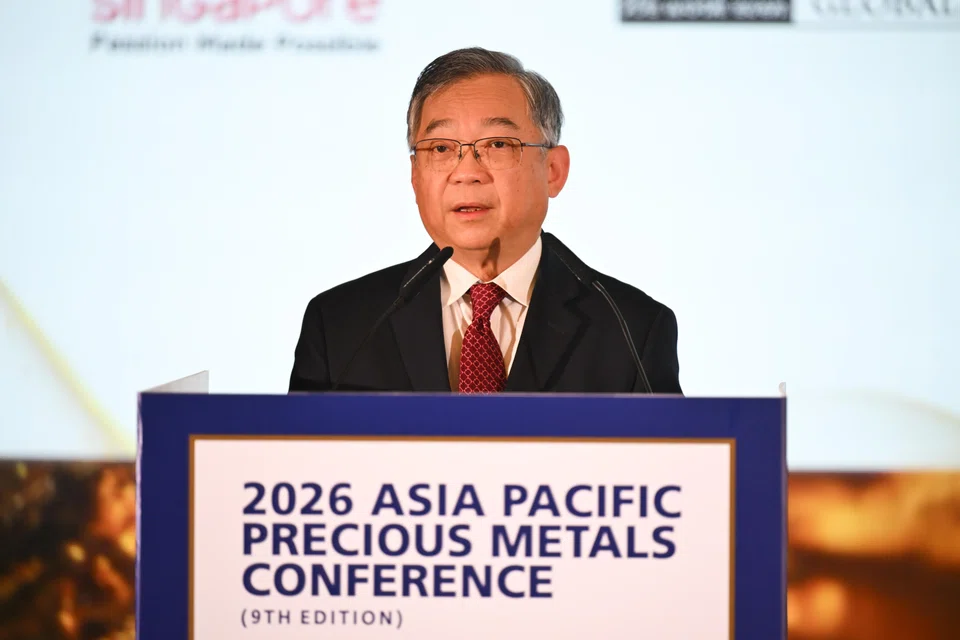
[SINGAPORE] An over-the-counter (OTC) gold clearing system is among initiatives that will be rolled out this year to boost Singapore’s role as a trusted global node for capital, investment and physical trade flows.
DBS, Deutsche Bank, ICBC Standard Bank, JPMorgan, OCBC and UOB signed a memorandum of understanding with Singapore Exchange (SGX) on Monday (Jun 15) to participate as clearing members.
The Monetary Authority of Singapore (MAS) will also introduce gold-vaulting services for central banks by October, said Deputy Prime Minister Gan Kim Yong at the Asia-Pacific Precious Metals Conference on Monday.
He noted that some foreign central banks and sovereign entities may be keen to actively manage their gold holdings as well.
Therefore, MAS will extend gold accounts to a select group of Singapore-based bullion banks to better provide gold-related services and liquidity to these entities, he said.
David Tait, CEO of the World Gold Council, told The Business Times: “Singapore probably has an edge (over Hong Kong) because it’s ... offering itself to the central banks of the world for custody, which I think is going to be pivotal.
“If central banks are willing to deposit their (gold) reserves here, it adds a degree of confidence in the overall running of the market and everything.”
However, in terms of gold trading and market liquidity, Tait said: “It’s really first past the post.” He noted that the competition lies in “vanilla” factors such as which country attracts more liquidity from banks and how quickly they set up their market framework.
He elaborated that the OTC clearing system in London and those intended to be set up in Hong Kong and Singapore are largely similar in structure.

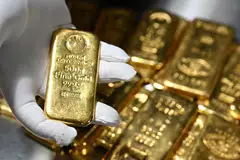

The measures unveiled by DPM Gan follow MAS and the Singapore Bullion Market Association’s announcement in March that they are working to deepen the Republic’s gold-trading infrastructure.
Gold’s breakneck rally in 2025 was underpinned by continued central-bank buying and geopolitical risk hedging.
The yellow metal peaked near US$5,500 an ounce in January and then retreated in March, as its safe-haven appeal gave way to liquidity needs amid the Middle East conflict.
Building market infrastructure and capabilities
Asia accounts for around 70 per cent of annual consumer demand for gold, and is a key driver of consumption and investment flows.
DPM Gan noted, however, that the region’s gold market infrastructure “has not fully kept pace with the shift in demand”.
He added that trading, liquidity and price discovery remain concentrated in established markets such as London and New York.
“This creates a practical gap in the Asian time zone,” said Gan, who is also minister for trade and industry.
“Market participants are seeking more efficient ways to access liquidity, manage risk and settle transactions during Asian trading hours.”
He noted that beyond yield and liquidity, investors are also searching for locations where assets can be held “safely, transacted reliably and governed transparently”.
The Republic’s OTC gold clearing system will be established by the SGX by the end of this year, with interbank trading expected to build up from 2027, he noted.
OTC clearing and settlement refers to capturing, netting and settling trades on a ledger system.
He added that the clearing system will support both large bars and kilobars for standardised settlement during Asian trading hours.
DPM Gan noted that Singapore will align its market practices with relevant global standards to “reduce friction for participants across markets, while preserving flexibility to accommodate differences in market structures”.
These include standards under the LBMA Good Delivery framework for large bars, as well as delivery and settlement standards adopted by major exchanges such as the Chicago Mercantile Exchange and Shanghai Gold Exchange for kilobars. (LBMA is the London Bullion Market Association. LBMA Good Delivery is the global benchmark standard for the purity, weight, physical appearance and provenance of gold and silver bars.)
He added that banks and market intermediaries “play an important role” in bridging markets through products and services that enable participants to transact efficiently across locations and bar formats.
Separately, MAS will remove the 5 per cent cap on physical investment precious metals under the tax incentive schemes for funds; more details will be shared by September, DPM Gan said.
“This will allow eligible funds and family offices to diversify their portfolios more flexibly, and support greater capital deployment into physical gold in Singapore.”
Gold-related capital market products
The development of gold-related capital market products has the potential to “deepen liquidity, strengthen price discovery and improve the efficiency of gold as a tradable financial asset”, he said.
In the light of this, SGX is exploring a physically deliverable gold futures contract to enhance price discovery and risk management, he said.
SGX previously launched a 25-kilobar gold futures contract in October 2014, but this was subsequently withdrawn in 2018 due to low trading interest.
DPM Gan said that banks are also keen to develop the use of tokenised gold within Singapore’s market.
DBS announced on Thursday that it will launch tokenised gold for retail customers in the second half of this year; the OCBC-LionGlobal Physical Gold Fund Token was launched in April for institutional and corporate accredited investors.
“We are not seeking to replace established centres of gold trading and liquidity,” DPM Gan pointed out.
“Instead, Singapore can serve as a trusted node in the global gold ecosystem – connecting regional demand with global liquidity, and supporting market activity during Asian hours.”
Tait of the World Gold Council identified two key challenges that Singapore could face in its push to become a gold hub: The first is the degree to which the city-state can convince banks to continue to supply liquidity to its gold market; the second is the competition that Hong Kong presents.
“I expect both ... authorities to be doing their absolute utmost to make sure the banks come to their market. You’re probably going to have the big bank sitting in front of (both governments asking): ‘What do you offer?’” he said.
Decoding Asia newsletter: your guide to navigating Asia in a new global order. Sign up here to get Decoding Asia newsletter. Delivered to your inbox. Free.
Copyright SPH Media. All rights reserved.
TRENDING NOW

Once staunchly pro-China, Malaysian Chinese businesses are now distancing themselves from Beijing

Looking beyond looming CEO succession, should UOB potentially pursue a transformative merger?

Could stablecoins be the future of money?

Grab CEO’s wife Chloe Tong on life with Anthony Tan and finding her purpose

